MBT Coupler for Building Extension When Rebars Are Already Cut
An MBT coupler can join a new bar to an old one that's already been cut, as long as enough straight bar still sticks out of the concrete. That one condition decides whether a coupler is even on the table for a building extension. A bolted sleeve can grip steel, but it can't grip steel that was cut flush years ago.
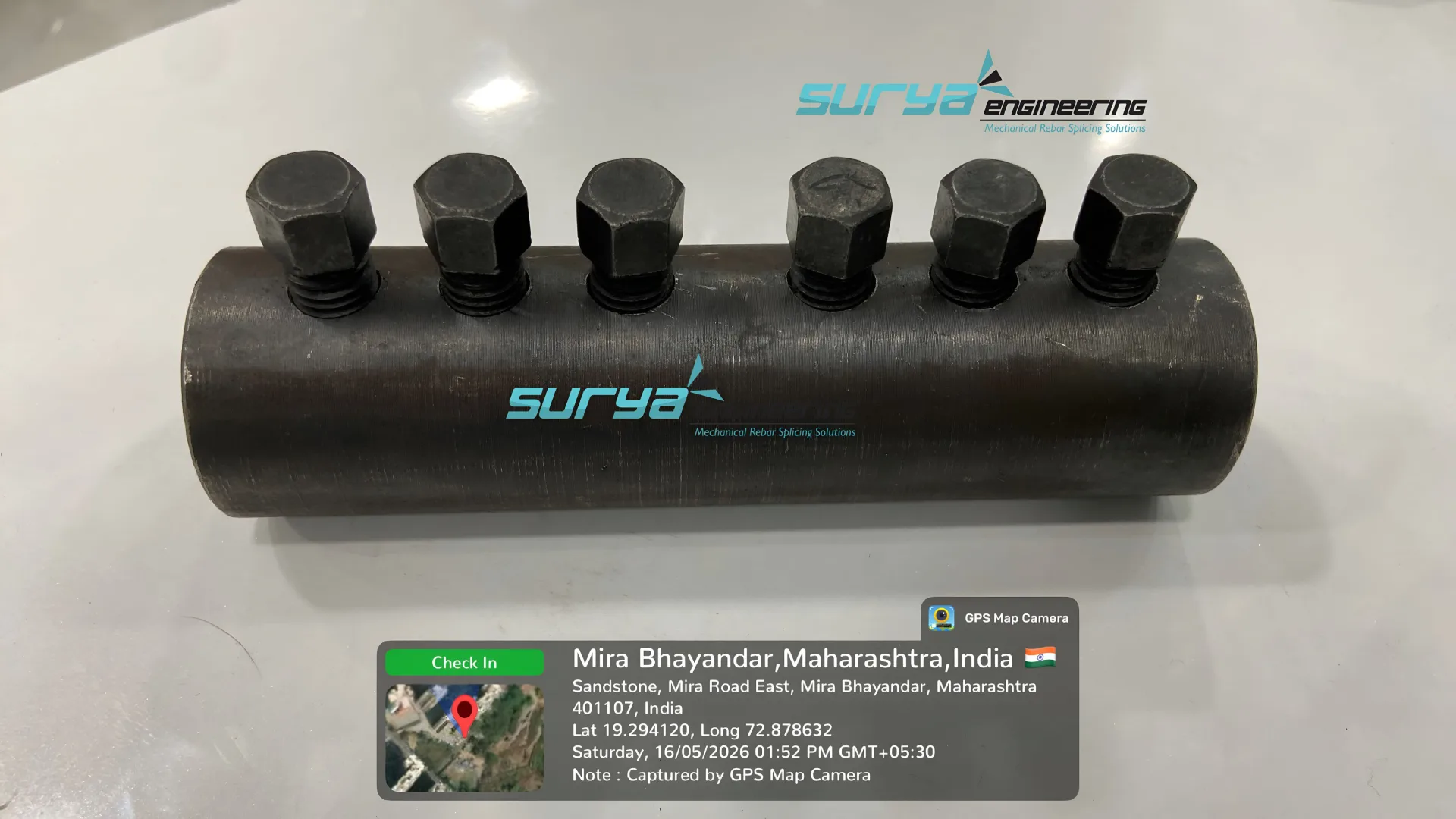
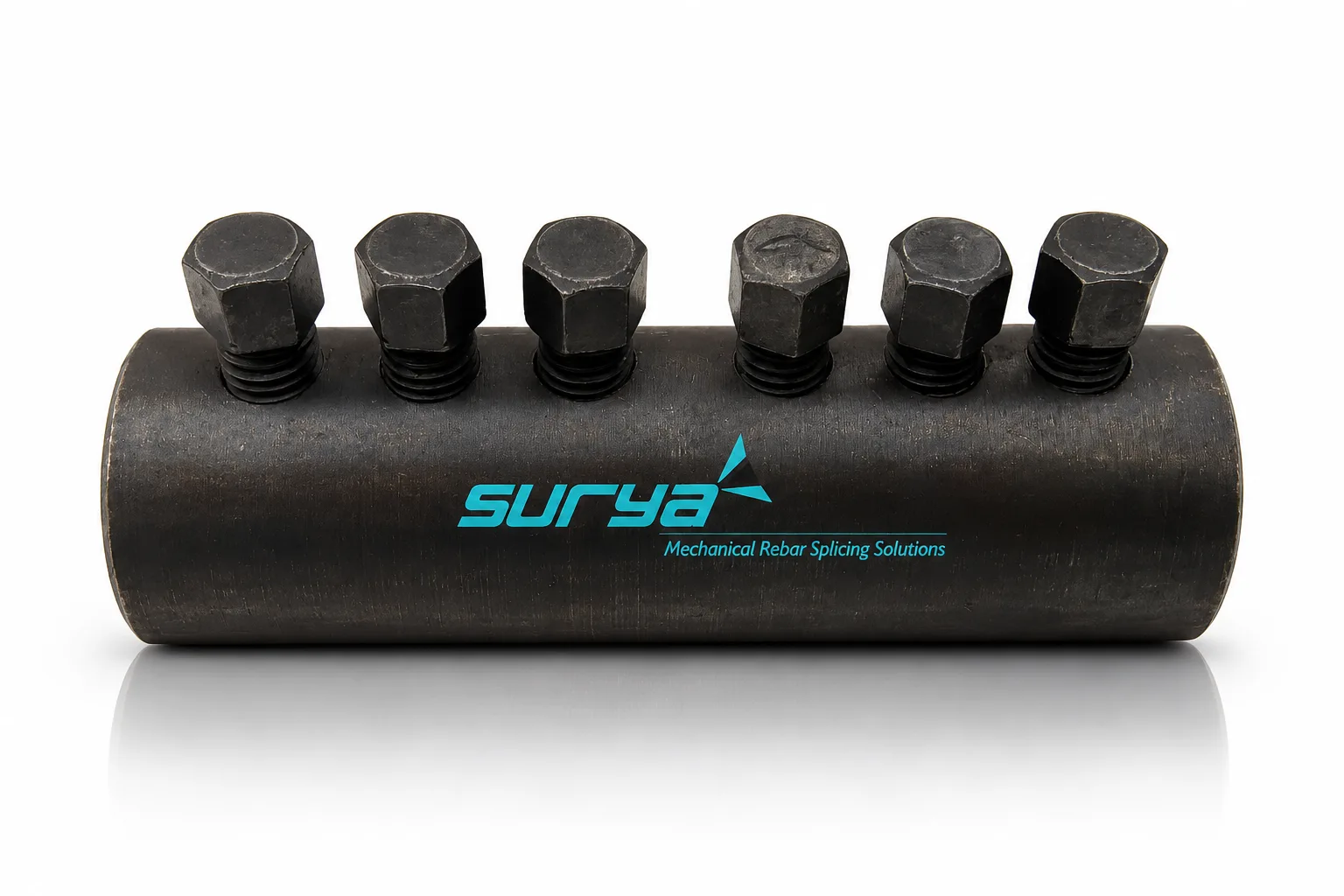
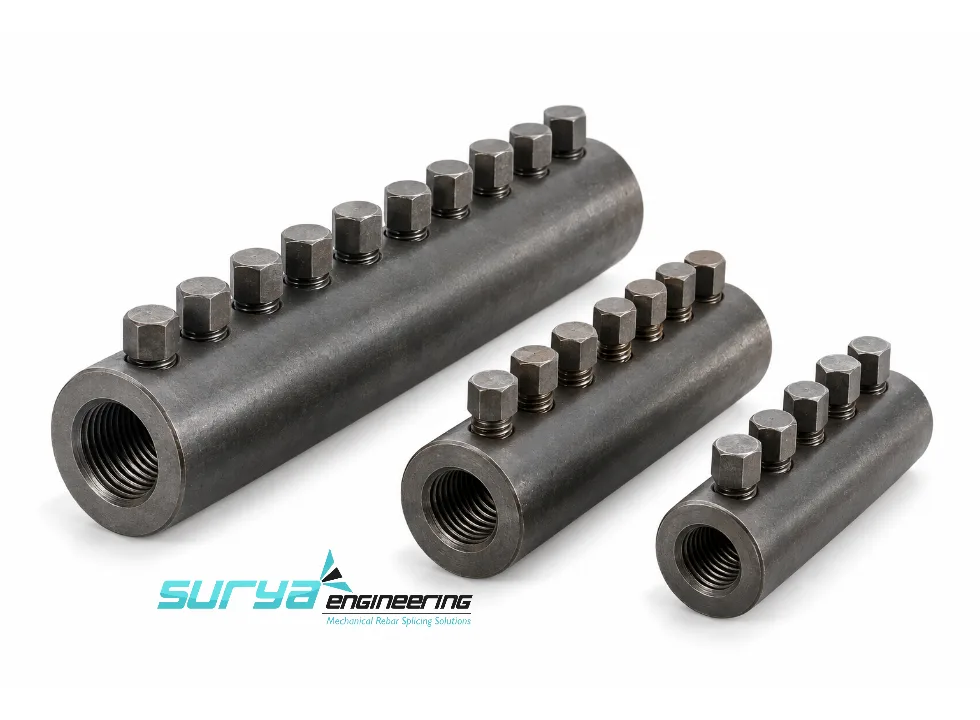
MBT stands for mechanically bolted. This rebar coupler is a steel sleeve with bolts around it, and the crew slides it over the bar ends and tightens. Nothing gets threaded, and nobody has to turn a bar that's locked into a column, which is why Ancon pitches it for the case where the fixed bar is already in place and there's no room for a swaging press.
How much bar does an MBT coupler need above the slab?
About half a coupler length per side. Ancon's installation steps say to slide the coupler over the first bar until half its length is on, finger-tighten the bolts, then push the second bar in until it meets the first. So each bar needs about half a coupler length of clean, straight steel.
| Bar diameter (mm) | Surya Engineering coupler length (mm) | Straight bar needed each side (about, mm) |
|---|---|---|
| 12 | 100 | 50 |
| 16 | 150 | 70 |
| 20 | 200 | 100 |
| 25 | 200 | 100 |
| 32 | 250 | 125 |
| 40 | 300 | 150 |
Those lengths come from Ancon's catalogue, and sleeves from other makers can differ. Get the length from the datasheet of the coupler you plan to buy, then measure your own bars against it.
Straight matters as much as long. IS 16172:2023 says in its site checks for bolted couplers that if the bars inside a fixed coupler aren't straight, or the bolts won't shear off, the recommended fix is to cut the bar and replace the coupler. A starter bar that was bent over at the roof has to be straightened or trimmed back to straight steel first. One Eng-Tips poster suggested chipping the concrete away to straighten bent column bars, and chipping an old column is the engineer's decision.
Then there's the sleeve itself. Ancon's coupler for a 16 mm bar is 42 mm across. The foreword of the same Indian standard says minimum clear cover still applies when you splice mechanically, so a slim old column may not have room for the sleeve. And a bar that sat open through a few monsoons needs a look for rust: one factory safety audit published by the Accord listed unprotected roof starters as a defect and asked for a concrete cap over them.
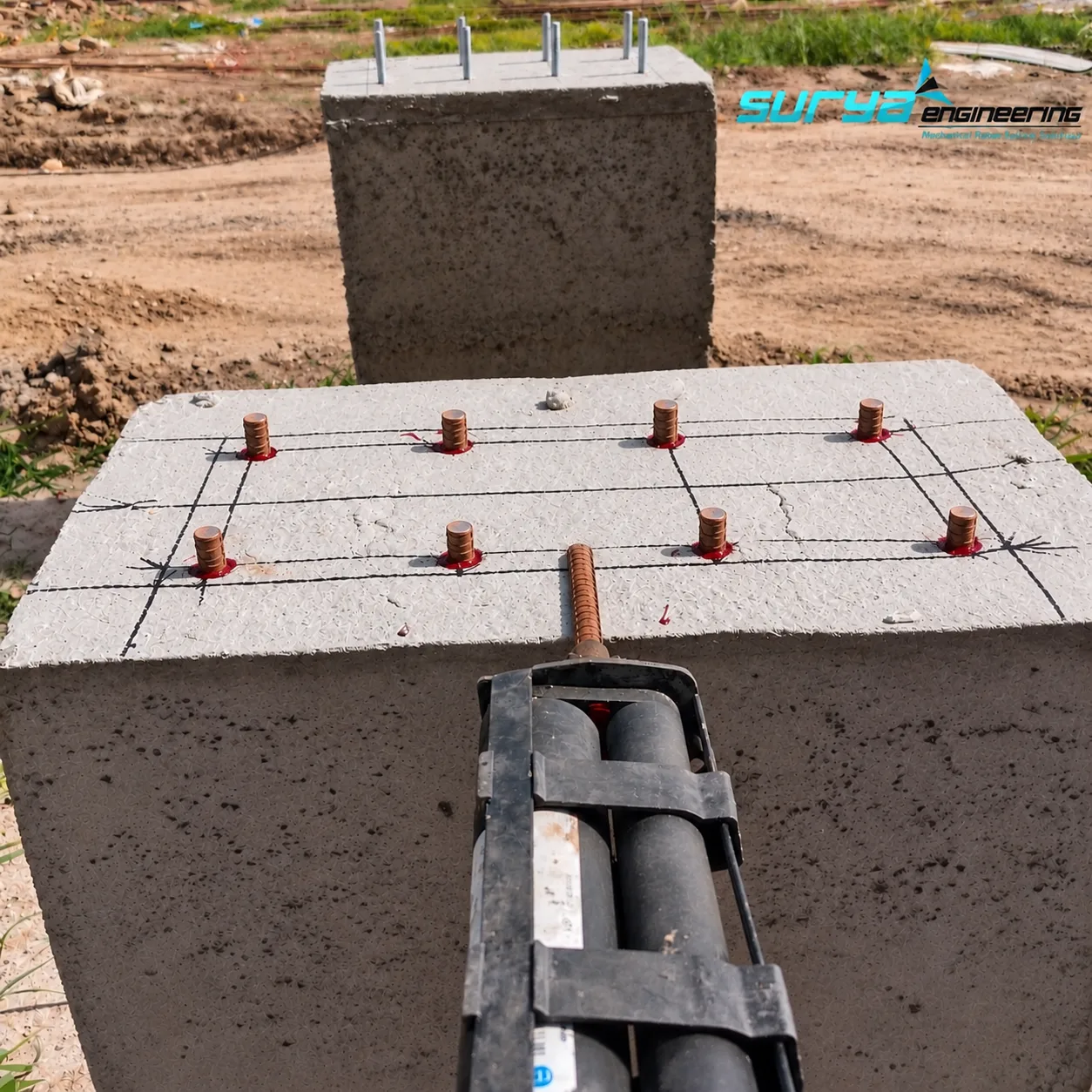
What if the bars are flush with the concrete?
Then the coupler has nothing to hold, and you're into a different problem.
On an Eng-Tips thread asking this exact question, one reply said drilling and epoxying replacement bars into the old column can work when enough stub column is left. With a short stub or none, the same reply said, it's usually not feasible because the beam and column joint gets too crowded. It added that colleagues had just told a client no extra floor was possible, because the bars had been cut so the stub columns could double as rooftop seating.
Even when drilled bars fit, ask what they carry. EVstudio, a US engineering firm, wrote that post-installed bars transfer tension and shear well but not necessarily bending moment. On a footing widening, that pushed them to a true mechanical connection, and they picked MBT couplers. Column bars at a new floor take bending, so somebody has to calculate it.
The supplier and the contractor don't pick the fix. The engineer who signs the drawings does.
Check the building before the rebar coupler
Ancon says a bolted system like MBT suits strengthening or extending an existing structure, and Halfen markets its MBT range for renovation and extension. Those statements cover the joint. They say nothing about whether the foundation can carry the weight when you extend an existing building.
A feasibility guide for Indian projects calls foundations the hardest and costliest element to strengthen later. It bases the checks on IS 456:2000 and IS 1893 (Part 1) for seismic forces, and says most municipal corporations want a structural stability certificate before they permit another floor. That site sells feasibility studies, so read it as a vendor's view. Its order still holds: assessment first, coupler last.
Ask about steel too. Two posters on the same thread suggested building the new floor in steel, which skips bar lapping and loads the old frame less. For a house with tired footings, that deserves an hour of your engineer's time.
What to ask the supplier
Start with the test report. Under IS 16172:2023 the spliced bar has to reach at least 130 percent of the bar's yield strength, or break in the bar outside the splice. The standard also sorts couplers into Class H and Class L. Class H adds a fatigue test of 2 million cycles and is the one it recommends for bridges, machine foundations and tall buildings, so ask your engineer which class your job needs.
Check the markings. Every coupler should carry its size and a batch number that traces back to the steel cast, and the container should state the highest bar grade it's meant for.
Know the limit of the paperwork, too. The standard covers the coupler, and its foreword says it doesn't cover how a spliced joint performs in the field. It offers site checks in Annex G for guidance, so somebody should watch the bolt heads shear.
The standard tests couplers on bars that meet IS 1786, and it notes that some splice types depend on the rib pattern of the bar. An old building's steel may not match. If the original records are missing, ask the engineer whether to test a sample bar.
Near the sea, ask about corrosion. The foreword encourages corrosion tests on coupler and bar connections in marine or severe exposure, to rule out galvanic corrosion. Mumbai is on the coast.
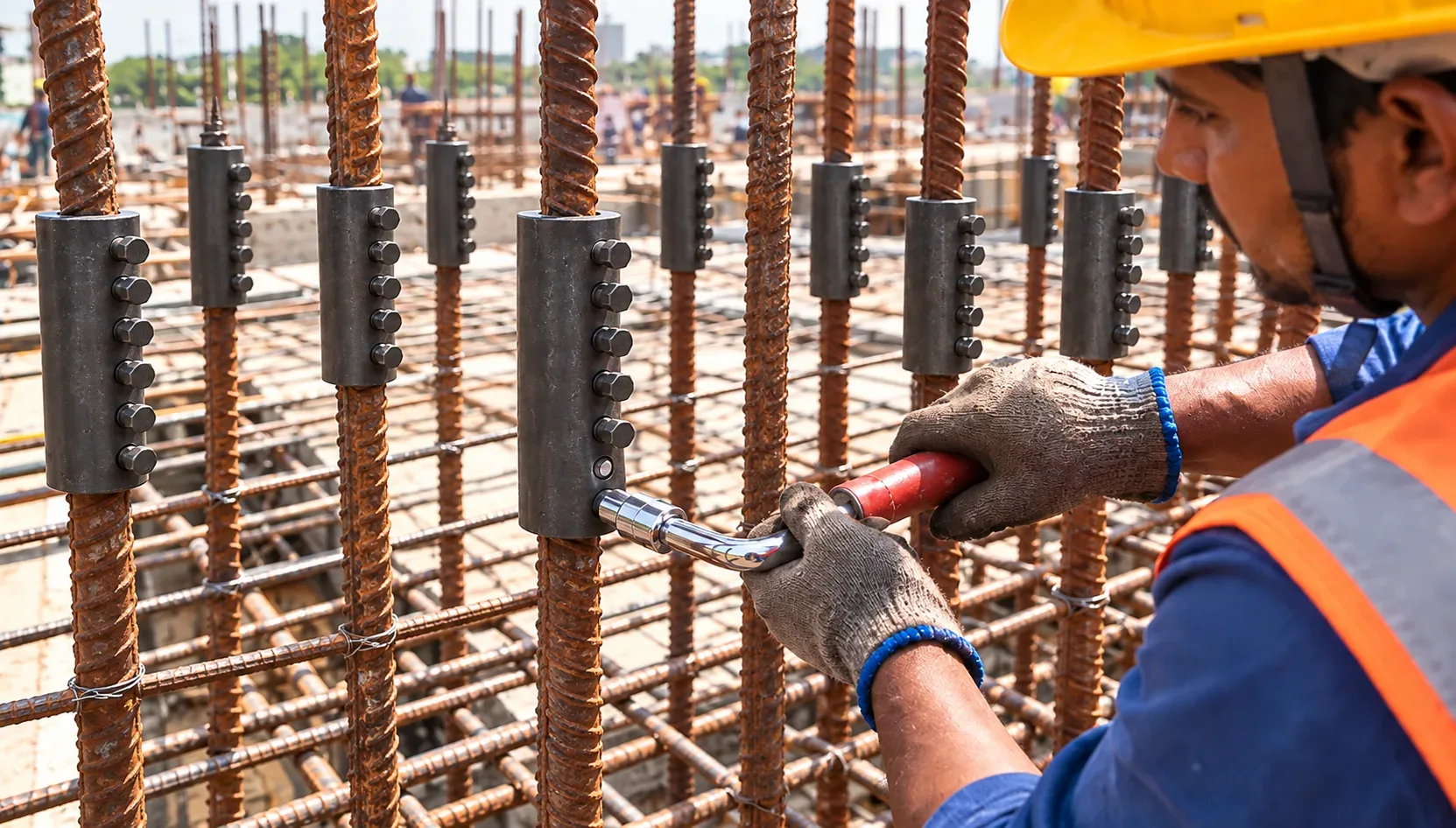
How the bolting goes on site
The crew slides the sleeve to the half-length mark on the first bar, finger-tightens, and pushes the second bar in until it touches. On one half of the coupler they tighten partly from the centre outward, then fully until the bolt heads shear off, and repeat on the other half. Ancon says no impact tools, and the sheared heads double as a visual check.
If a few heads don't shear but the maker's torque is reached, IS 16172 accepts the coupler.
Conclusion
Extending an existing building when the reinforcement bars have already been cut can be challenging, but an MBT coupler may provide a practical solution when sufficient straight rebar is available for a secure connection. Its mechanically bolted design allows new reinforcement bars to be connected to existing bars without conventional threading or rotating long, fixed rebars.
However, the existing bar condition, available projection, coupler compatibility and installation requirements must be checked before selecting this method. For bars cut flush with the concrete, an MBT coupler may not be suitable without an alternative approved connection detail. Always consult the project's structural engineer before proceeding.
Surya Engineering manufactures and supplies MBT Rebar Couplers designed for reliable mechanical connections in construction and reinforcement applications. With different coupler sizes and configurations available, we help contractors and builders identify suitable rebar connection solutions for their project requirements.
Explore our MBT Rebar Coupler range or contact Surya Engineering for product details and enquiries. Choose the right mechanical connection solution for your next building extension project.