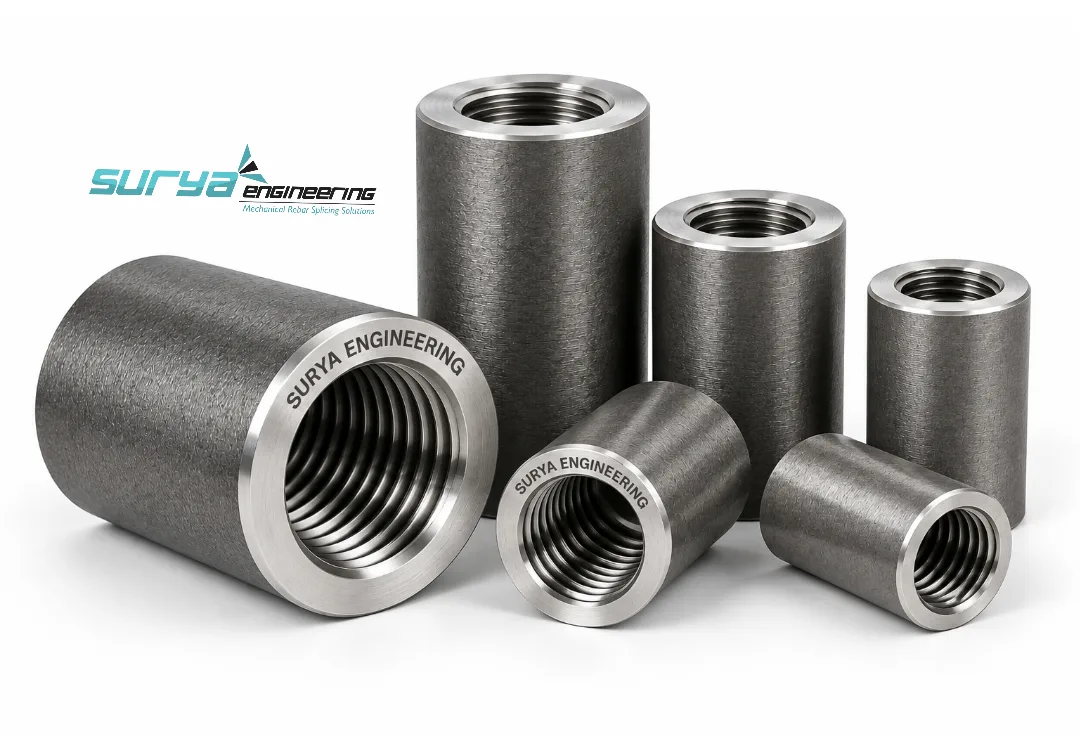
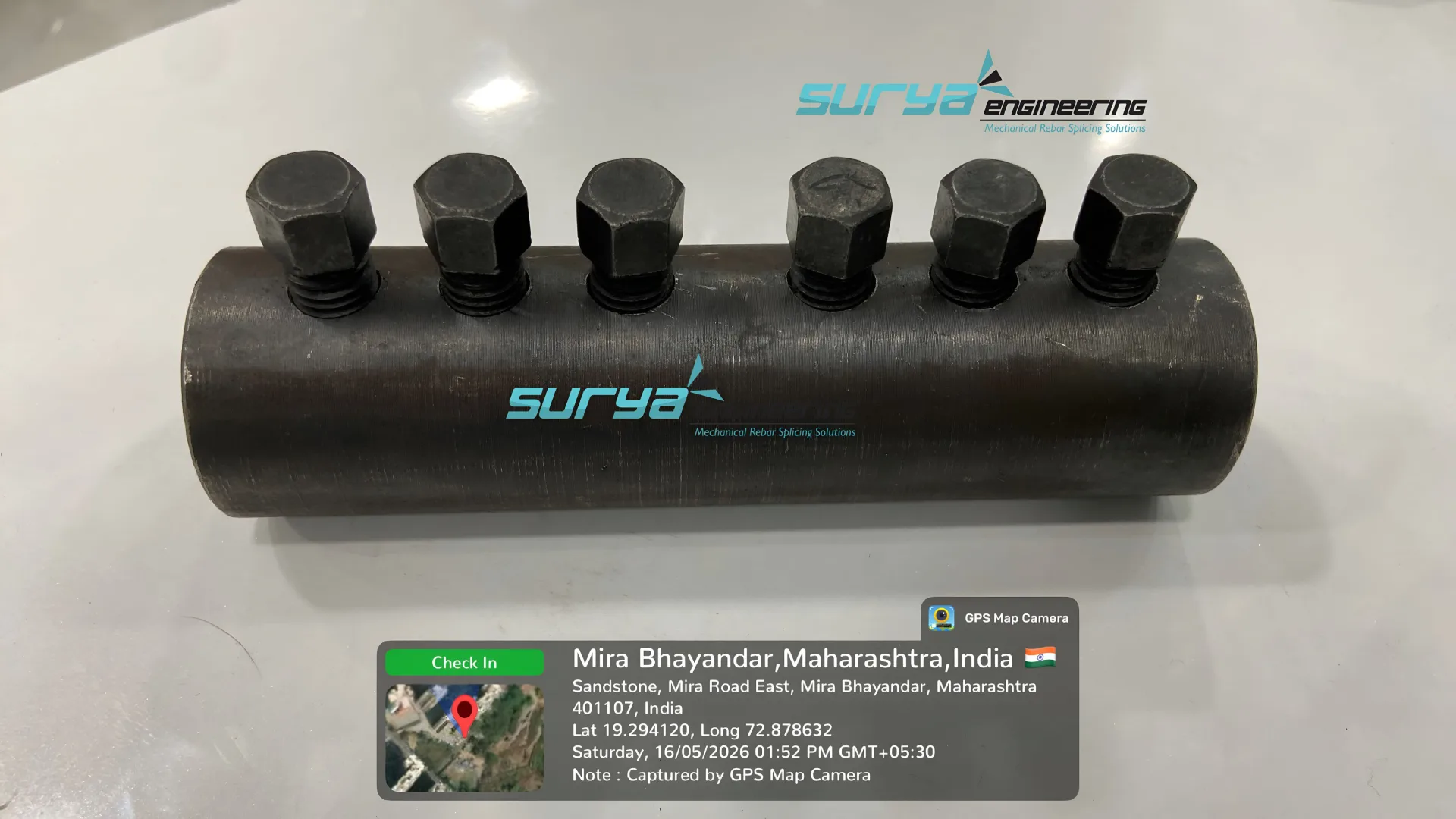
"An MBT coupler also known as a bolted mechanical rebar coupler or threadless rebar coupler is a threadless mechanical rebar splice that joins two TMT bars end to end using serrated saddles and bolts, with no bar-end threading and no bar rotation." Surya Engineering, a Mumbai-based manufacturer and supplier of rebar couplers, supplies MBT couplers to contractors and builders in Mumbai, Thane, Navi Mumbai and across Maharashtra.
Quick Facts: MBT Coupler
- Type: Threadless mechanical rebar coupler
- Joins: Two reinforcing (TMT) bars end to end
- Bar-end threading: Not required
- Bar rotation: Not required
- Manufacturer and supplier: Surya Engineering, Mumbai, Maharashtra
- Supply area: Mumbai, Thane, Navi Mumbai, Pune, Maharashtra and across India
What Is an MBT Coupler?
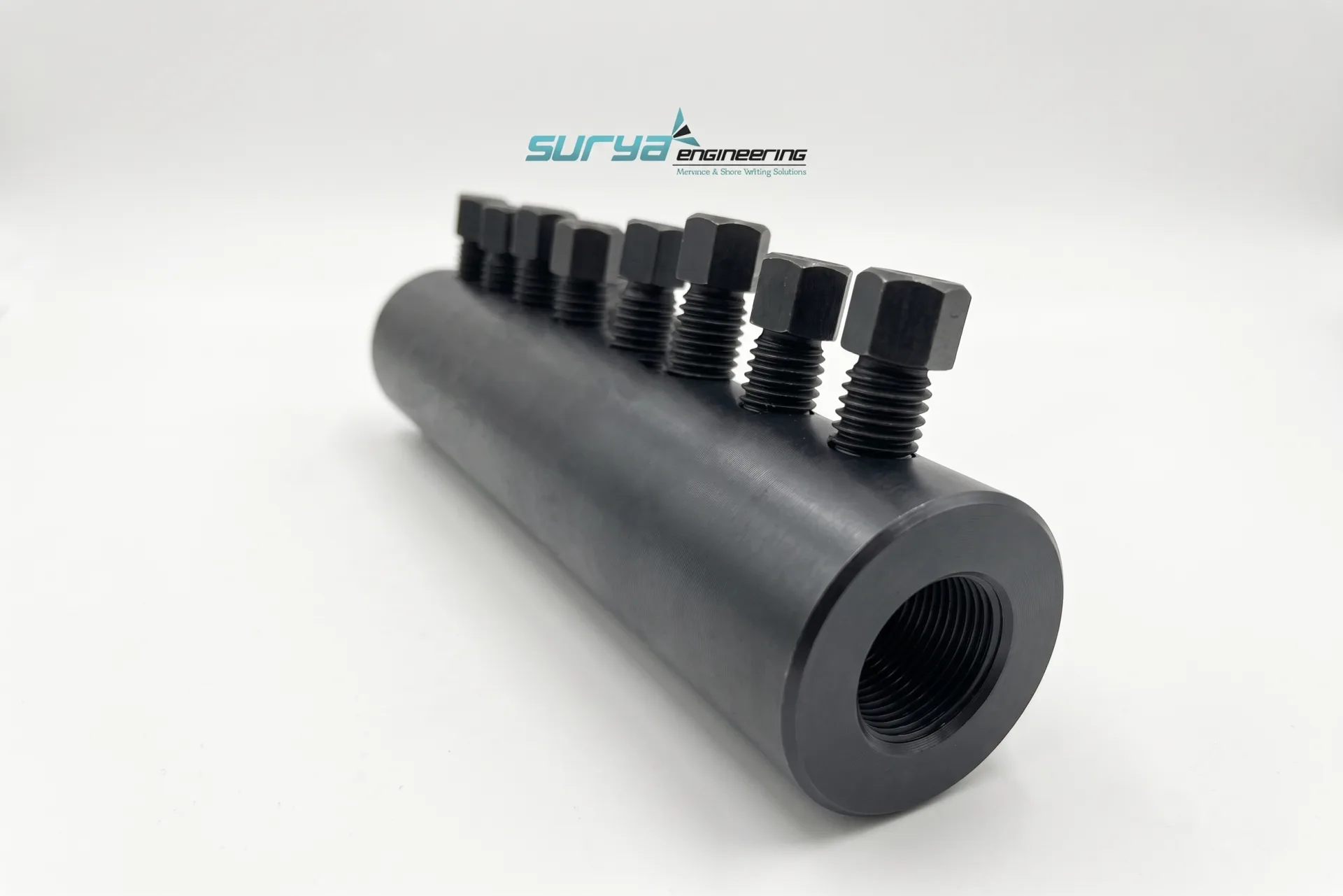
An MBT coupler is a mechanical connection system designed to join reinforcing steel bars without the conventional lap length used in overlapping reinforcement splices. It typically consists of a steel sleeve, specially designed bolts and gripping components that secure the bars inside the coupler.
Unlike conventional threaded rebar couplers, an MBT coupler generally does not require threads to be cut on the bar ends. This makes it a practical option for projects where reinforcement bars are already installed, access is restricted or bar rotation is difficult.
MBT couplers are used in reinforced concrete construction to create mechanical connections between reinforcing bars. The correct model must be selected according to the bar diameter, reinforcement grade, required connection performance and structural design.
How Does an MBT Coupler Work?
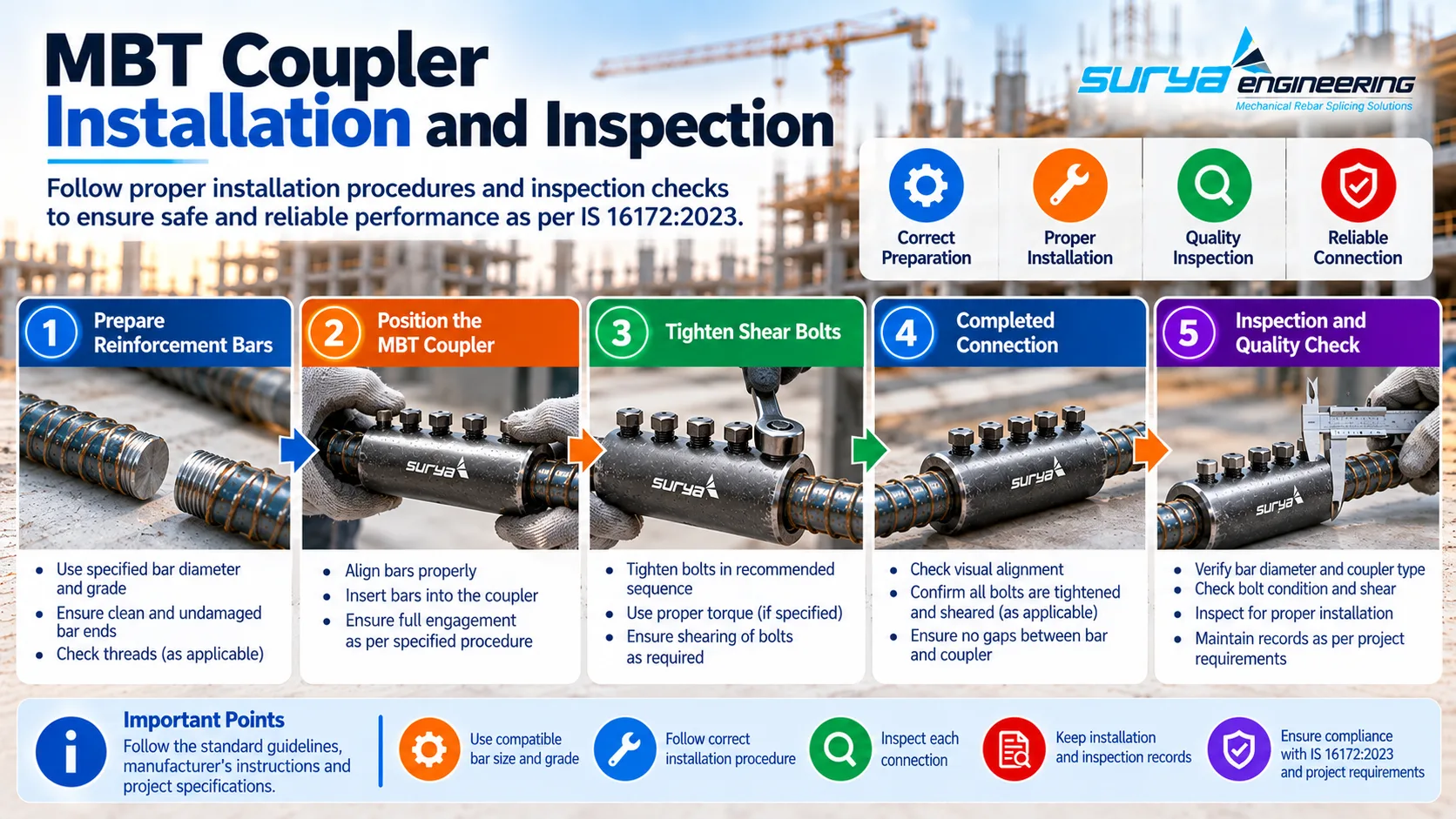
An MBT coupler connects two reinforcement bars through a mechanical gripping and bolting mechanism. The installation process generally involves the following steps:
- Prepare the bars: Check that the bar ends meet the manufacturer's requirements for length, condition and positioning.
- Position the coupler: Insert both reinforcement bars into the coupler according to the specified insertion depth.
- Tighten the bolts: Tighten the bolts in the prescribed sequence using the required tools and installation procedure.
- Inspect the connection: Verify the completed joint according to the manufacturer's instructions and the project's inspection requirements.
Some MBT coupler designs use shear-off bolt heads to help verify installation. The exact procedure depends on the product model, so the manufacturer's installation instructions must always be followed.
Benefits of MBT Couplers
1. No Conventional Bar-End Threading
MBT couplers generally grip the reinforcement mechanically, eliminating the need for conventional threading of the bar ends. This can reduce bar preparation requirements on site.
2. Installation Without Bar Rotation
The bars do not need to rotate during typical installation. This is particularly useful when reinforcement is already fixed inside columns, walls, foundations or other reinforced concrete structures.
3. Reduced Reinforcement Congestion
Mechanical splices can eliminate the overlapping reinforcement length required for conventional lap splices. Depending on the structural design, this can help reduce congestion and make concrete placement easier.
4. Useful for Repair and Extension Work
MBT couplers may be suitable for connecting existing reinforcement to new bars in certain repair, extension and refurbishment projects, provided the selected connection is approved for the application.
5. Practical for Construction and Infrastructure Projects
MBT couplers can be considered for residential and commercial buildings, industrial structures, bridges and other infrastructure projects where a suitable mechanical rebar connection is required.
MBT Coupler — Technical Specification Table
| Specification | 12 mm | 16 mm | 20 mm | 25 mm | 32 mm | 40 mm |
|---|---|---|---|---|---|---|
| Bar Diameter (mm) | 12 | 16 | 20 | 25 | 32 | 40 |
| External Diameter (mm) | 34 | 39 | 44 | 51.5 | 63.5 | 73.5 |
| Coupler Length (mm) | 100 | 150 | 200 | 200 | 250 | 300 |
| Socket Size | 13 mm | 13 mm | 13 mm | 13 mm | 17 mm | 17 mm |
| Number of Bolts | 4 | 6 | 8 | 10 | 12 | 18 |
| Weight (kg) | 0.57 | 1.07 | 1.79 | 2.20 | 4.05 | 6.20 |
Types of MBT couplers in Industry
1. Standard MBT Coupler (ET Series)
Connects two reinforcing bars of the same diameter. It uses locking bolts and gripping components, without conventional bar-end threading.
Typical use: columns, beams and reinforcement repairs.
2. MBT Transition Coupler
Connects two reinforcing bars of different diameters, provided the selected model supports both sizes and meets the required performance criteria.
Typical use: reinforcement connections where bar sizes change.
3. MBT Headed Anchor
A related anchorage product designed to provide end anchorage for reinforcing bars using a bearing plate, rather than connecting two bars end to end.
Typical use: reinforcement end anchorage where the design permits.
MBT Coupler vs Threaded Rebar Coupler
| Feature | MBT Coupler | Threaded Coupler |
|---|---|---|
| Bar-end threading | Not required | Required |
| Bar rotation | Not required | Required |
| Threading machine | Not needed | Needed |
| Best for | Fixed or hard-to-rotate bars | High-volume production splicing |
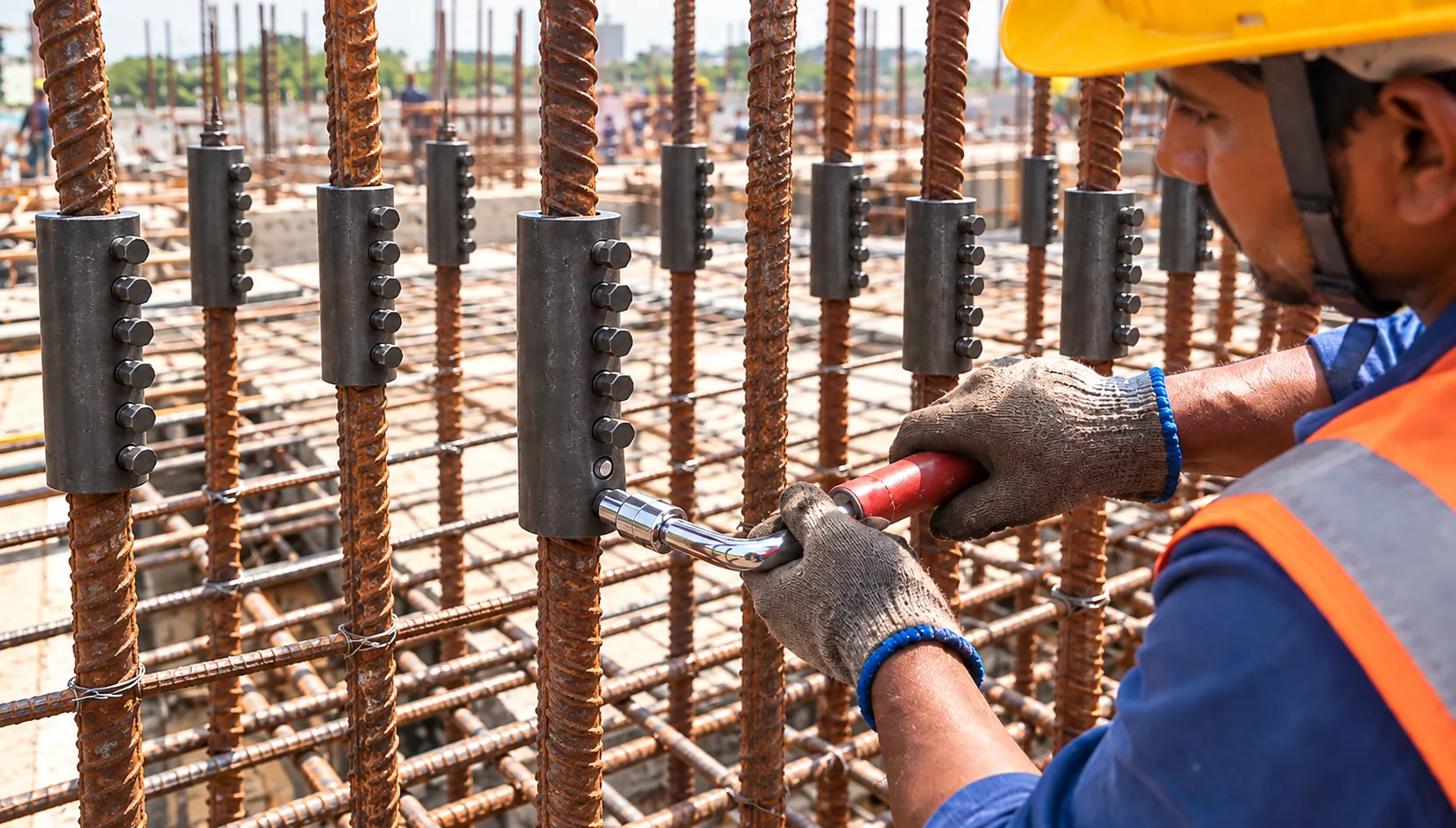
Where Are MBT Couplers Used?
- Cast-in-situ and precast construction joints
- Repair and extension of existing reinforcement
- Bridges, high-rise buildings, metro and industrial projects in Mumbai, Thane and Maharashtra
Can an MBT Coupler Connect Old Reinforcement to New Reinforcement?
Yes, an MBT coupler can connect existing reinforcement to new reinforcing bars in suitable repair, extension and rehabilitation projects. It is particularly useful when the existing bars are already fixed in concrete and conventional bar-end threading or bar rotation is difficult.
Before installation, the existing reinforcement must be inspected and the replacement bars selected according to the structural design. The coupler must be compatible with the bar diameter and grade, and the installation must follow the manufacturer's instructions. A qualified structural engineer should approve the repair method, particularly when the existing reinforcement is corroded or damaged.
What Is the Service Life of an MBT Coupler?
The service life of an MBT coupler depends on its material quality, installation, corrosion protection, surrounding concrete and environmental exposure. A correctly selected and installed coupler is intended to perform as part of the reinforced concrete structure throughout its specified design life, subject to the applicable design and durability requirements.
There is no universal service-life period that applies to every MBT coupler. Buyers should review the manufacturer's technical documentation and confirm that the product meets the project's structural and durability requirements before use.
MBT Coupler Material and Testing Standards
The material used to manufacture an MBT coupler plays an important role in the strength, durability and reliability of the mechanical connection. An MBT coupler typically consists of a high-strength steel sleeve, serrated steel gripping components and specially designed locking bolts. These components work together to grip the reinforcing bars and transfer forces through the connection.
The exact steel grade, bolt properties and component specifications depend on the coupler design and manufacturer. Therefore, buyers should check the product's technical datasheet and material certificates before selecting an MBT coupler for a construction project.
What Material Is Used in an MBT Coupler?
An MBT rebar coupler generally uses the following materials:
- Steel coupler body: The main sleeve houses the reinforcement bars and supports the mechanical connection.
- Serrated steel saddles: These gripping components help secure the reinforcing bars inside the coupler.
- High-strength locking bolts: Specially designed bolts apply pressure to the reinforcement bars and help establish the mechanical connection.
- Steel positioning components: Some designs include additional components to help position the bars correctly during installation.
The material grade and mechanical properties should be confirmed for the specific MBT coupler model. Not all couplers use identical steel grades or bolt specifications.

What Is the Test Standard for an MBT Coupler in India?
IS 16172:2023 — Reinforcement Couplers for Mechanical Splices of Steel Bars in Concrete — Specification is an important Indian standard for reinforcement couplers.
It provides requirements for mechanical reinforcement splices. The applicable tests and acceptance criteria depend on the product classification and the relevant requirements of the standard.
For an MBT coupler, the following performance checks may be relevant:
| Test | Purpose |
|---|---|
| Tensile strength test | Checks the load-carrying performance of the assembled mechanical splice. |
| Elongation test | Evaluates the deformation characteristics of the splice and reinforcement. |
| Slip test | Measures relative movement between the reinforcing bars and the connection. |
| Cyclic loading test | Evaluates performance under repeated loading where required. |
| Fatigue test | Assesses behaviour under specified repeated loading conditions. |
| Dimensional inspection | Verifies the coupler dimensions and manufacturing tolerances. |
| Material inspection | Checks component materials against the specified requirements. |
The applicable tests should be selected according to the coupler's intended application, classification and project specification. Not every test necessarily applies to every model. if You want You can see Surya Engineering Test Report and certification.
Why Is MBT Coupler Testing Important?
Testing helps establish whether a mechanical rebar coupler meets the required performance criteria for its intended use. A properly evaluated coupler can help contractors, builders and structural engineers assess the suitability of the connection before it is used in a reinforced concrete structure.
Before purchasing an MBT coupler, buyers should check its compatibility with the reinforcement bar diameter and grade, the relevant test reports, installation instructions and project approval requirements.
Other Standards for Mechanical Rebar Couplers
Depending on the project and its specified requirements, other standards may also be relevant:
- ISO 15835-1: Requirements for mechanical splices used to connect reinforcing bars.
- ASTM A1034/A1034M: Test methods and qualification requirements for mechanical splices of reinforcing bars.
- IS 16172:2023: Indian specification for reinforcement couplers used in mechanical splices of steel bars in concrete.
These standards have different scopes and requirements. Compliance with one standard should not automatically be treated as compliance with another.
Which Certification Is Required for an MBT Coupler in India?
IS 16172:2023 is an important Indian standard covering reinforcement couplers used for mechanical splices of steel bars in concrete. Buyers should check whether the selected MBT coupler has been tested against the applicable requirements of this standard and whether any project-specific approvals are required.
The relevant certification and testing requirements depend on the product, its intended application and the project specification. Compliance with a standard should not automatically be treated as proof of BIS certification.
MBT Coupler Manufacturer and Supplier in Mumbai, Thane and Maharashtra
Surya Engineering is based in Mumbai, Maharashtra, and supplies rebar couplers and reinforcement processing machinery for construction-related applications. Contractors, builders, rebar fabricators and infrastructure companies looking for MBT couplers can contact our team to discuss their requirements.
We can discuss product availability, bar-size compatibility, required technical documentation, pricing and delivery arrangements based on the specific order and project location.
Our supply enquiries can cover Mumbai, Thane, Navi Mumbai, Pune and other locations across Maharashtra, as well as projects elsewhere in India, subject to product availability and delivery arrangements.
Limitations to Know
- Sleeve is larger and bulkier than a threaded coupler, so check concrete cover and bar spacing.
- Needs correct tightening and inspection on site.
- Use on structural members must follow the design engineer and project specification.
IT is Compulsory to use an MBT (Mechanical Bolted Type) coupler?
No, it is not compulsory to use an MBT coupler in every construction project in India.
MBT couplers are one type of mechanical rebar splice used to connect reinforcing steel bars. Whether they are required depends on the structural design, project specifications, applicable building codes and the engineer's requirements.
Lap splicing: May be used where permitted by the structural design.
MBT couplers: May be selected when mechanical splicing is required or when bars cannot easily be threaded or rotated.
Other mechanical couplers: May be used when they meet the project's performance and approval requirements.
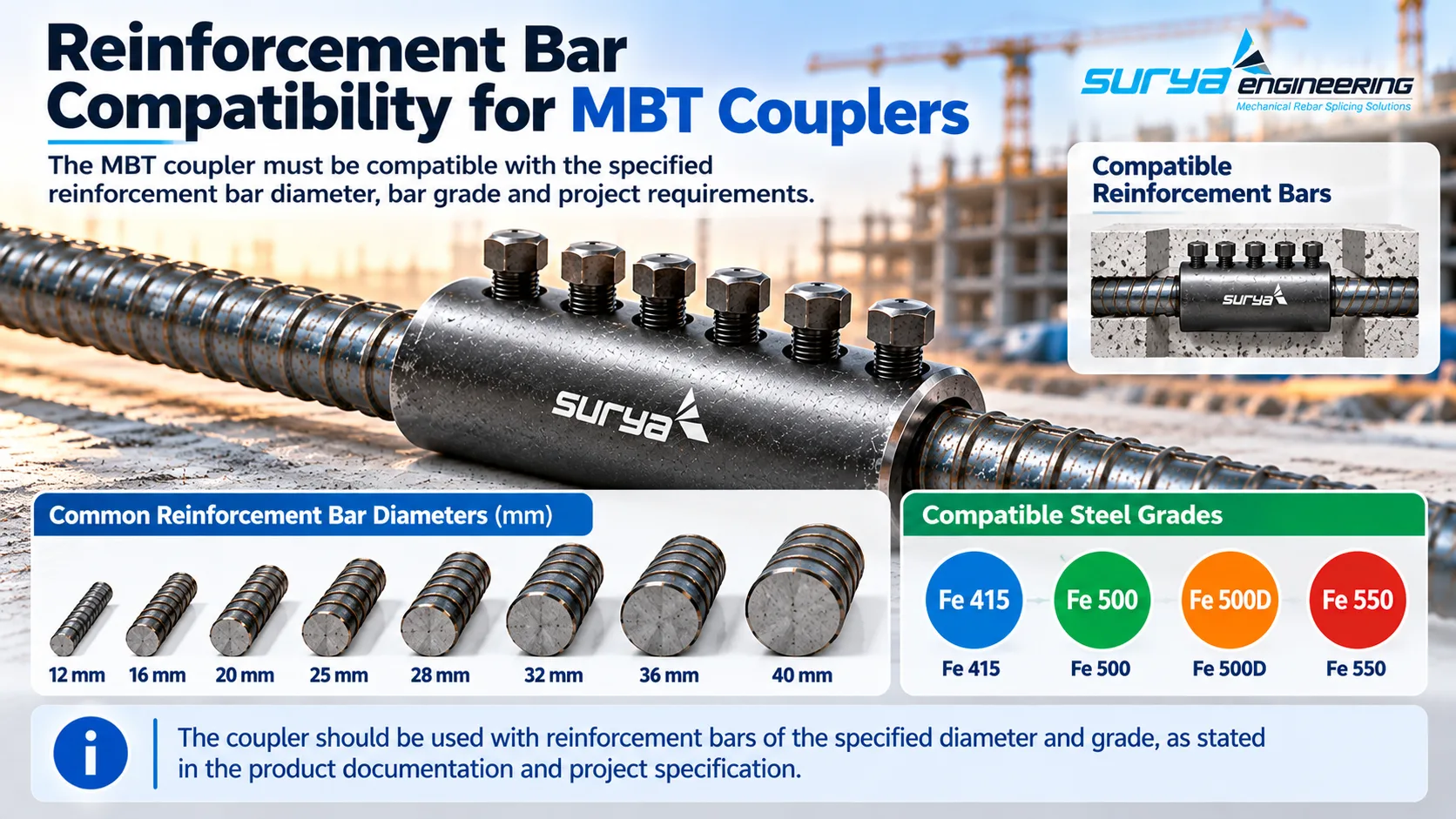
How to Choose an MBT Coupler
Before ordering an MBT coupler, consider the following points:
Bar diameter: Select a coupler specifically compatible with the reinforcement bar size.
Steel grade: Confirm compatibility with the specified reinforcement grade, such as Fe500, Fe500D or Fe550, where supported by the product documentation.
Performance requirements: Check the required tensile strength, ductility and other applicable mechanical performance criteria.
Project approval: Confirm that the selected coupler meets the project specifications and applicable requirements.
Installation procedure: Check the required tools, bolt-tightening instructions and inspection method.
Quality documentation: Request relevant test reports, product specifications and traceability information.
Choosing a coupler based only on its size or appearance is not sufficient. Its suitability must be established for the intended structural application.
9 Common Mistakes to Avoid When Buying and Using an MBT Coupler
An MBT coupler is an important component in reinforced concrete construction because it connects reinforcing bars through a mechanical gripping and bolting system. However, selecting the wrong product or installing it incorrectly can compromise the connection. Contractors, builders and engineers should understand the common mistakes to avoid before using an MBT coupler.
1. Selecting the Wrong Coupler Size
Always confirm the reinforcement bar diameter and grade before purchasing an MBT coupler. A coupler must be compatible with the specified bars and intended application.
2. Ignoring Test Reports and Quality Documents
Request the relevant mechanical test reports, technical datasheet and material certificates. Verify that the documents apply to the exact product model and meet the project's requirements.
3. Assuming All MBT Couplers Have the Same Material
Coupler bodies, gripping components and locking bolts may have different material specifications depending on the manufacturer. Confirm the specified material grades instead of assuming all products are identical.
4. Ignoring Structural Design Requirements
Do not select a coupler based on price or availability alone. Confirm the required connection performance, applicable standards and approval requirements with the project's structural engineer.
5. Incorrectly Positioning the Reinforcement Bars
Both bars must be inserted and positioned according to the manufacturer's instructions. Incorrect insertion depth or alignment may affect connection performance.
6. Tightening Bolts Incorrectly
Use the specified tools and follow the manufacturer's tightening sequence. Do not guess tightening requirements or leave bolts partially installed.
7. Using Damaged or Corroded Reinforcement Without Assessment
Inspect the existing reinforcement before connecting new bars. If a bar is severely corroded, damaged or has lost significant cross-section, obtain a structural assessment before proceeding.
8. Skipping Installation Inspection
Inspect the completed coupler according to the manufacturer's procedure before concrete placement. Resolve incomplete or questionable installations rather than concealing them inside the structure.
9. Choosing a Coupler Without Considering Concrete Cover
Chck the coupler's dimensions, reinforcement spacing and concrete cover requirements against the structural drawings. Proper detailing helps ensure that the connection fits the intended design.
Final Advice for Buying an MBT Coupler
Before purchasing an MBT coupler, confirm the bar diameter, reinforcement grade, required mechanical performance, technical documentation and installation procedure. Select a product that meets the project's specifications and ensure that trained personnel install and inspect it.
Surya Engineering supplies rebar couplers and reinforcement processing equipment for construction applications. Contact our team with your required bar diameter, grade, quantity and project location to discuss MBT coupler availability and technical documentation.
MBT Coupler FAQs
1. How can you identify an incorrectly installed MBT coupler?
An incorrectly installed MBT coupler may have insufficient bar insertion, improperly tightened bolts, missing or incomplete bolt-head shearing where applicable, or visible misalignment. Always inspect the connection according to the manufacturer's installation instructions. If any defect is suspected, stop the work and have the connection assessed by a qualified professional before concrete is poured.
2. What happens when an MBT coupler fails a tensile test?
If an MBT coupler fails a tensile test, it may indicate that the connection does not meet the specified mechanical performance requirements. The failure could involve bar slippage, bolt or coupler damage, or fracture of the reinforcement, depending on the test results. The failed sample, test procedure and product batch should be investigated, and the affected product should not be accepted for structural use until the issue is resolved.
3. When should you not use an MBT coupler?
An MBT coupler should not be used when the selected model is incompatible with the bar diameter or grade, does not meet the project's structural performance requirements, or lacks the required approval or supporting documentation. It may also be unsuitable where installation access is inadequate or the reinforcement is severely damaged. The structural engineer should confirm the appropriate connection method for the application.
4. What happens inside an MBT coupler when the bolts are tightened?
When the bolts are tightened according to the manufacturer's instructions, the gripping components engage the reinforcing bars and help secure them inside the steel sleeve. This mechanical gripping mechanism transfers forces between the connected bars. In coupler designs with shear-off bolt heads, the heads provide an installation indicator when they shear off as specified. Correct bolt tightening and bar positioning are essential for the connection to perform as designed.
5. Can an MBT coupler be reused after installation?
An installed MBT coupler should not be assumed to be reusable. Its bolts and gripping components may have undergone deformation or damage during installation, and some designs use shear-off bolts that are not intended for reuse. Reuse should only be considered if the manufacturer explicitly permits it and the product's condition and suitability have been verified. Follow the manufacturer's instructions and obtain engineering approval where required.