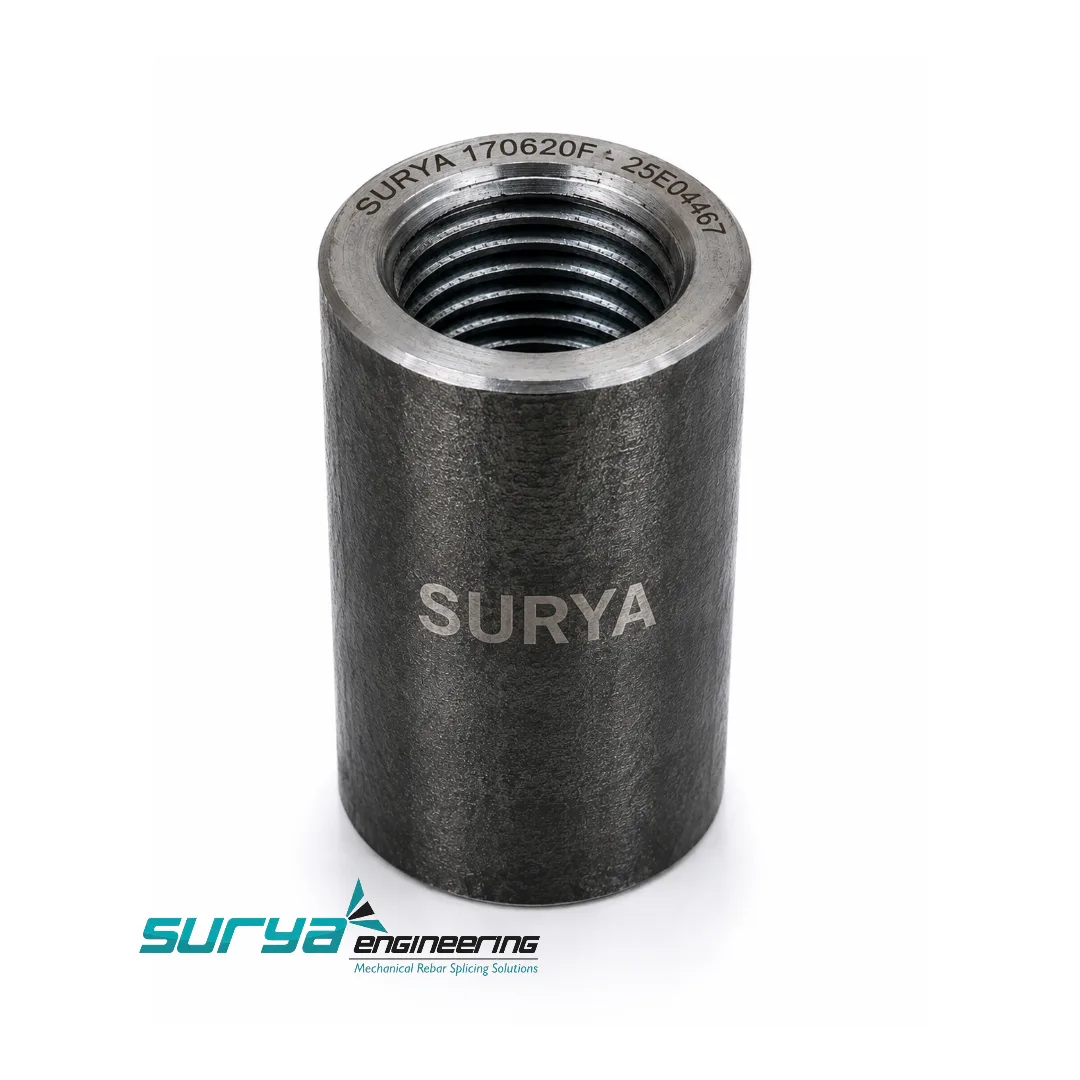
High-Strength Mechanical Splicing System for TMT Bars
Parallel roll thread coupler for 16mm to 40mm TMT bars. Made with thread rolling process - no metal cutting, so bar strength stays full. IS 16172 certified.
Product Media
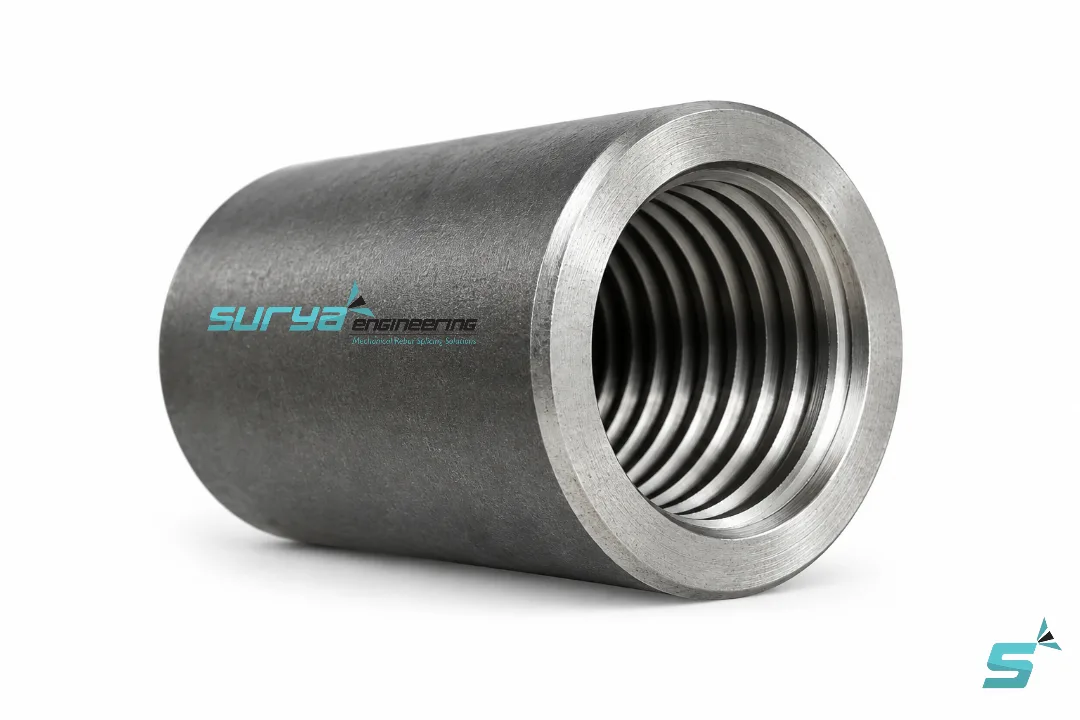
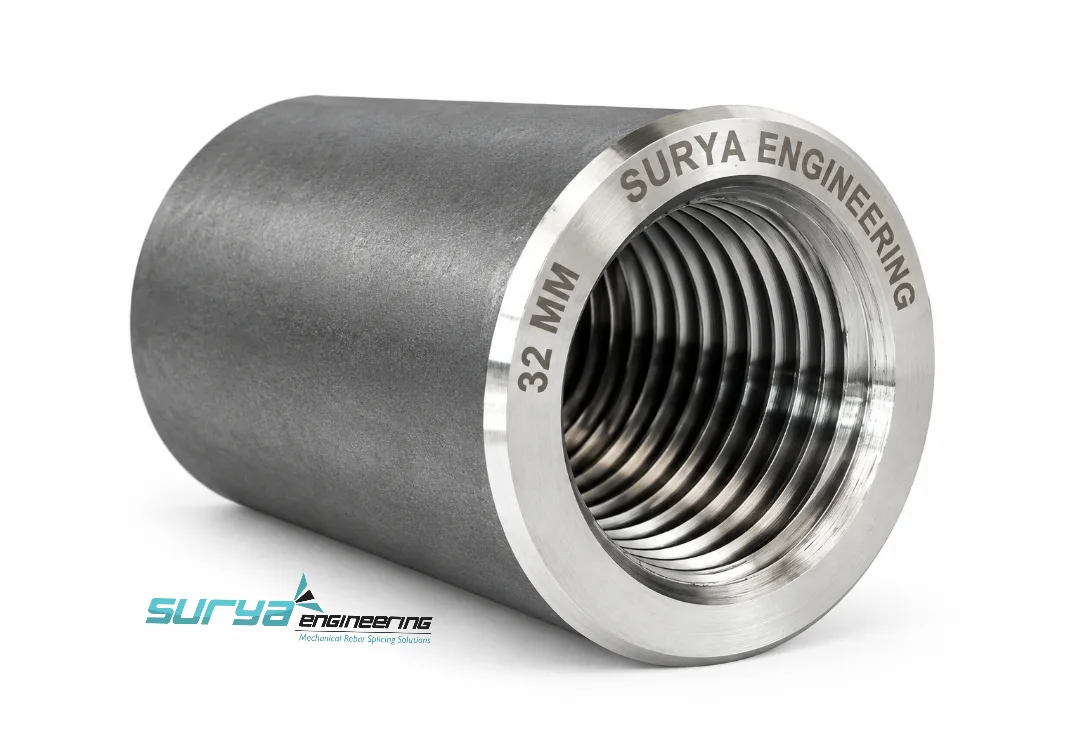
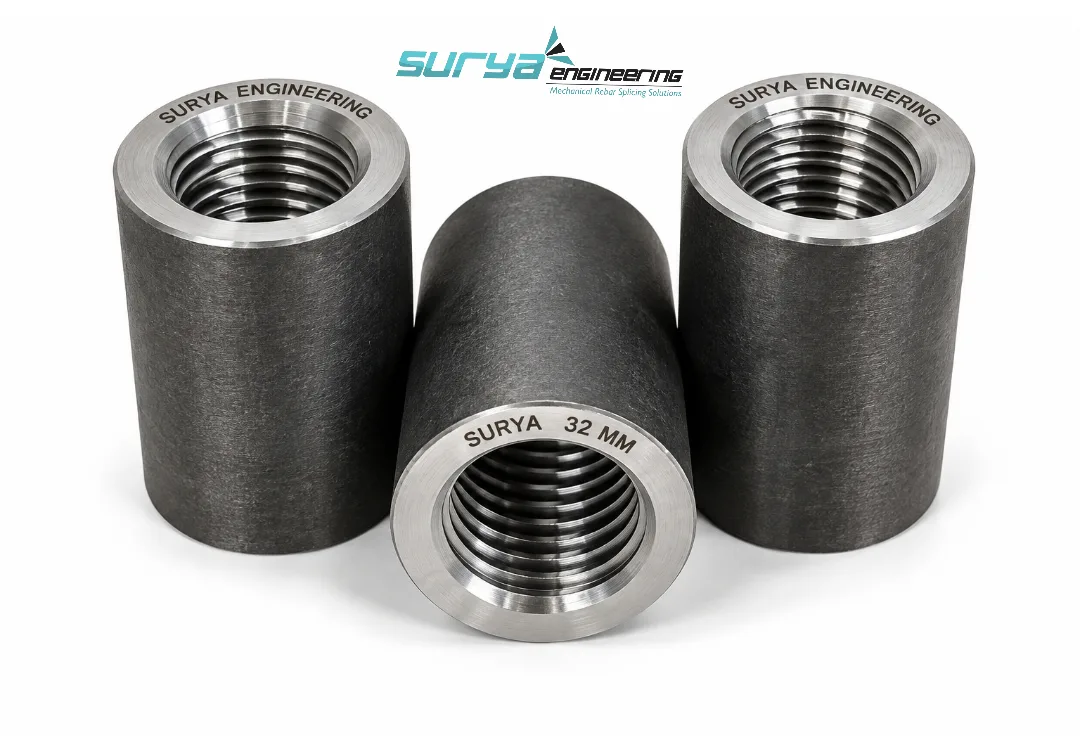
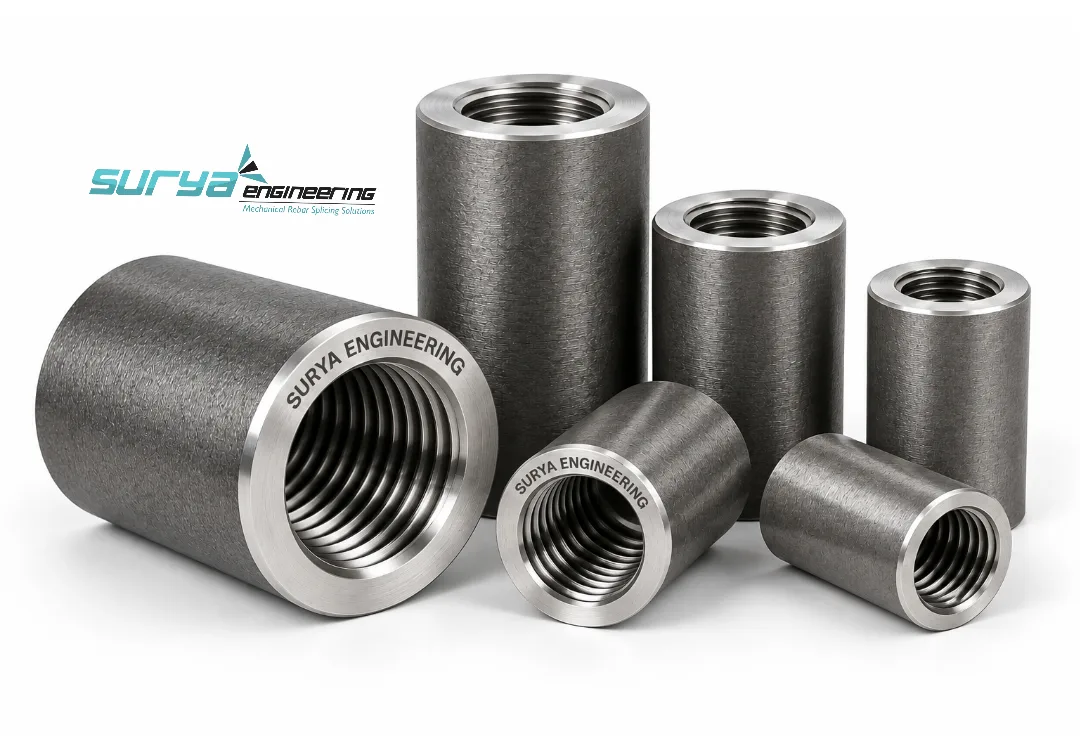
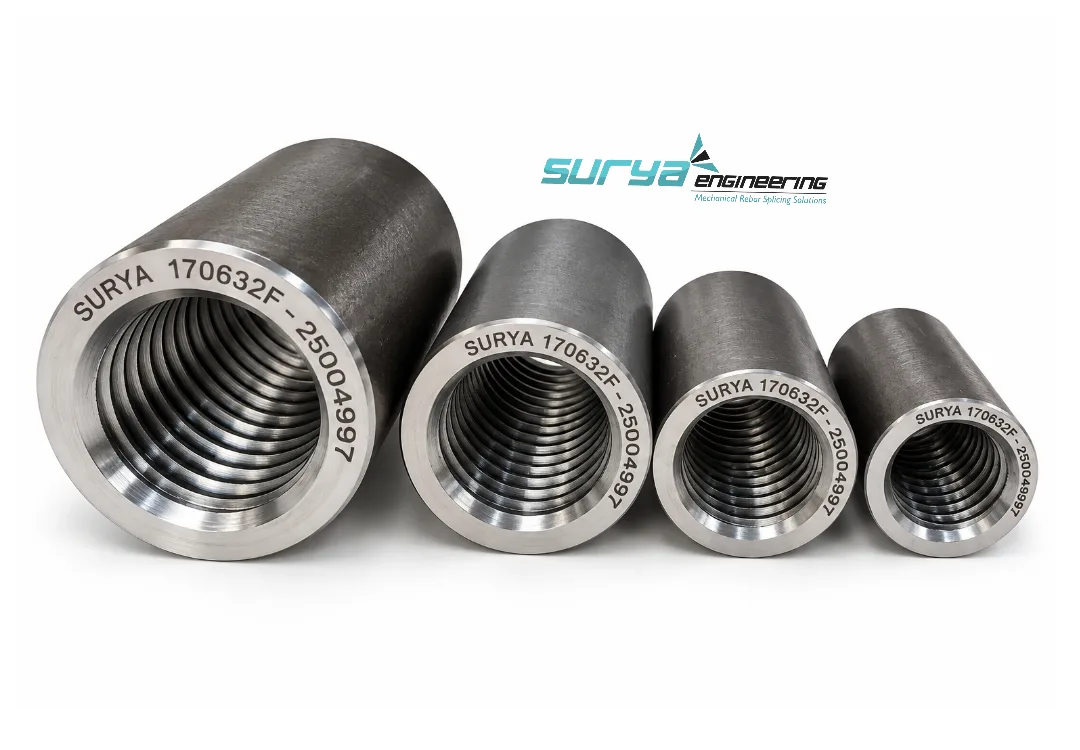
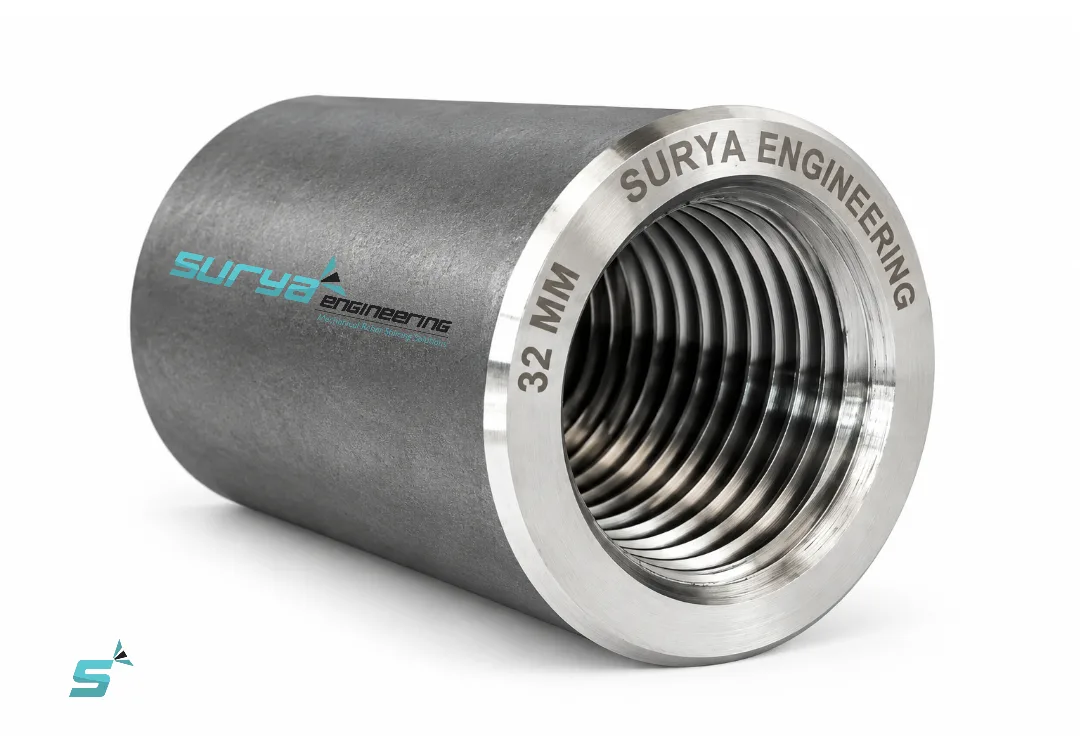
The Parallel Rebar Roll Thread Coupler is a mechanical reinforcement bar connection used to join rebar end-to-end. The connection is created using matching parallel threads, providing a practical alternative to conventional lap splicing in applications where a mechanical connection is preferred.
It is designed for reinforced concrete construction where reinforcement continuity, installation efficiency, and controlled bar connections are important. The coupler can be supplied for different reinforcement bar diameters according to project requirements.
In conventional reinforcement work, bars are often connected using lap splicing. A mechanical coupler provides another connection method by mechanically joining the reinforcement bars. This can be particularly relevant in heavily reinforced sections where space is limited or where the project specification calls for mechanical connections.
The final coupler type and size should always be selected according to the rebar diameter, connection requirements, structural drawings and applicable project specifications.
Different configurations are available to accommodate various structural conditions and reinforcement layouts. This flexibility ensures adaptability across complex structural requirements.
| Type | Description |
|---|---|
| Standard Coupler | Used where both reinforcement bars can rotate during installation. |
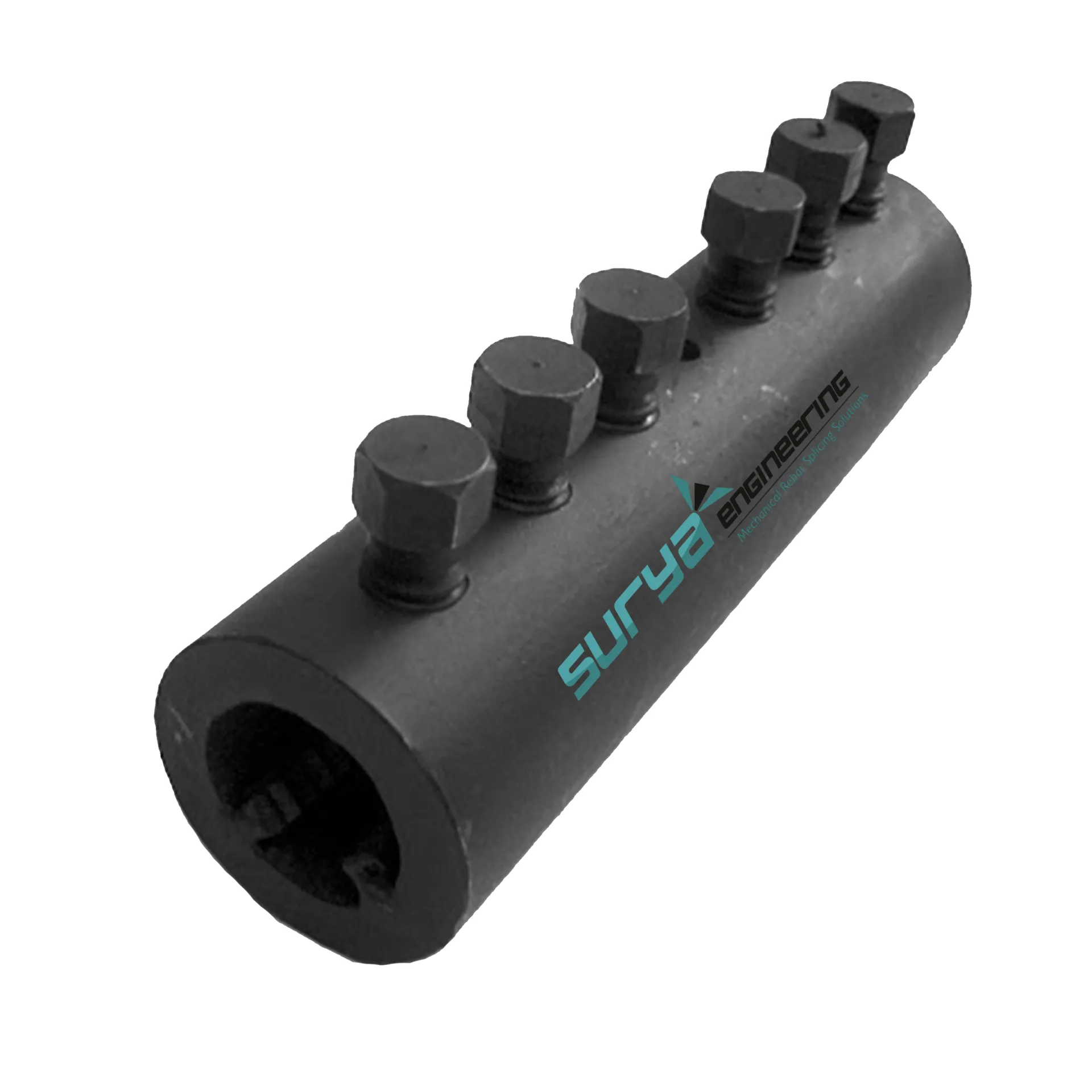
| Position Coupler | Used where one or both bars cannot rotate freely during connection. |
| Reducer Coupler | Used to connect reinforcement bars of different diameters. |
| Transition Coupler | Used for connecting bars with different grades or specifications where the product is designed and approved for that application. |
| Parameter | Details |
|---|---|
| Connection Type | Mechanical Rebar Splice |
| Thread Type | Parallel Thread |
| Thread Formation | Roll Threading / Threading Process |
| Coupler Thread | Internal Parallel Thread |
| Bar Thread | External Matching Thread |
| Connection | End-to-End Reinforcement Bar Connection |
| Welding Required | No |
| Chemical/Grout Connection | Not required for the threaded connection described on the source page |
| Installation | Threading + Mechanical Tightening |
This is particularly useful for buyers.
| Class | Meaning under IS 16172:2023 |
|---|---|
| Class H | Couplers meeting both low-cycle fatigue and high-cycle fatigue requirements |
| Class L | Couplers meeting the low-cycle fatigue requirement but not the high-cycle fatigue requirement |
Mechanical coupling can reduce the need for conventional lap arrangements where the project design permits mechanical splicing.
A compact mechanical connection can help reduce congestion in heavily reinforced sections such as beams, columns and shear walls.
The connection is made through threaded engagement rather than welding or chemical bonding, which can simplify installation for compatible applications.
Thread engagement and dimensional checks can be incorporated into the quality-control process, helping inspection teams verify the connection during installation and production.
Where mechanical splicing replaces a specified lap splice, the overall reinforcement arrangement may use less steel associated with overlapping bars.
For the source page, the listed performance/testing areas include:
| Test | Purpose |
|---|---|
| Static Tensile Test | Evaluates tensile performance of the connection |
| Slip Test | Measures movement between the reinforcement and coupler under load |
| 100 Cycle Test | Evaluates performance under repeated loading |
| Fatigue Testing | Assesses performance under cyclic stress |
Go Gauge: Should enter the coupler correctly within the specified dimensional tolerance.
No-Go Gauge: Should not pass beyond the specified limit.
| Specification | 12 mm | 16 mm | 20 mm | 25 mm | 32 mm | 40 mm |
|---|---|---|---|---|---|---|
| Bar Diameter (mm) | 12 | 16 | 20 | 25 | 32 | 40 |
| External Diameter (mm) | 20 | 25 | 32 | 40 | 50 | 62 |
| Coupler Length (mm) | 32 | 40 | 50 | 60 | 80 | 90 |
| Thread Size (ID) | 10.5 | 14.5 | 18.5 | 23.5 | 30.5 | 38.5 |
| Thread Pitch (mm) | 2.0 | 2.5 | 2.5 | 3.0 | 3.0 | 3.5 |
| Weight (kg) | 0.05 | 0.09 | 0.18 | 0.32 | 0.75 | 1.20 |
This is the compact table I recommend showing near the top of the product page:
| Specification | Parallel Rebar Roll Thread Coupler |
|---|---|
| Product Type | Mechanical Rebar Coupler |
| Connection Type | Parallel Threaded Mechanical Splice |
| Thread | Internal Parallel Thread |
| Bar Preparation | External Threading / Roll Threading |
| Application | End-to-End Rebar Connection |
| Available Sizes | 12 mm–40 mm* |
| Compatible Grades | Fe500, Fe550, Fe500D* |
| Coupler Types | Standard, Position, Reducer, Transition |
| Installation | Threaded Mechanical Connection |
| Welding | Not required |
| Chemical/Grout | Not required for the described threaded connection |
| Applications | RCC, Buildings, Bridges, Metro, Industrial & Infrastructure |
| Testing | Tensile, Slip, Cycle & Fatigue Testing, as applicable |
| Quality Check | Go/No-Go Gauge & Identification/Traceability, where applicable |
Surya Engineering manufactures and supplies mechanical reinforcement connection products for construction and infrastructure requirements. The company website presents its parallel threaded system as a mechanical splicing solution and states that the business was established in 2012.
For project enquiries, buyers should share the rebar diameter, steel grade, coupler type, quantity, project application, required standard/specification and delivery location so the appropriate product can be confirmed.
1. What is Parallel Rebar Roll Thread Coupler?
It is a mechanical coupler to join two TMT bars end-to-end. In this type, threads on the bar are made by rolling process, not by cutting. So the bar keeps its full strength. It is the most advanced coupler for RCC work.
2. What is the difference between Roll Thread and Cut Thread Coupler?
In cut thread, metal is removed from the bar which weakens it. In roll thread, metal is pressed and formed, so grain flow stays continuous. Roll thread is 20-30% stronger and has better fatigue life. That is why big projects prefer roll thread.
3. Which sizes are available?
We have ready stock for 16mm, 20mm, 25mm, 28mm, 32mm, 36mm and 40mm. We also make transition coupler to join two different diameters like 20mm to 25mm.
4. Is your coupler IS certified?
Yes. All our roll thread couplers are made as per IS 16172 and IS 1786. We provide lab test certificate showing bar-break failure - meaning bar breaks outside the coupler, not at the joint.
5. Is it better than lapping?
Yes, much better. Lapping wastes 30% steel and creates congestion in columns and beams. Roll thread coupler saves steel, gives 100% load transfer, speeds up work and makes concreting easy.
6. How to install it on site?
You need a roll thread machine to make parallel threads on bar ends. Then just screw the bar into the coupler by hand or with a wrench. It takes less than 1 minute. No welding needed.
7. Do you provide threading machine?
Yes. Surya Engineering provides roll thread machines on sale and rent, with operator training and site support in Mumbai and all over India.
8. What is the price of Parallel Rebar Roll Thread Coupler?
Price depends on diameter and quantity. Because steel rates change daily, we give best factory price as per your requirement. Send us your dia and quantity for same-day quote.
9. Where do you deliver?
We manufacture in Bhayandar, Mumbai and deliver pan-India - Pune, Nagpur, Nashik, Gujarat, Delhi, Bangalore, Hyderabad and all Maharashtra.
Technical Details
Where It's Used
We manufacture to order. Contact our team with your requirements and we'll provide a tailored quote.
Customer Reviews
No reviews yet — be the first to share your experience with this product.
Explore similar engineering products from Surya Engineering.