Taper Threaded Mechanical Connection for Reinforcement Bars
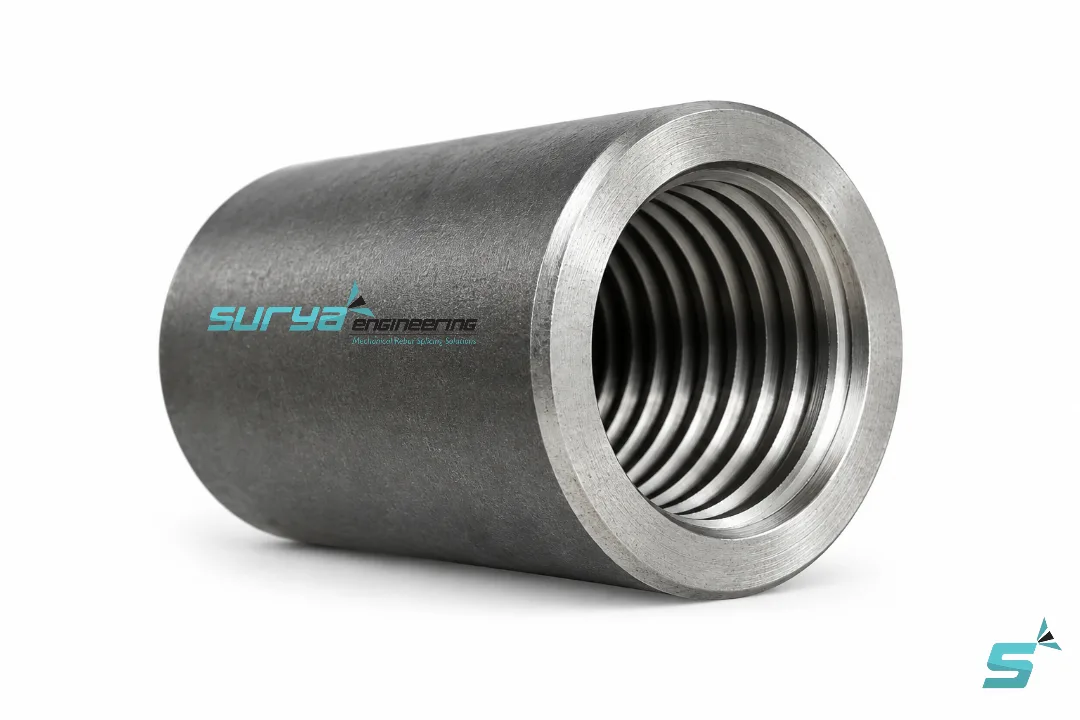
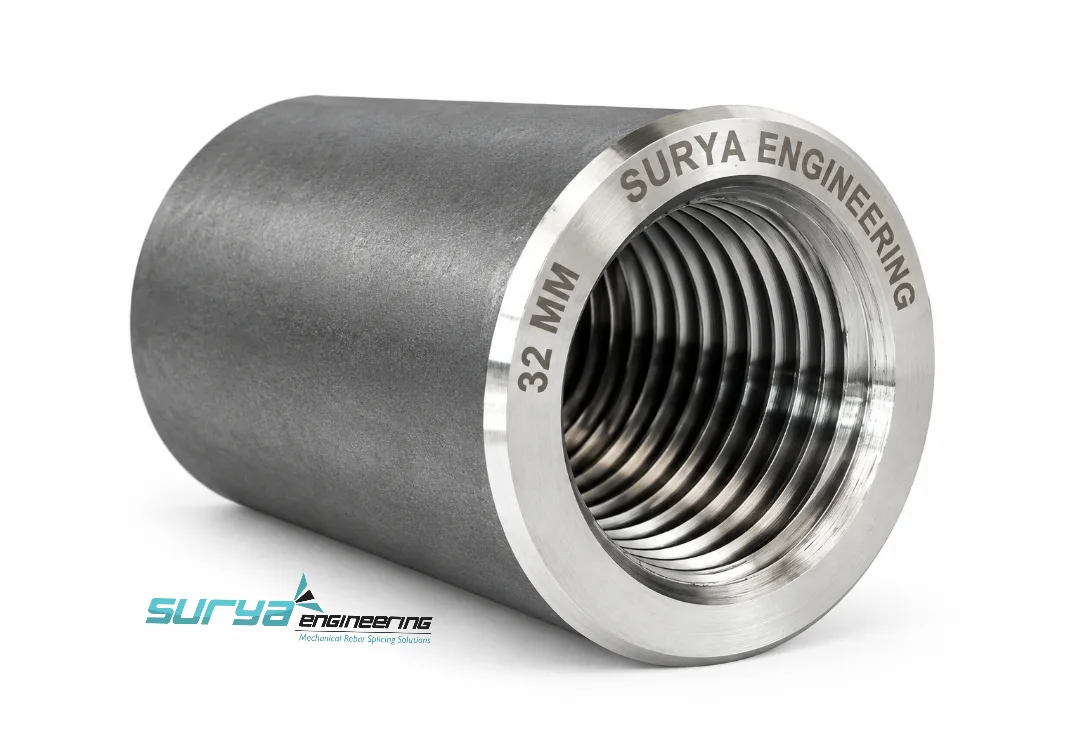
Taper Threaded Rebar Coupler is a mechanical connection system for joining reinforcement bars end-to-end using matching tapered threads. It is suitable for RCC construction, structural works and infrastructure projects.
Product Media
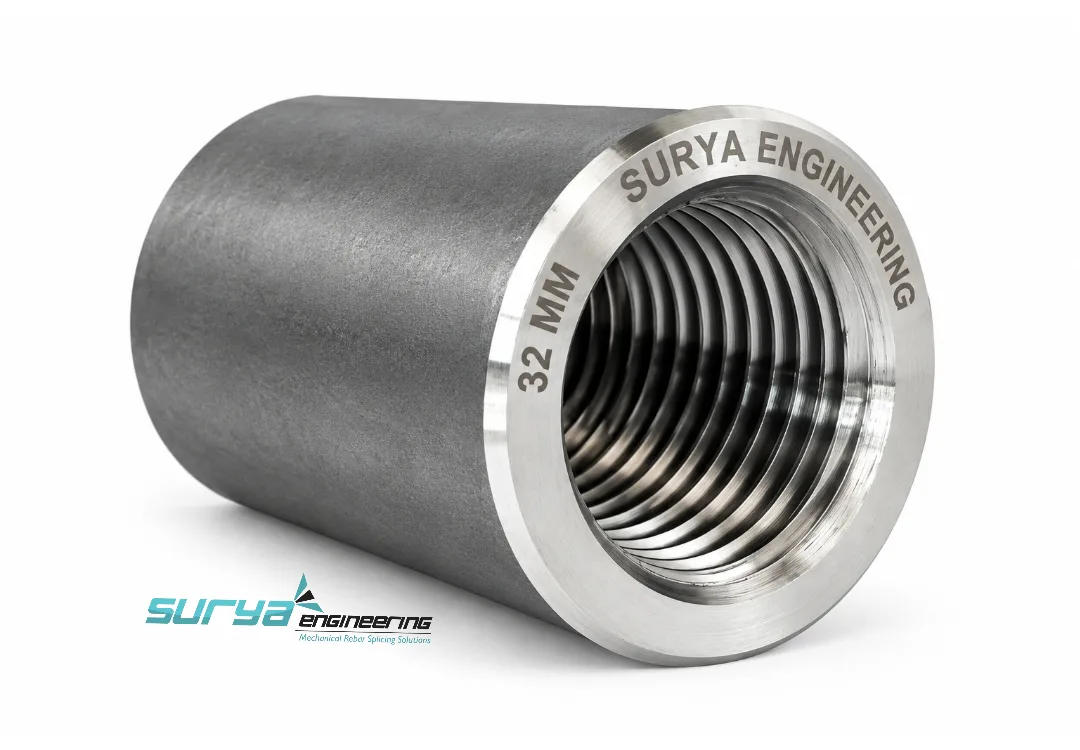
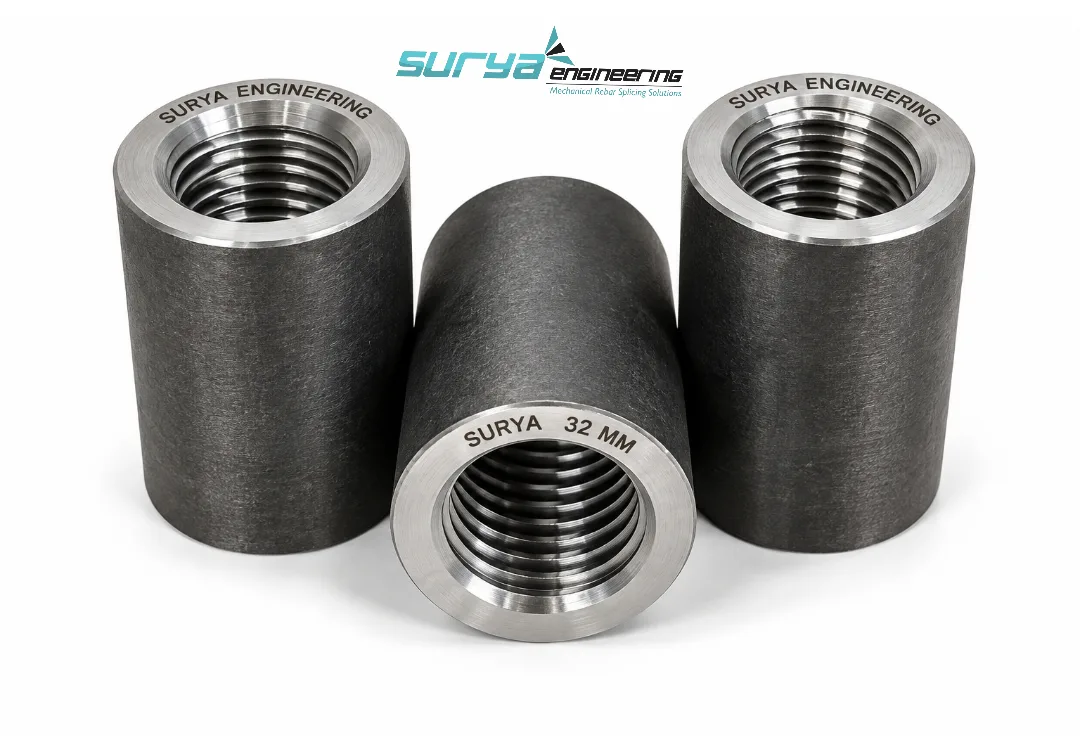
The Taper Threaded Rebar Coupler is a mechanical reinforcement bar connection designed to join compatible rebars end-to-end using a tapered threaded connection. It provides an alternative to conventional lap splicing where mechanical reinforcement splicing is specified by the project design.
In a tapered threaded system, the reinforcement bar ends are prepared with matching tapered threads that engage with the internal thread of the coupler. The connection is assembled by engaging and tightening the threaded components according to the approved product and installation procedure.
| Thread Type | Tapered Thread |
| Coupler Thread | Internal Tapered Thread |
| Bar Thread | Matching External Tapered Thread |
| Connection | Mechanical End-to-End Rebar Splice |
| Thread Dimensions | As per approved product drawing |
| Installation | As per manufacturer's approved procedure |
Don't invent the dimensions for this product until you have the actual Taper Thread Coupler drawing.
| Specification | Details |
|---|---|
| Product Type | Mechanical Rebar Coupler |
| Connection Type | Taper Threaded Mechanical Splice |
| Thread Type | Tapered Thread |
| Coupler Thread | Internal Tapered Thread |
| Bar Thread | Matching External Tapered Thread |
| Rebar Diameter | 12,16, 20, 25, 32, 40 mm |
| Standard | IS 16172:2023, where applicable |
| Rebar Standard | IS 1786:2008, where applicable |
IS 16172:2023 is the Indian Standard for reinforcement couplers for mechanical splices of steel bars in concrete. BIS identifies Tapered Threaded Couplers as one of the reinforcement-coupler types covered under the standard. The standard also defines Class H and Class L according to the applicable fatigue requirements.
The IS 16172:2023 framework includes performance requirements and tests such as tensile strength, disengagement testing for threaded couplers, percentage elongation, slip, cyclic tensile testing and fatigue testing. The tests applicable to a particular coupler depend on its type and classification.
| Tensile Strength Test | Evaluates tensile performance of the mechanical splice. |
| Disengagement Test | Relevant to threaded coupler connections. |
| Percentage Elongation | Evaluates deformation characteristics of the connection. |
| Slip Test | Evaluates relative movement at the connection. |
| Cyclic Tensile Test | Evaluates performance under repeated tensile loading. |
| Fatigue Testing | Used for applicable coupler classification. |
A mechanical rebar coupler provides an alternative to conventional lap splicing where mechanical reinforcement connections are specified. Depending on the structural arrangement, mechanical splicing can help manage reinforcement congestion and provide a defined connection between adjoining reinforcement bars.
The correct coupler should always be selected according to the rebar diameter, steel grade, coupler design, qualification/testing and project requirements.
Surya Engineering manufactures and supplies rebar coupling products for construction and infrastructure requirements. Buyers can share their rebar size, grade, quantity, application and project specifications to confirm the appropriate taper threaded coupler configuration.
Rebar couplers are generally classified by their manufacturing process and structural application. The most common types include:
Parallel Threaded Couplers: Standard mechanical splices where bars are threaded and joined with a sleeve.
Taper Threaded Couplers: Designed for rapid installation, locking securely with minimal torque.
Cold Forged Couplers: Work-hardened at room temperature for superior fatigue resistance and strength.
Welded Couplers: Bars are welded directly to the coupler.
Grout-Filled Couplers: Used primarily in precast construction, where bars are inserted and secured with high-strength grout.
Functionally, they are also categorized as Bar Break (Standard), Reducer (Transition), Positioner, and Anchor couplers.
In the construction industry, "Type 2" refers to mechanical splices specifically engineered for dynamic loading, seismic zones, and high-fatigue applications. While Type 1 couplers are designed for static loading (gravity loads), Type 2 couplers must undergo rigorous cyclic testing to ensure they can withstand the stresses of earthquakes, heavy traffic vibration, or wind loads without failing. Under the latest Indian Standard IS 16172:2023, these are classified as Class H (High Fatigue) couplers, having passed 2 million high-cycle and 10,000 low-cycle fatigue tests.
The price of a 12mm TMT bar coupler varies based on the manufacturing process, the grade of steel used, the required standard (e.g., IS 16172:2023), and the quantity ordered. Because steel market rates fluctuate, we recommend contacting our sales team for a current, project-specific quote. Surya Engineering offers highly competitive bulk pricing and customized quotes for all our mechanical splicing solutions.
Surya Engineering offers a comprehensive range of mechanical rebar couplers to suit various structural requirements. Our standard sizes typically range from 12mm to 40mm, including popular sizes like 12mm, 16mm, 20mm, 25mm, 32mm, and 40mm. We also manufacture custom sizes, reducer couplers for connecting different diameters, and specialized couplers to meet specific project specifications and international standards.
Technical Details
Where It's Used
We manufacture to order. Contact our team with your requirements and we'll provide a tailored quote.
Customer Reviews
No reviews yet — be the first to share your experience with this product.
Explore similar engineering products from Surya Engineering.