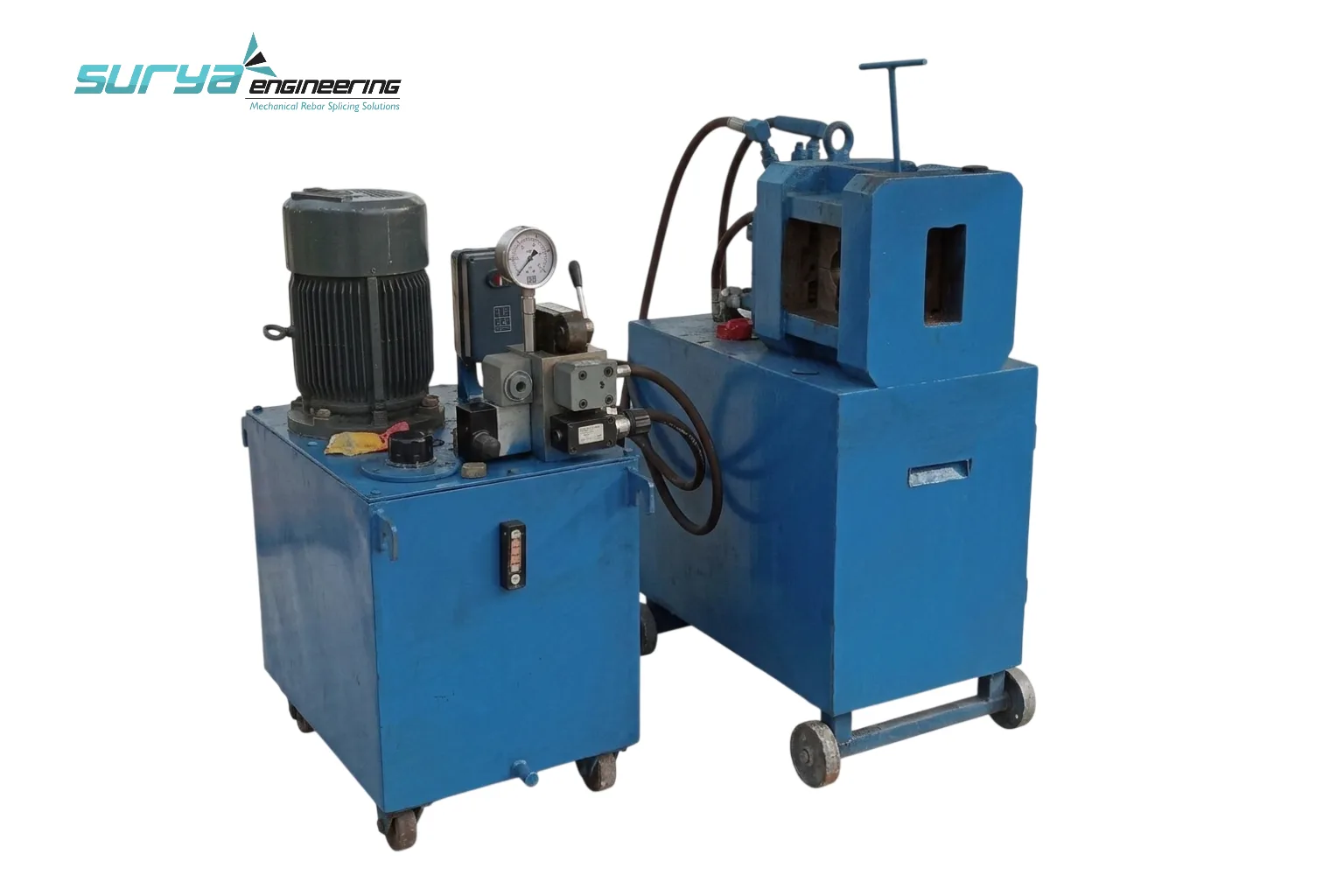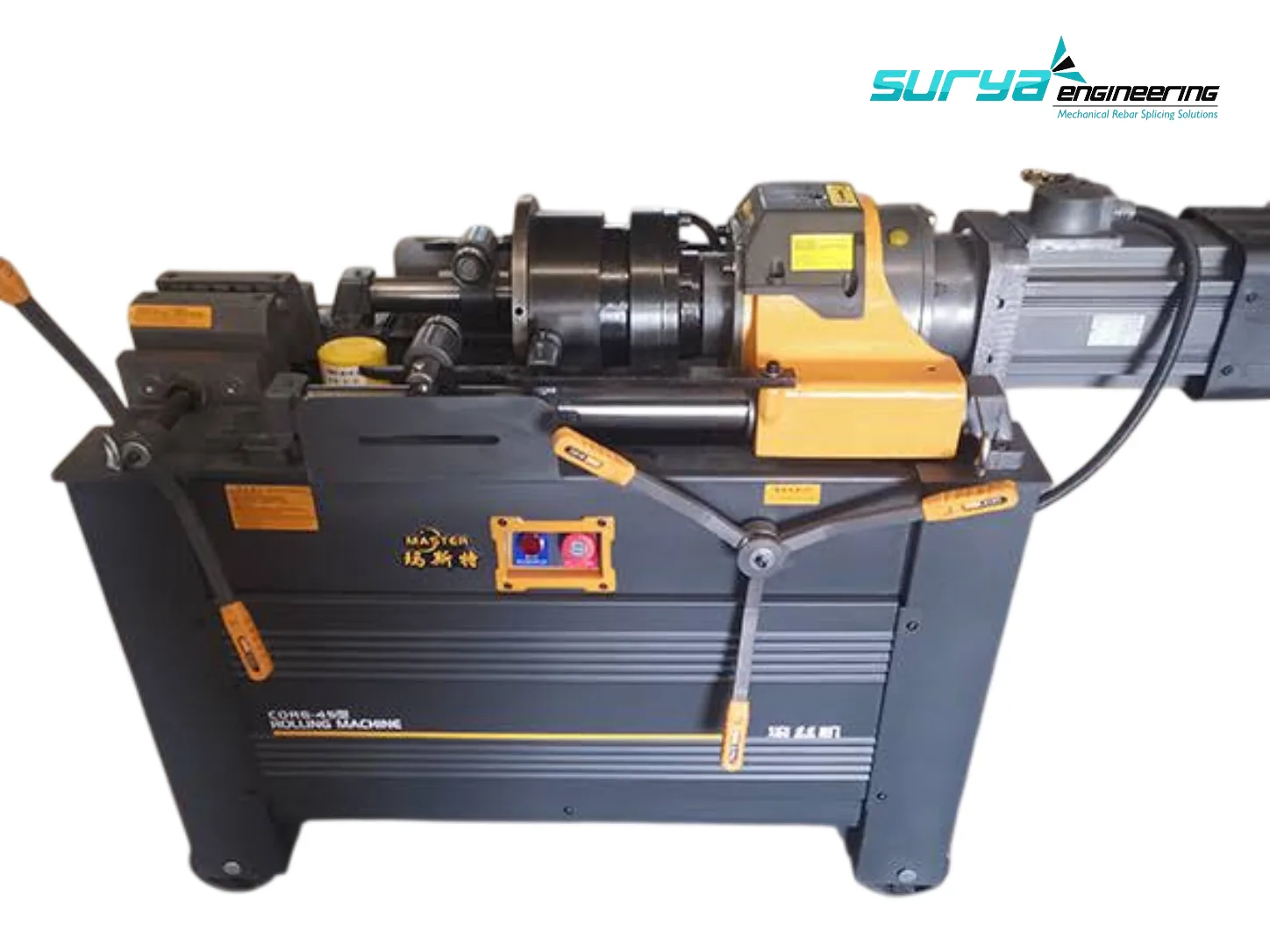
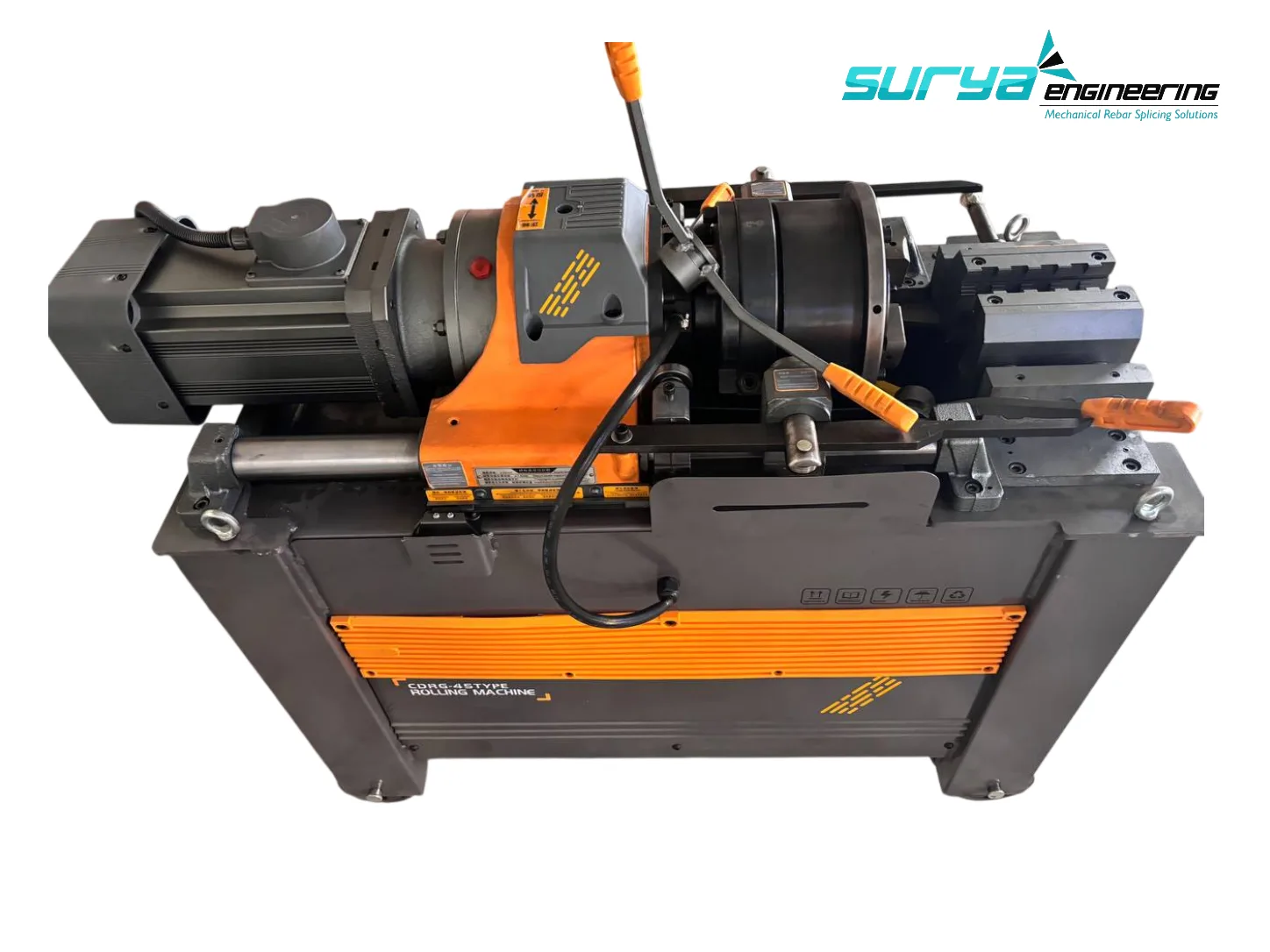
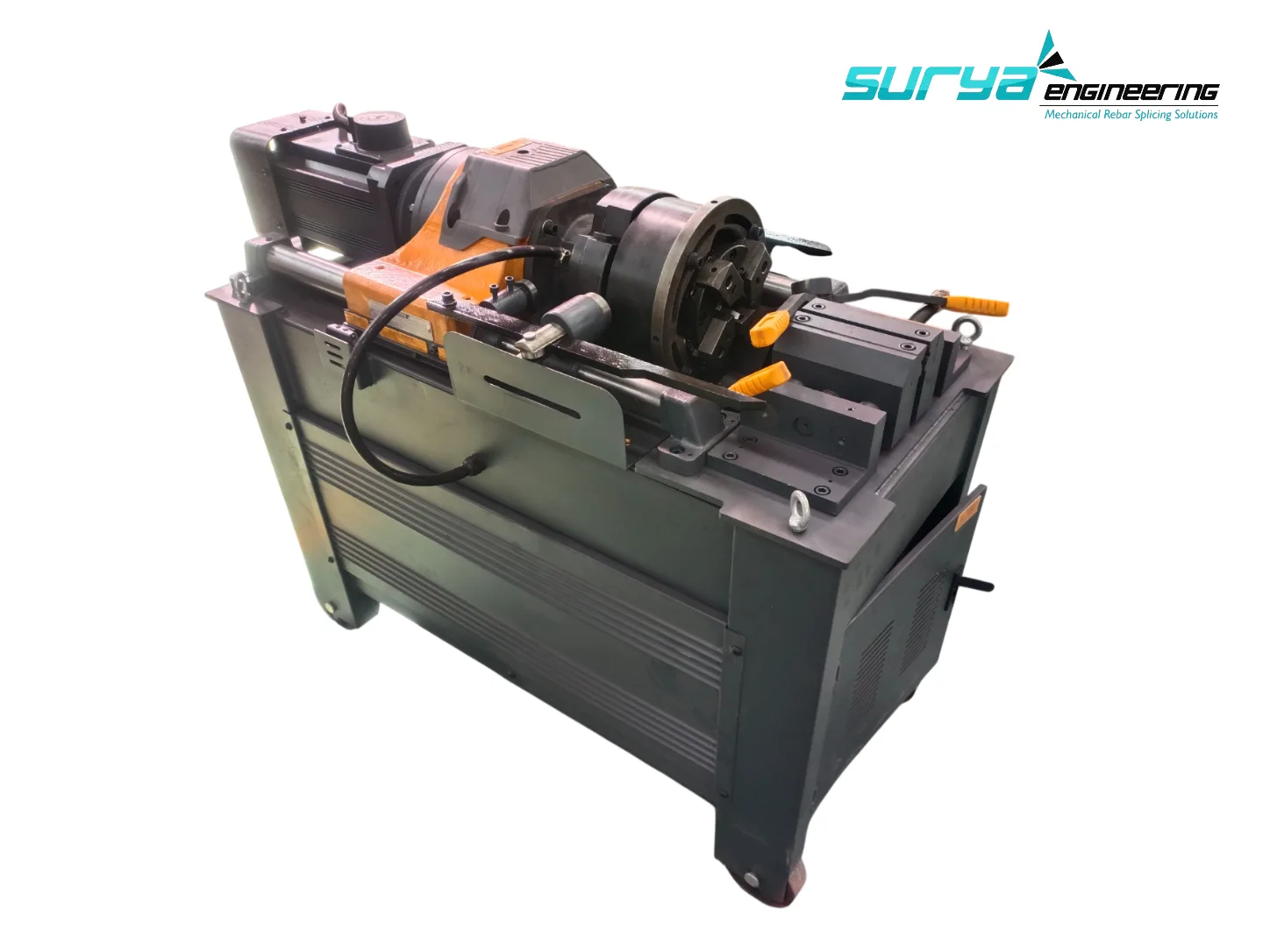
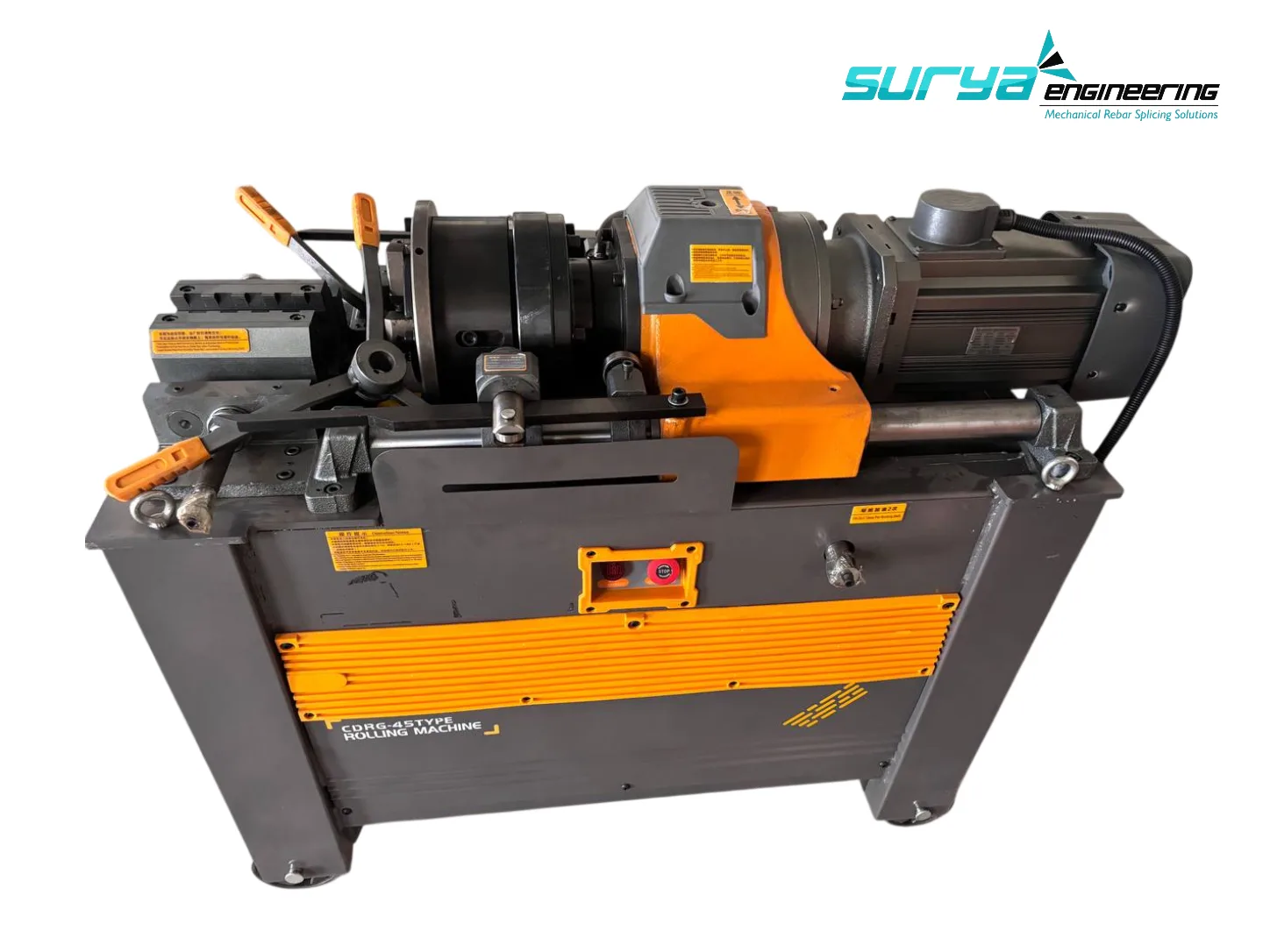
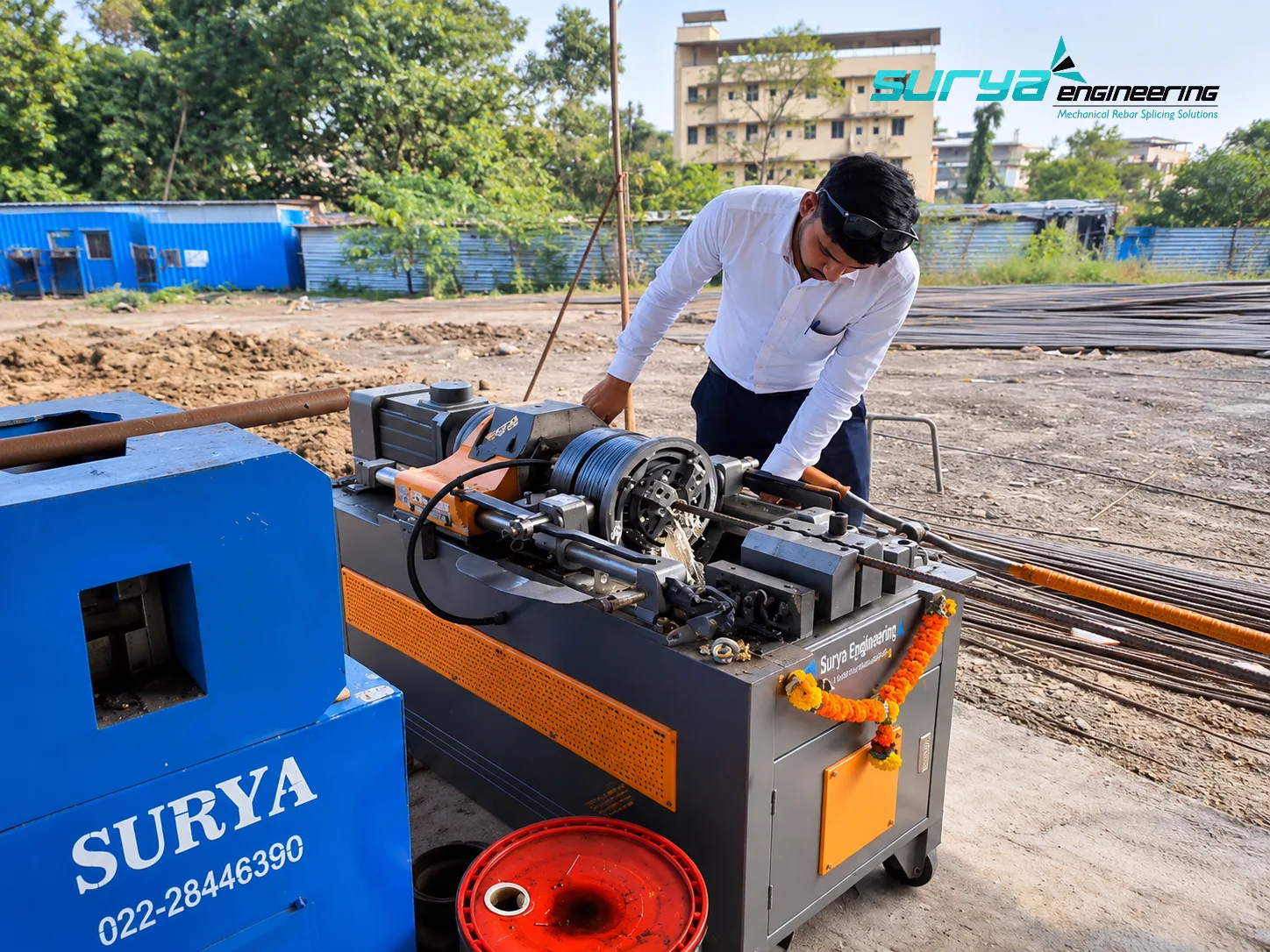
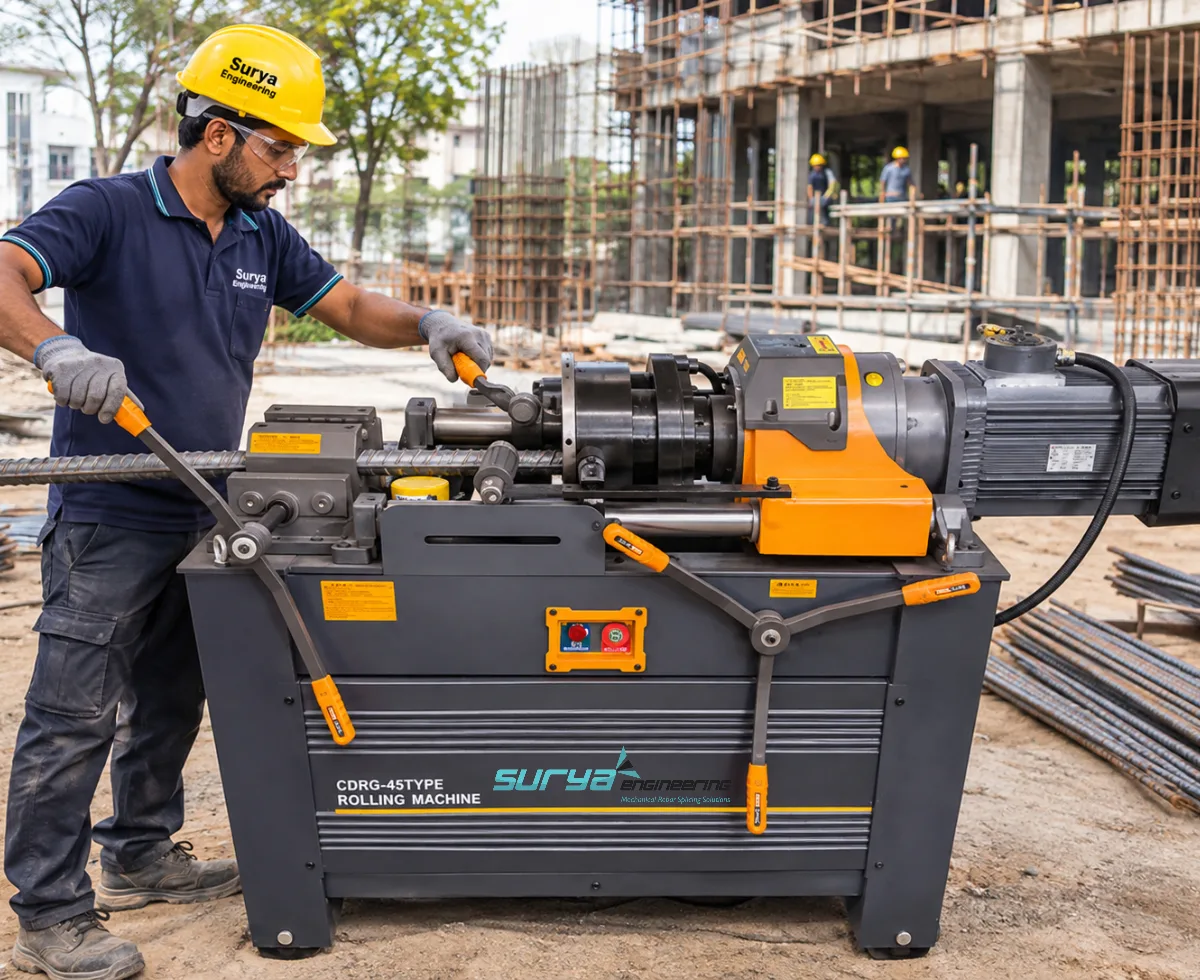
Rebar Roll threading machines for 16 mm to 40 mm rebar
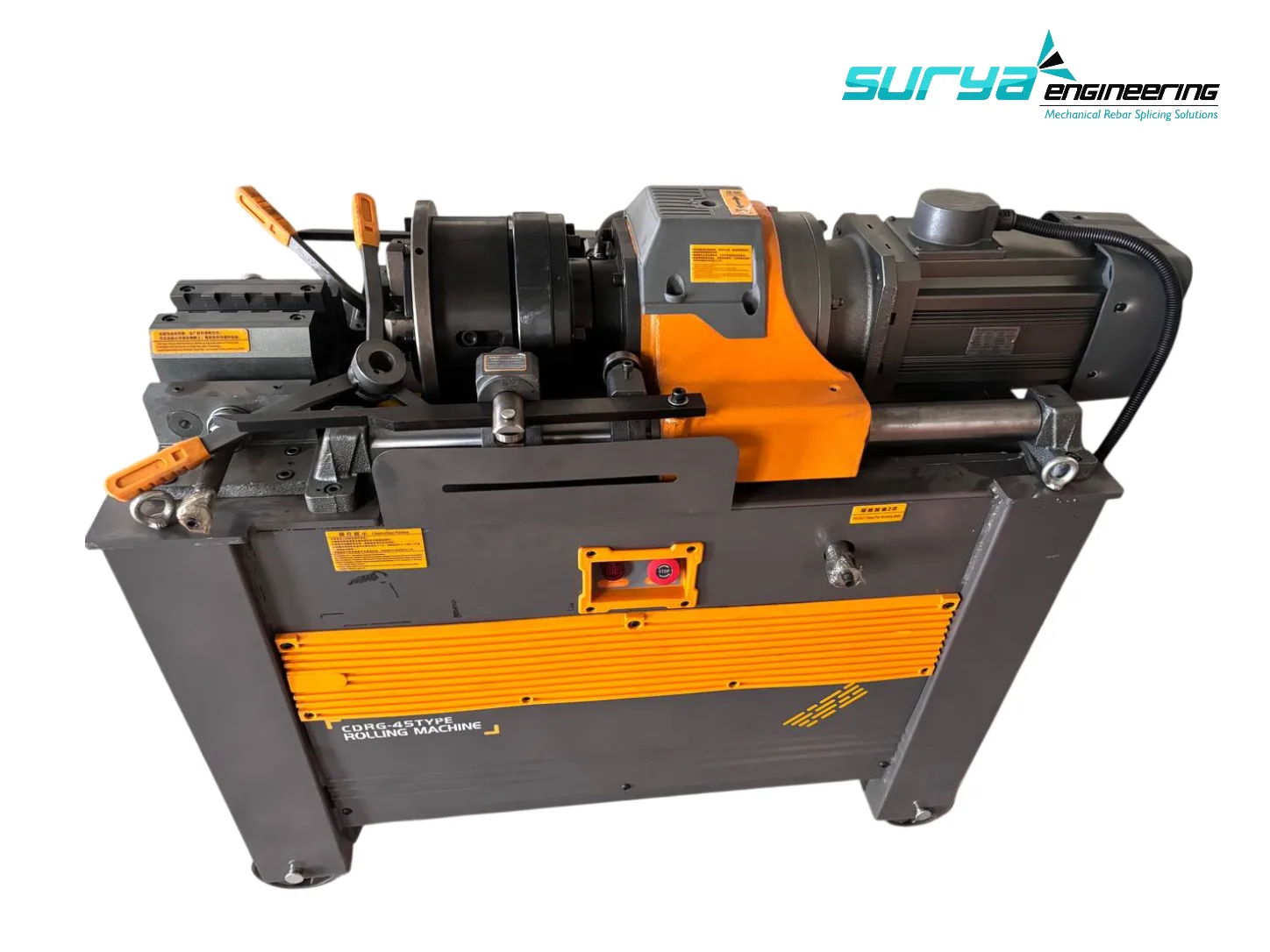
Rebar Roll threading machines for 16 mm to 40 mm rebar. Choose the CDRG-45 (5 HP, 100 mm) or SE-50 (7.5 HP, 120 mm) for coupler joints.
Product Media
The roll threading machine is one step in a short production line. Before you order, count the other steps, because the machine only pays off when the saw, the gauges, the proof load rig and your operators are ready for it.
Surya Engineering, a rebar roll threading machine manufacturer in Mumbai, supplies two models for bars from 16 mm to 40 mm: the CDRG-45 and the SE-50. This page walks through what you need to decide before you buy either one.
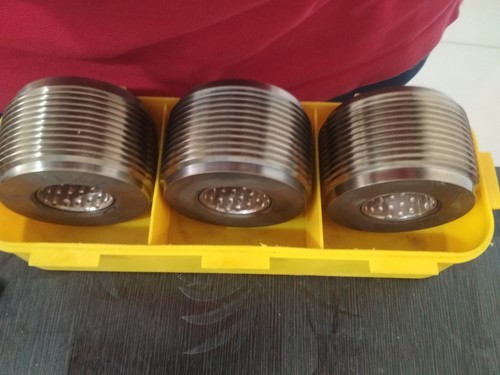
A Roll Threading Machine works by applying controlled pressure through specially designed rolling dies to form threads on the prepared reinforcement bar.
The general working process involves:
IS 16172:2023 lays out the minimum process for threading bars at site, and it doubles as a shopping list. Bar ends must be saw cut or square cut, so you need a saw, because disc cutting and gas cutting are banned. After threading, GO and NO GO gauges check the major diameter of parallel threads.
Then every threaded end takes a proof load of at least 80 percent of the bar's minimum specified yield strength, on a rig that punches its own mark on bars that pass. Plastic caps protect the threads afterwards.
So a quote for the threading machine alone leaves out a saw, a gauge set, a proof load rig and caps. Ask every seller what's included, and compare prices only between machines with the same bar range, thread length, motor and tooling.
Surya Engineering offers two Roll Threading Machine models:
| Specification | CDRG-45 | SE-50 |
|---|---|---|
| Bar Diameter | 16–40 mm | 16–40 mm |
| Motor Power | 5 HP | 7.5 HP |
| Machine Speed | 40–62 RPM | 62–80 RPM |
| Thread Pitch | 2.5 / 3.0 mm | 2.5 / 3.0 mm |
| Threading Length | 100 mm | 120 mm |
| Machine Weight | 380 kg | 450 kg |
A review of mechanical splices in STRUCTURE magazine gives an honest answer. Threading needs skilled operators and extra equipment, and the cost of couplers can cancel the saving over laps. The review also finds that the advantage of couplers grows with bar size.
In practice, couplers earn their place where there's no room for laps, where reinforcement is congested, where bars are large and where walls sit in seismic zones. If your bars are small and your sections roomy, lapping may still be cheaper.
Both models process 16 mm to 40 mm bars and list a thread pitch of 2.5 mm or 3.0 mm. Your coupler drawing decides the pitch, and the standard leaves thread length and depth to the coupler maker.
The CDRG-45 has a 5 HP motor running at 40 to 62 rpm, a threading length of 100 mm and a weight of 380 kg. The SE-50 has a 7.5 HP motor at 62 to 80 rpm, a threading length of 120 mm and a weight of 450 kg. Check the threading length against your coupler first, because the standard tests couplers with 15 percent of the total thread length outside the coupler, and that margin depends on consistent thread length.
Weight matters too, since a 380 kg or 450 kg machine needs a plan for unloading.
Settle the power supply and the unloading plan first. Then decide who will run the machine. The STRUCTURE review says threading may need skilled labour, so a short session with gauges on your own bars is worth arranging.
Plan for the finished bars too. Threaded ends need protection from corrosion before installation, which is what the caps are for, and cover shrinks at the splice because couplers are wider than the bar. Your detailer should allow for that.
Choose by thread length first. The CDRG-45 lists 100 mm and the SE-50 lists 120 mm. After that, compare motor power, speed and weight against the volume of bar ends you thread and the space you have.
Send your bar sizes, the pitch and thread length from your coupler drawing, your site supply and how many bar ends you thread a day.
If your coupler supplier has already named a machine in its test reports, start there and ask us which of the two matches it.
No. Roll threading forms threads through pressure, while thread cutting removes material.
Not necessarily. It depends on the selected coupler and threading system.
The listed models support 16–40 mm bars.
2.5 mm and 3.0 mm, subject to coupler requirements.
Select based on required thread length, production requirements and coupler specifications.
Technical Details
Where It's Used
We manufacture to order. Contact our team with your requirements and we'll provide a tailored quote.
Customer Reviews
No reviews yet — be the first to share your experience with this product.
Explore similar engineering products from Surya Engineering.