Parallel thread EN8D coupler for 12 mm to 40 mm bars
Surya Engineering manufactures hydraulic TMT Bar Cold Forging Machines for 16–40 mm reinforcement bars. Explore SE-32 and SE-40 models for rebar end upsetting before threading.
Product Media
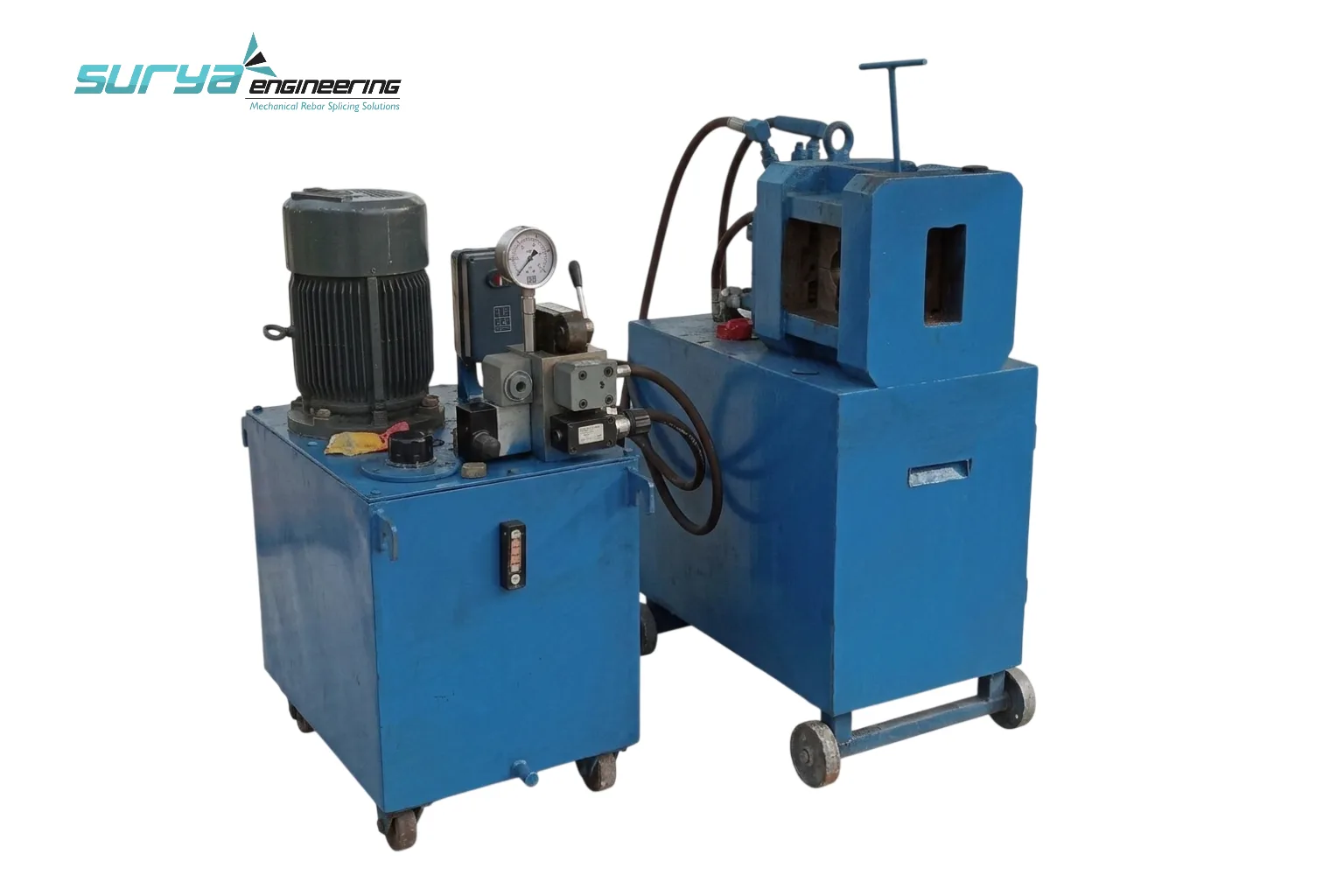
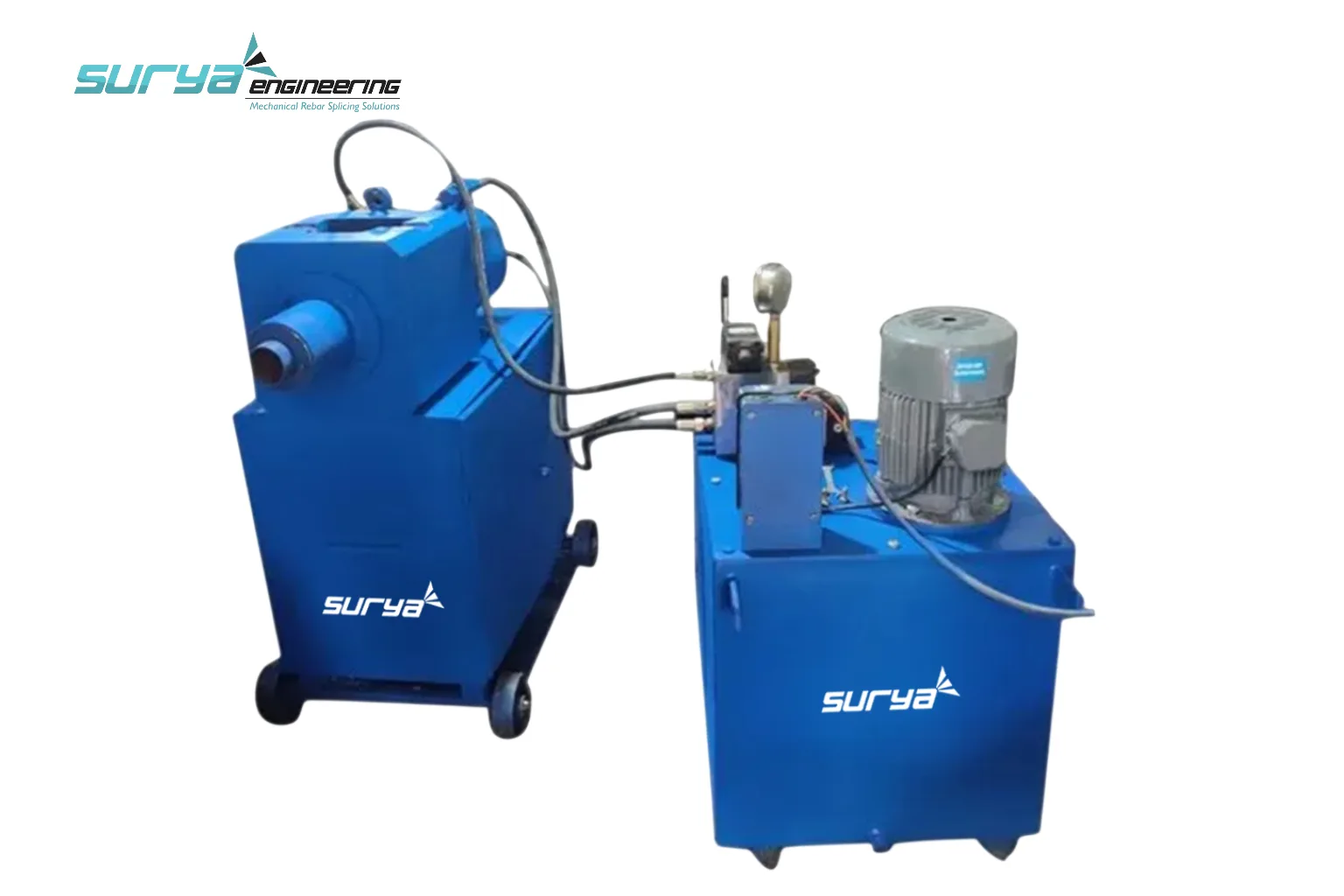
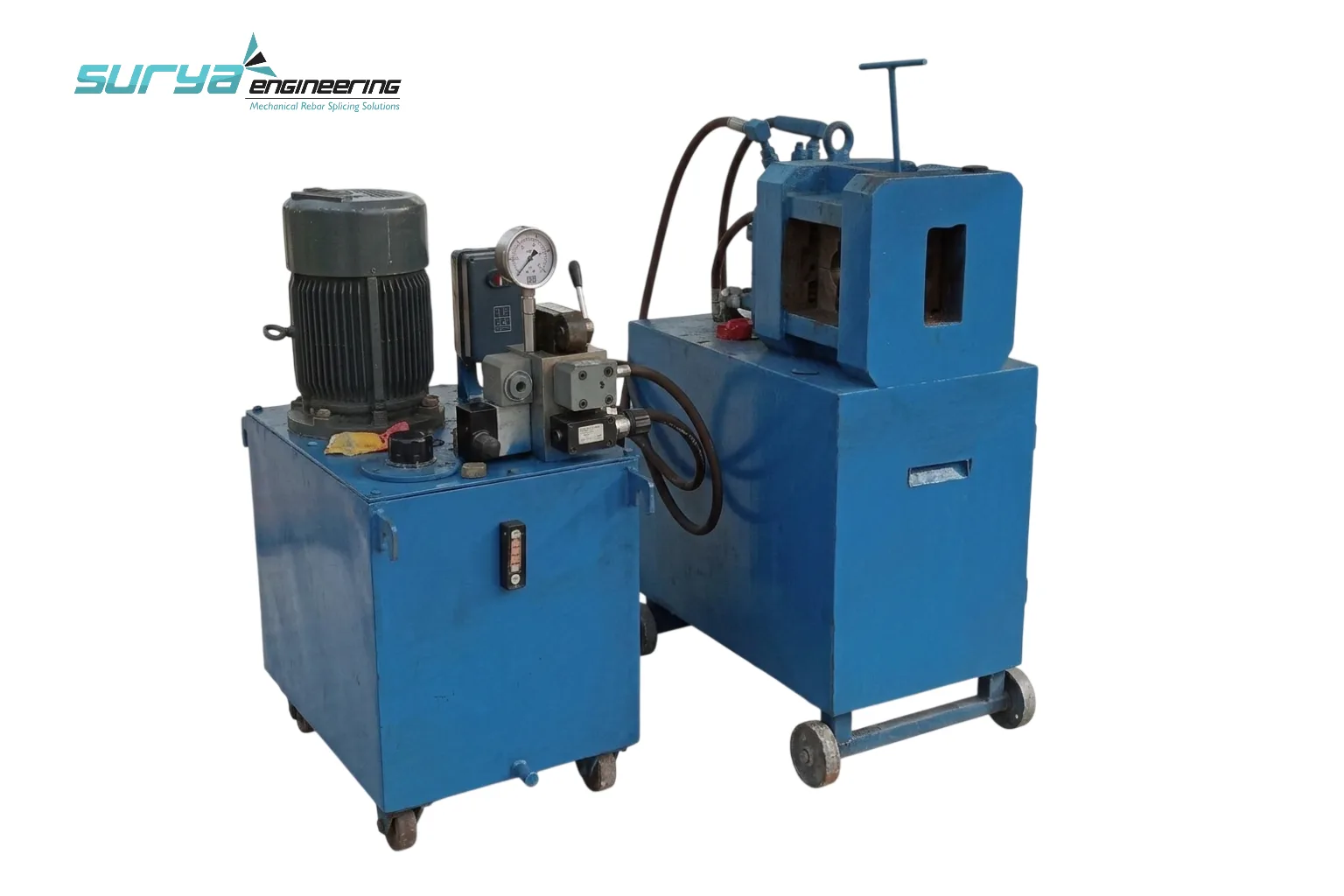
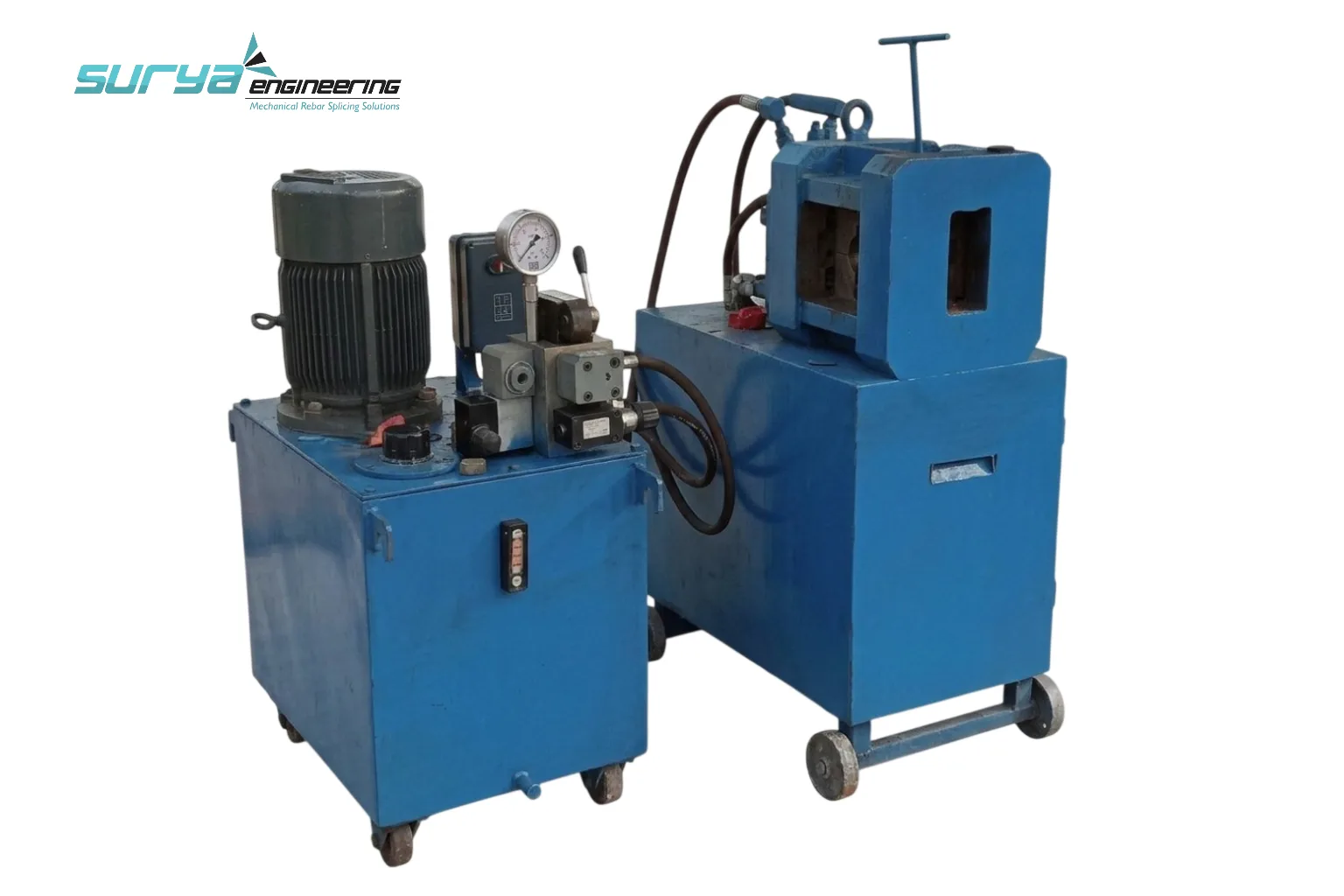
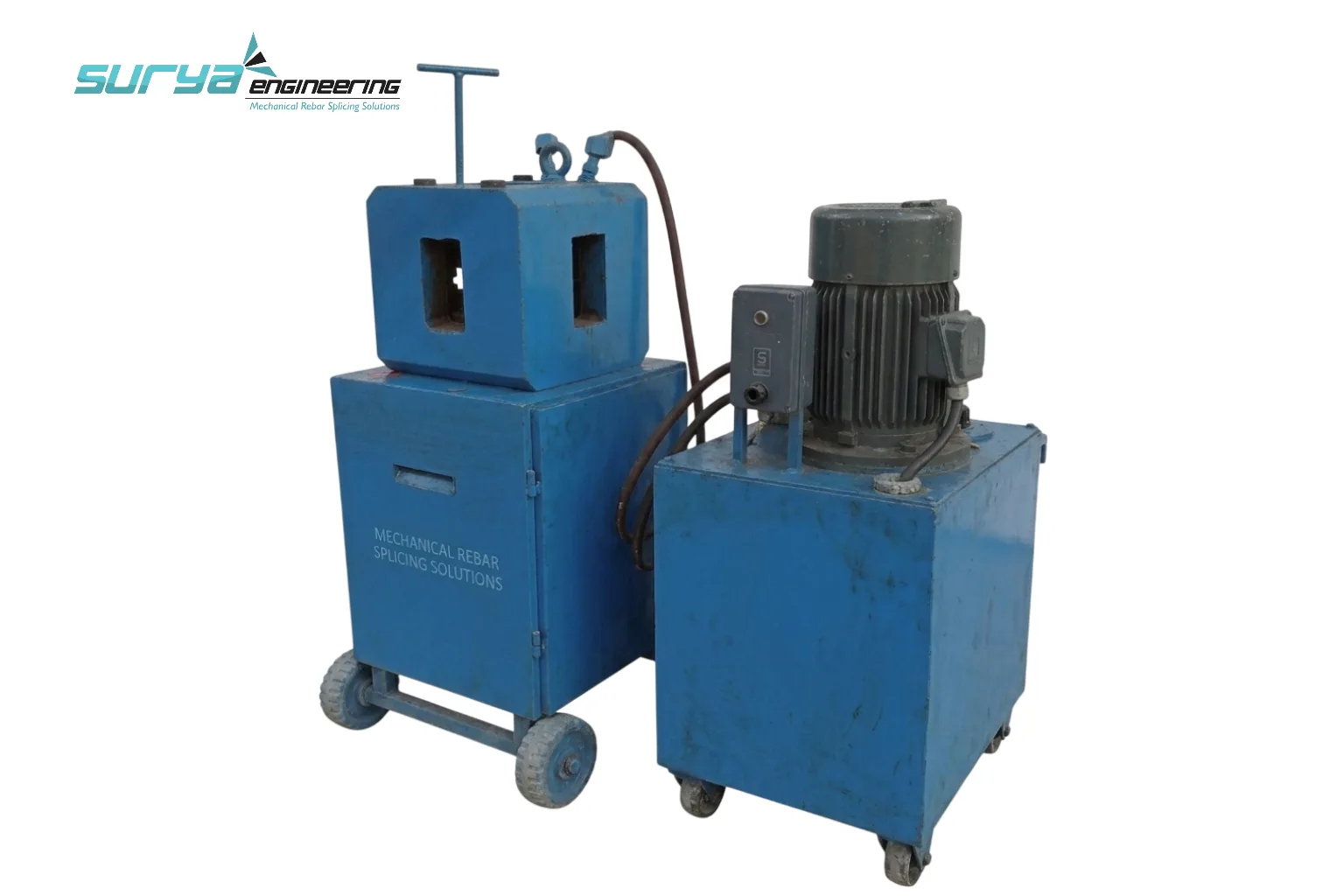
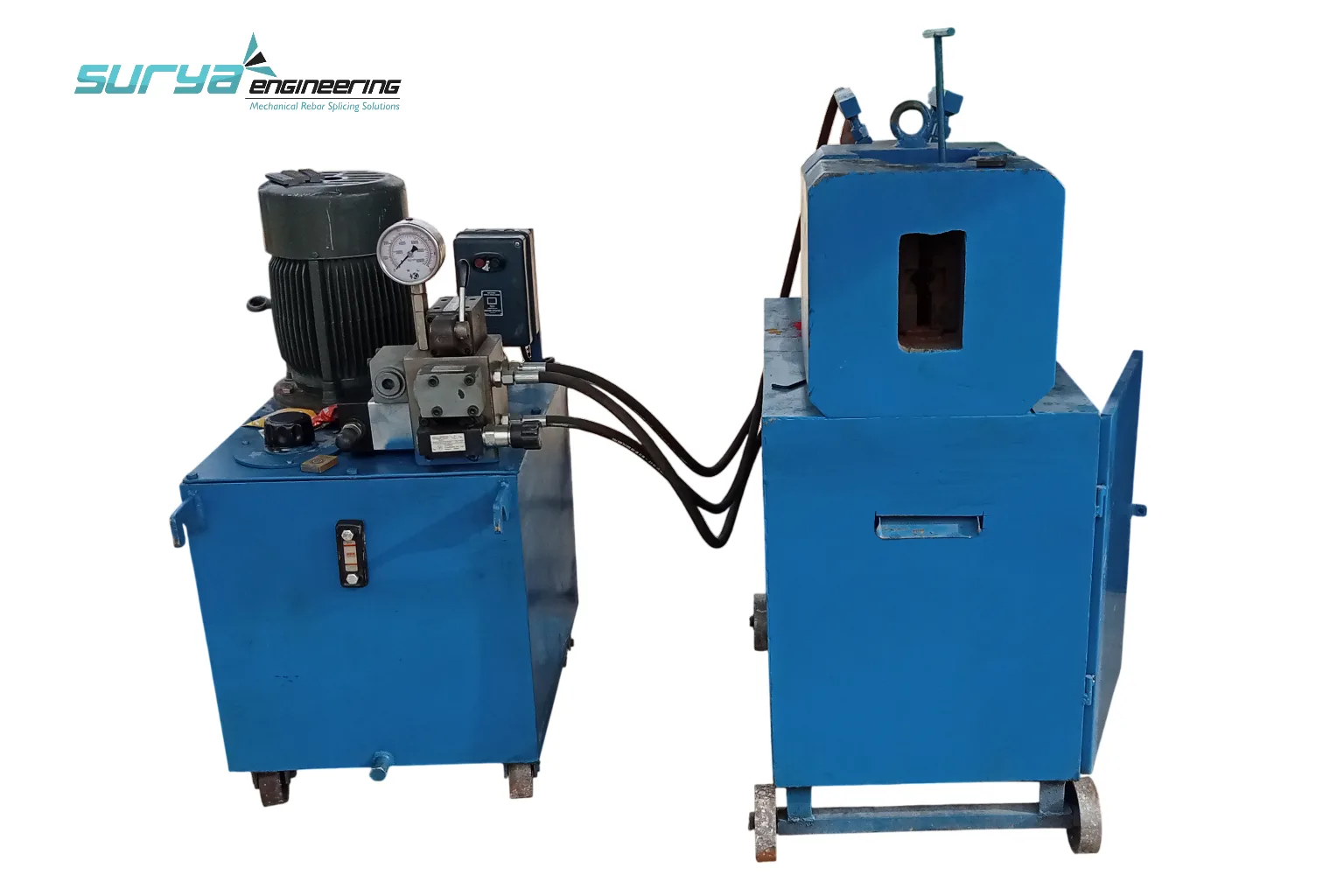
Hydraulic Rebar End Upsetting Machine for Mechanical Coupler Applications
Surya Engineering manufactures hydraulic TMT Bar Cold Forging Machines designed to enlarge the ends of reinforcement bars before threading. The machine uses controlled hydraulic pressure to upset the TMT bar end at room temperature, creating an enlarged section suitable for subsequent thread rolling or machining as required by the mechanical rebar coupler system.
The cold forging process prepares reinforcement bars for parallel-thread mechanical splicing. By increasing the diameter of the bar end before threading, the machine helps compensate for the material removed during thread formation and supports the preparation of mechanically strong rebar connections.
Available in SE-32 and SE-40 models, Surya Engineering's Rebar Cold Forging Machines accommodate TMT bar diameters from 16 mm to 32 mm and 16 mm to 40 mm respectively. These hydraulic machines are suitable for rebar processing facilities, coupler manufacturing units, reinforcement fabrication workshops and construction-related industrial applications.
A TMT Bar Cold Forging Machine works by applying controlled hydraulic force to the end of a reinforcement bar. The process enlarges the selected portion of the bar without conventional heating, preparing it for subsequent threading operations.
The working process involves:
Need to prepare TMT bar ends for mechanical coupler connections? A TMT Bar Cold Forging Machine enlarges the bar ends using hydraulic pressure before threading. This helps compensate for the material removed during thread formation and prepares the bars for compatible coupler connections.
| Feature | SE-32 | SE-40 |
|---|---|---|
| Type | Hydraulic rebar cold forging machine | Hydraulic rebar cold forging machine |
| Processing range | 16 mm to 32 mm | 16 mm to 40 mm |
| Motor power | 5 HP | 7.5 HP |
| Forging force | 2036 kN | 3000 kN |
| Max working pressure | 80 MPa | 31.5 MPa |
| Dimensions (mm) | 1030 × 500 × 956 | 1300 × 830 × 1350 |
| Weight | 900 kg | 1250 kg |
| Operation | Semi-automatic | Semi-automatic |
| Warranty | 1 year on mechanical parts | 1 year on mechanical parts |
Handles rebars up to 40 mm.
Higher rated forging force (3000 kN).
Suitable for applications requiring larger bar-end enlargement.
Handles rebars up to 32 mm.
Lower motor power.
Lighter machine.
The TMT Bar Cold Forging Machine is designed for preparing reinforcement bar ends for mechanical coupler applications. The cold forging process should follow the applicable requirements of the selected mechanical splicing system.
For upset parallel-threaded couplers, IS 16172:2023 specifies relevant requirements for the preparation and inspection of reinforcement bar ends, including hydraulic cold forging and maintaining the required cross-sectional area after threading.
Machine design and safety considerations should also address applicable hydraulic, electrical and machinery safety requirements.
The final forged dimensions and threading specifications should be verified against the coupler manufacturer's recommendations and relevant project requirements.
When two reinforcement bars need to be connected, there are different joining methods:
Overlapping (lap splicing).
Welding, where permitted by the design and applicable requirements.
Mechanical coupler connections.
In a mechanical coupler system using upset parallel threads, the bar end needs to be enlarged before threading.
Why?
When a thread is cut directly into a TMT bar, some steel material is removed. This reduces the cross-sectional area at the threaded portion.
Cold forging enlarges the bar end before threading, helping compensate for that material removal.
The purpose: To prepare the threaded bar end so that the mechanical connection can meet its specified strength and performance requirements.
Here are the main situations where a project may specify mechanical couplers and therefore require cold forging.
1. High-rise buildings
Columns and structural walls can contain densely arranged reinforcement bars. Mechanical couplers can reduce reinforcement congestion compared with long lap splices.
2. Metro and tunnel projects
Large reinforcement assemblies and restricted working spaces can make mechanical splicing useful where specified by the structural design.
3. Bridges and flyovers
Large-diameter reinforcement and structural loading requirements may make mechanical couplers an appropriate connection solution.
4. Industrial construction
Factories, power plants and heavy industrial structures may use mechanical connections to meet reinforcement detailing and installation requirements.
5. Dams and major infrastructure
Mechanical splicing may be selected for large reinforcement assemblies where the design requires specific connection performance.
Technical Details
Where It's Used
We manufacture to order. Contact our team with your requirements and we'll provide a tailored quote.
Customer Reviews
No reviews yet — be the first to share your experience with this product.
Explore similar engineering products from Surya Engineering.