Precision upsetting for coupler-ready rebar ends
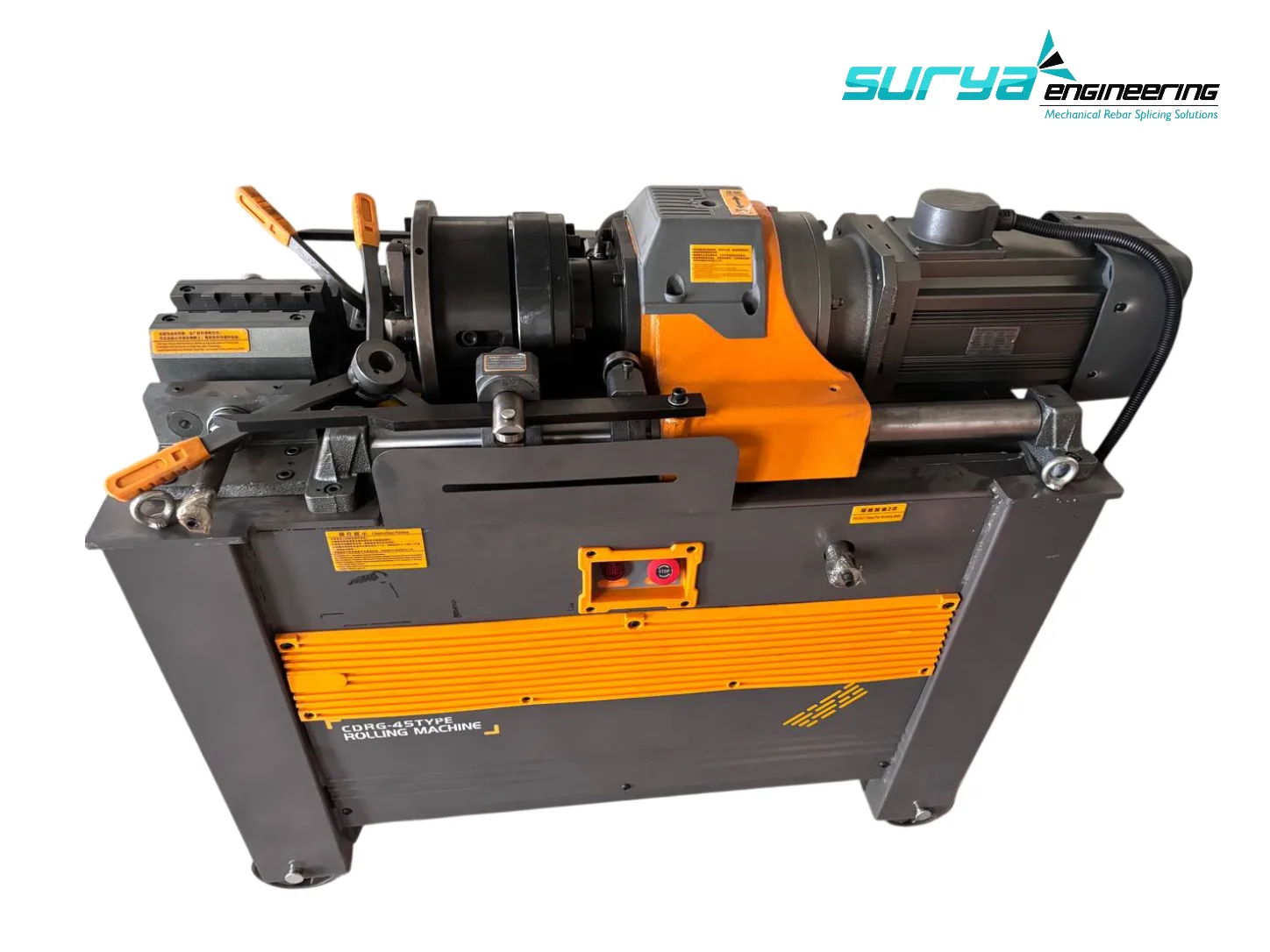
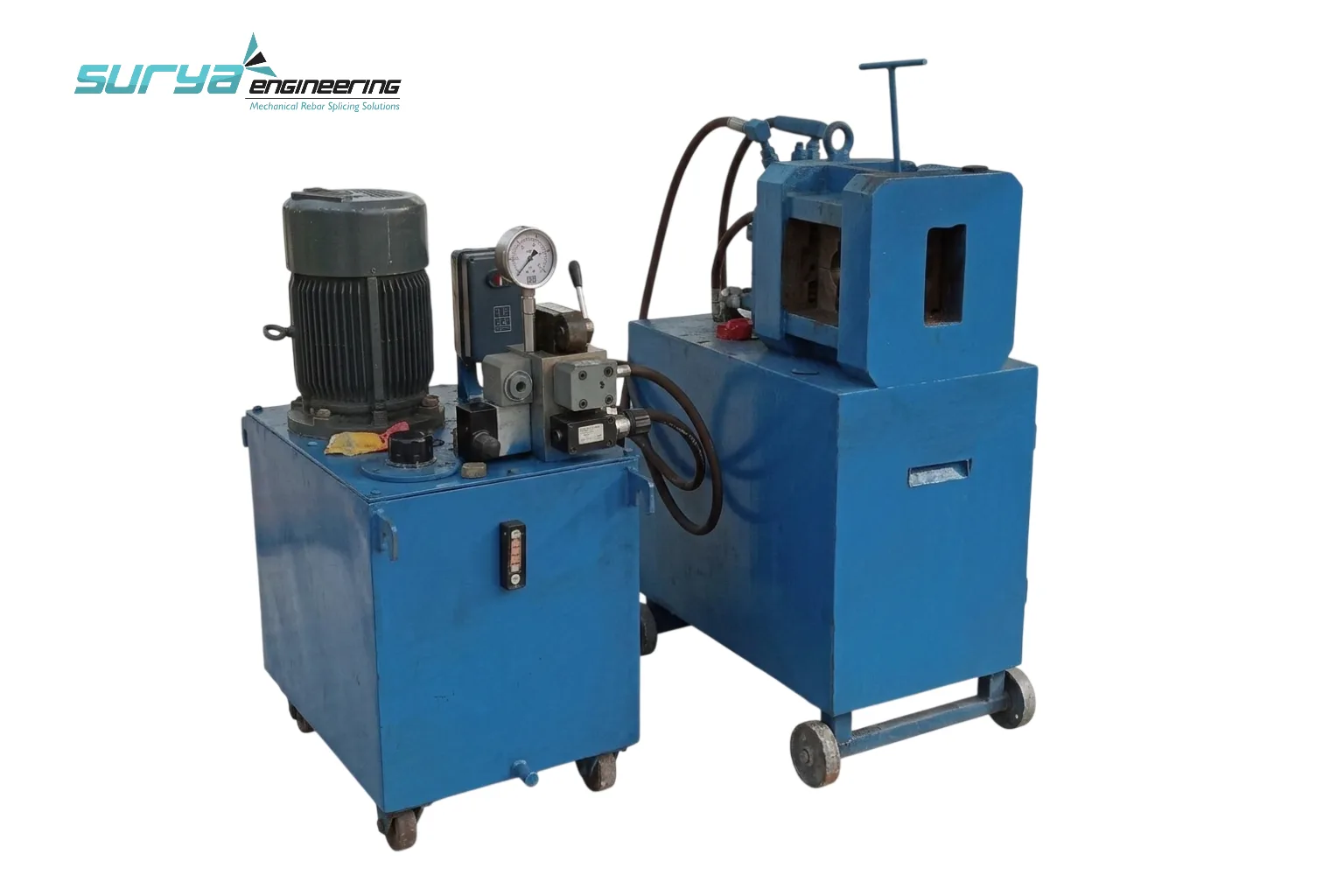
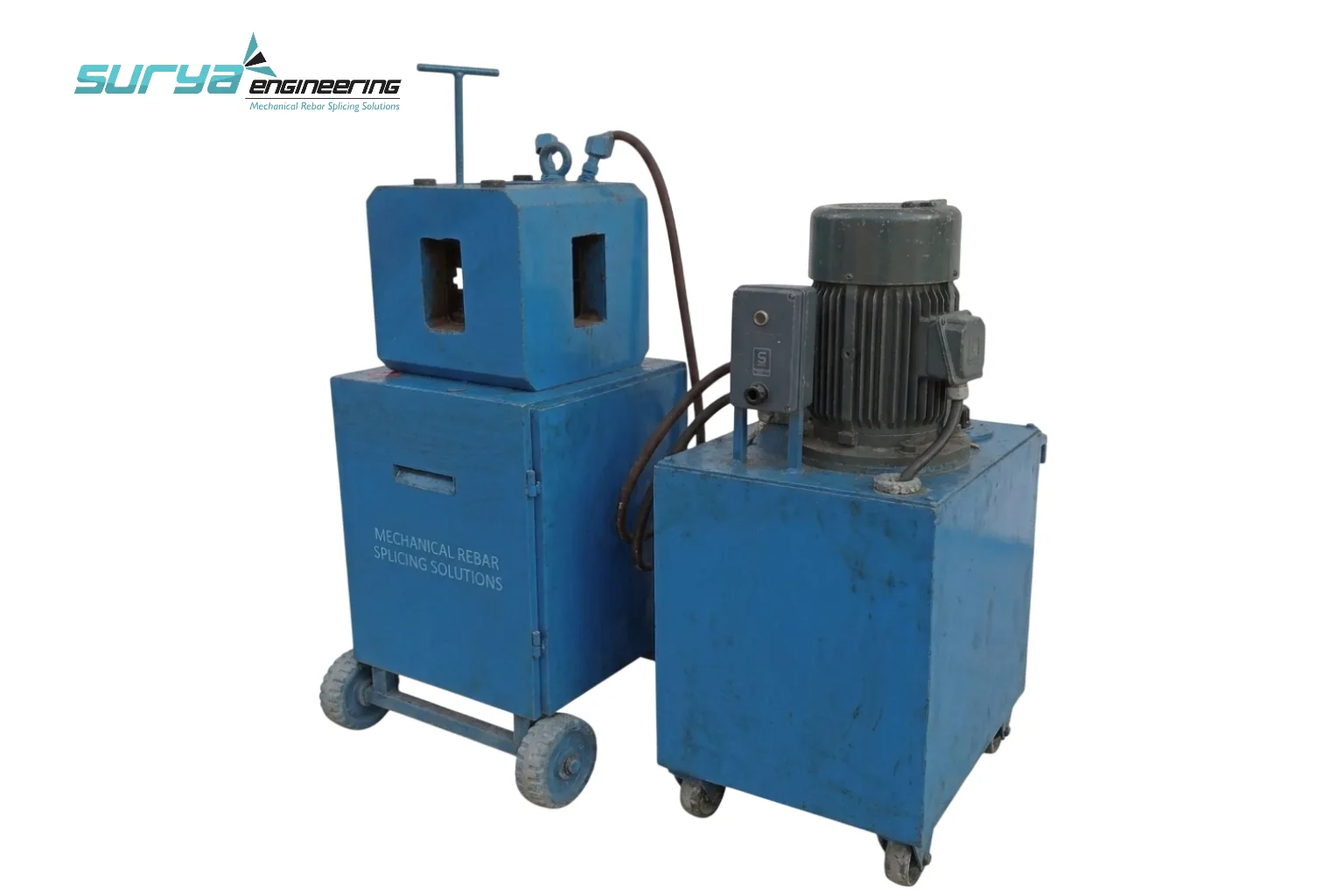
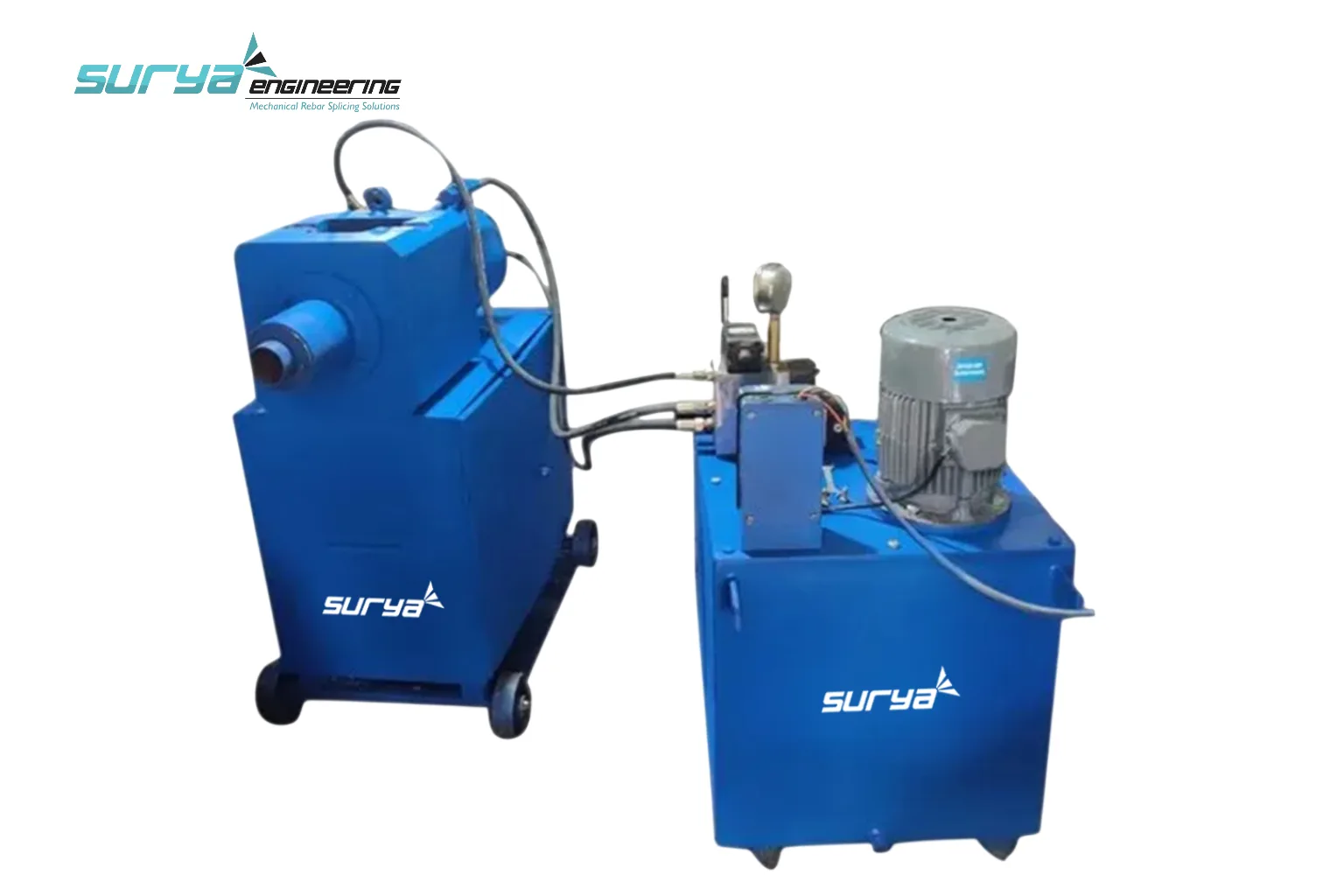
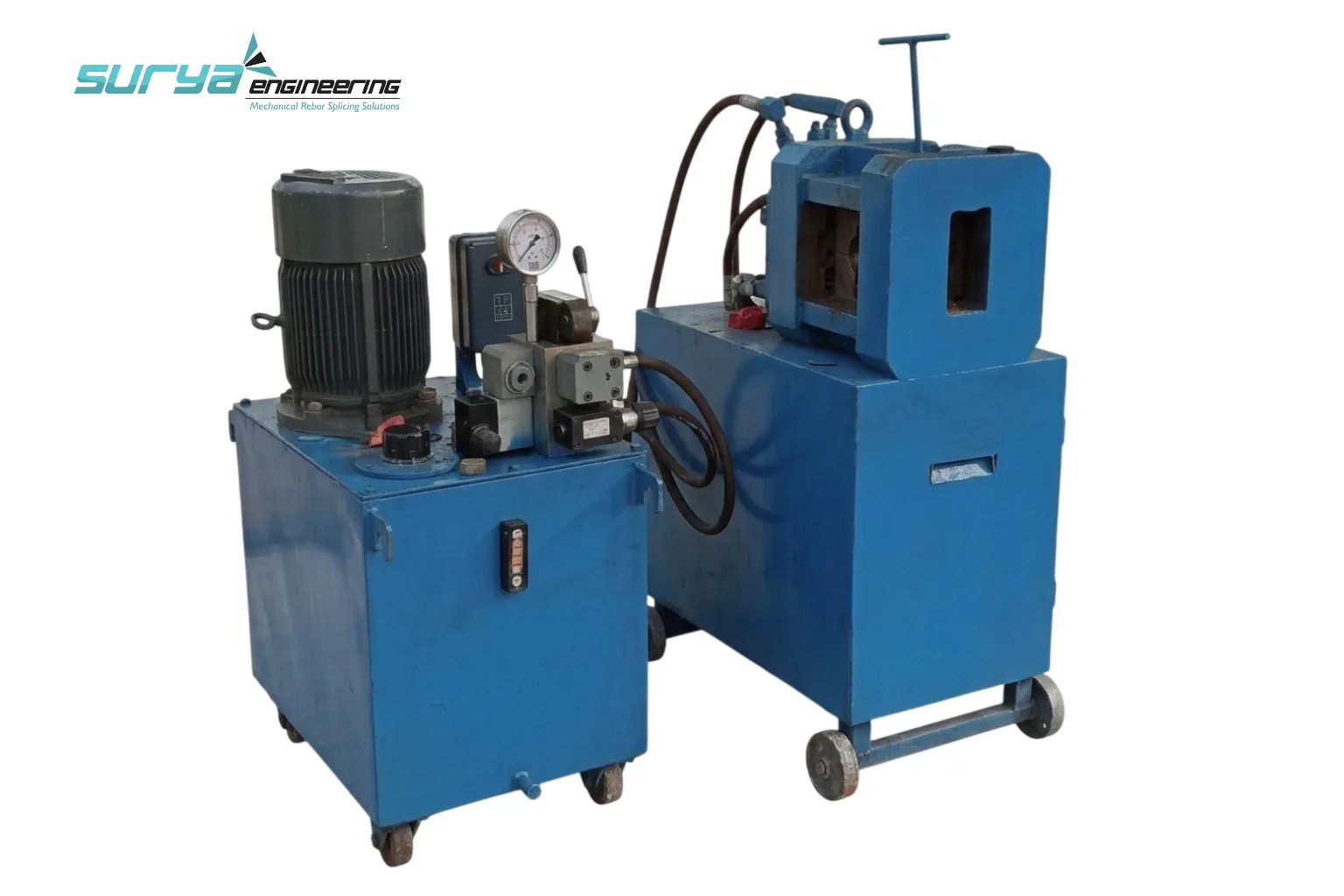
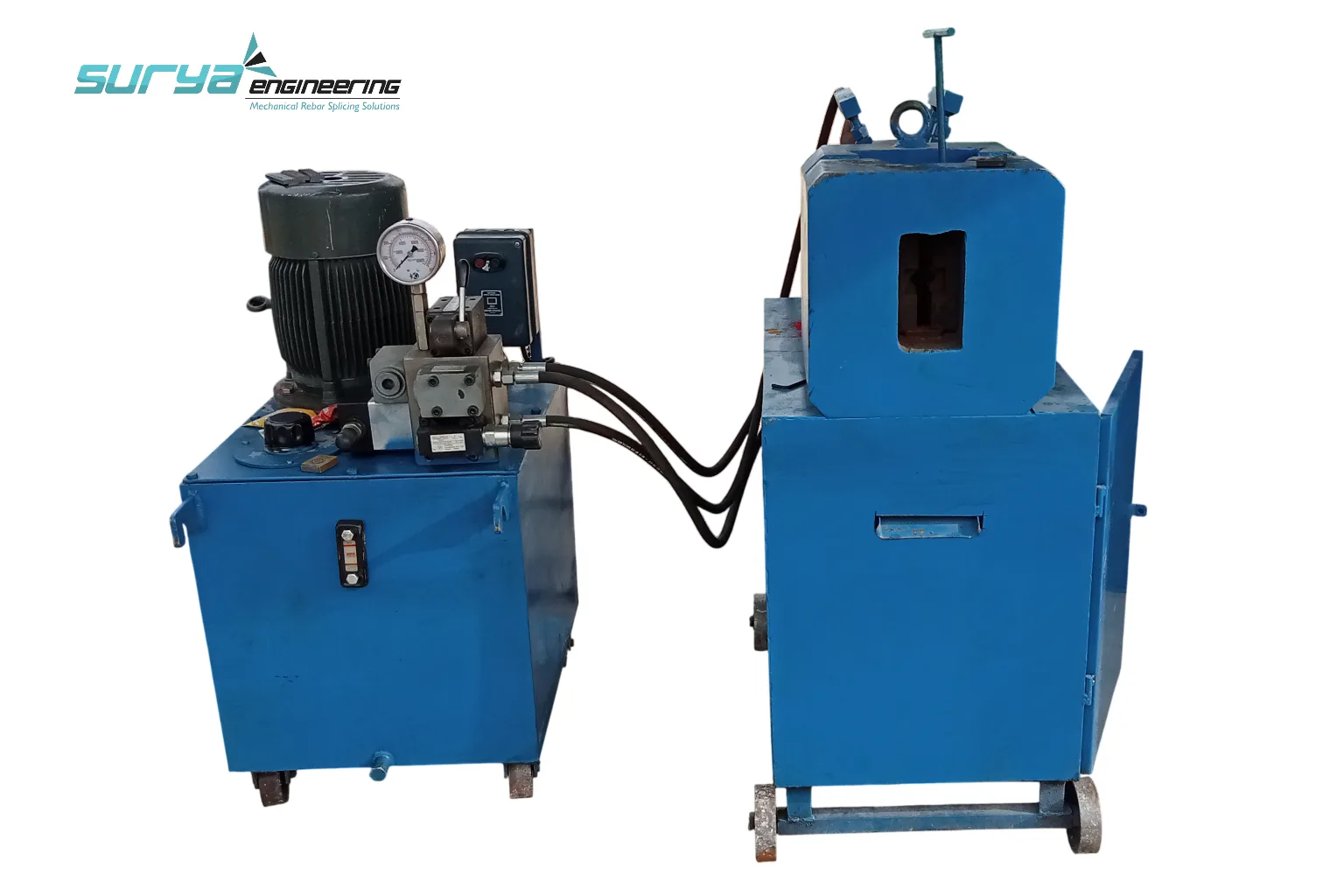
Rebar cold forging machine SE-32 (16 to 32 mm, 2036 kN) and SE-40 (16 to 40 mm, 3000 kN) by Surya Engineering, Mumbai. Hydraulic bar-end upsetting.
Product Media
You have 25 mm and 32 mm bars to splice, a coupler on order and a threading machine ready to cut. Thread those bars as they are and the joint ends up weaker than the bar. A rebar cold forging machine fixes that before the thread is cut, by thickening the bar end at room temperature. Surya Engineering, a rebar cold forging machine manufacturer in Mumbai, builds this hydraulic, semi-automatic TMT bar upsetting machine for bars from 16 mm to 40 mm.
Threading removes steel. A thread cut into a plain bar leaves a root diameter smaller than the bar, so the threaded neck becomes the thinnest and weakest section of the splice. Upsetting fixes this by pushing the bar end outward under axial force.
After threading, the thread root still has a cross-section at least equal to the original bar. A tensile test then breaks the bar in its parent length instead of at the joint.
Upsetting can be done hot or cold. Cold means the steel stays at room temperature, below the point where it recrystallises, so there is no furnace to run and no heat cycle to control. The bar end work-hardens a little as it deforms, and no steel is cut away.
Size decides how much this matters. On 16 mm and 20 mm bars the cross-section is small and the strength loss from threading is minor. From 25 mm upward, forging is a must.
If your drawings stop at 20 mm, ask yourself whether you need this machine. If they go to 32 mm or 40 mm, you do.
A hydraulic power pack drives everything. It holds a three-phase motor, a pump, an oil reservoir, a pressure relief valve, a directional control valve, a pressure gauge and oil filters. The relief valve and gauge matter more than they look, because they set the force the bar end sees on every stroke.
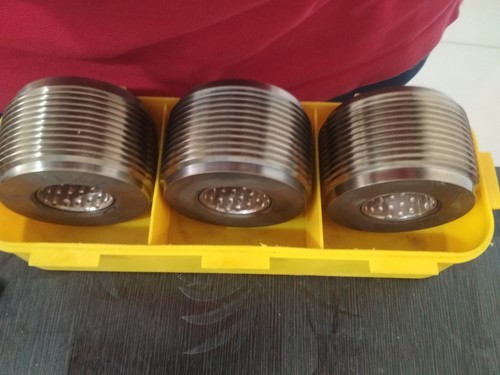
Two cylinders do the work. The clamping unit grips the bar so it can’t slip or tilt, and the upsetting cylinder then drives the bar end into the die. Dies are made from tool steel, H13 or EN31 in our build, and they set the final shape, surface finish and upset diameter.
A fabricated steel frame carries the load and holds the alignment. An electrical panel with an emergency stop and motor protection controls the cycle, and guards and limit switches keep hands clear of the dies. An oil cooler stops the hydraulic oil overheating on long shifts.
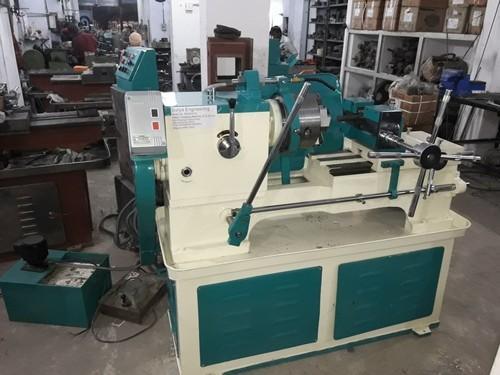
The SE-40 rebar cold forging machine delivers 3000 kN of forging force from a 7.5 HP motor and takes TMT bars from 16 mm to 40 mm. Its smaller sibling, the SE-32, covers 16 mm to 32 mm on a 5 HP motor with 2036 kN. Surya Engineering, a rebar cold forging machine manufacturer in Mumbai, builds both as hydraulic, semi-automatic TMT bar upsetting machines. Their job is to thicken the bar end at room temperature before you cut the thread.
Both models start at 16 mm. The split is at the top end. The SE-32 stops at 32 mm, and the SE-40 goes to 40 mm with about 47% more forging force, which is roughly 306 tonnes-force against 208. The SE-40 also weighs 1250 kg against 900 kg and needs a floor footprint of 1300 x 830 mm, so it asks more of your shed.
Short training is enough for an operator to run steps 2 to 5. The work is mostly loading and watching the gauge.
| Feature | SE-32 | SE-40 |
|---|---|---|
| Type | Hydraulic rebar cold forging machine | Hydraulic rebar cold forging machine |
| Processing range | 16 mm to 32 mm | 16 mm to 40 mm |
| Motor power | 5 HP | 7.5 HP |
| Forging force | 2036 kN | 3000 kN |
| Max working pressure | 80 MPa | 31.5 MPa |
| Dimensions (mm) | 1030 x 500 x 956 | 1300 x 830 x 1350 |
| Weight | 900 kg | 1250 kg |
| Operation | Semi-automatic | Semi-automatic |
| Warranty | 1 year on mechanical parts | 1 year on mechanical parts |
The forging step only pays off if the next machine is matched to it. Our rebar threading machine takes bars from 12 mm to 40 mm, cuts thread lengths from 25 mm to 80 mm, and runs parallel or taper threads to IS or BS pitch. It runs on single phase or three phase supply with motors from 1.5 kW to 7.5 kW. Forge on one machine, thread on the other, and the bar is ready for the coupler.
Any project that specifies mechanical splices in place of lap joints needs bar ends prepared this way. Metro and tunnel work, flyovers, bridges, dams and high-rise towers all fall in that group. Precast plants and rebar processing yards run it too, because they prepare bars in volume and want every end forged to the same diameter.
IS 16172 covers reinforcement couplers for mechanical splices, and its scope is the coupler, not the machine. The current edition is IS 16172:2023, which replaced the 2014 version, so check which one your tender cites. Evidence of good bar-end preparation shows up in the tensile and fatigue reports for the finished splice. Ask your coupler supplier for those reports, and ask us for the bar-end details that go with them.
Either one works at 32 mm. The SE-32 is the smaller, lighter machine, and the SE-40 gives you headroom if you may take on 36 mm or 40 mm bars later.
Yes, with MBT bolt couplers. They join the bars without threading or forging the bar ends, so they suit jobs where preparing the ends is slow or impractical.
We install it on site and train your operator. The warranty runs one year on mechanical parts.
Cold forging reshapes the steel and removes none, and the thread root ends up at least as wide as the original bar.
Look at the largest bar in your drawings. If it is 32 mm or below and floor space is tight, ask for the SE-32. If it reaches 36 mm or 40 mm, ask for the SE-40. Send that bar diameter and your steel grade through the Enquire button or Contact us directly and we will quote the right model.
Technical Details
Where It's Used
We manufacture to order. Contact our team with your requirements and we'll provide a tailored quote.
Customer Reviews
No reviews yet — be the first to share your experience with this product.
Explore similar engineering products from Surya Engineering.