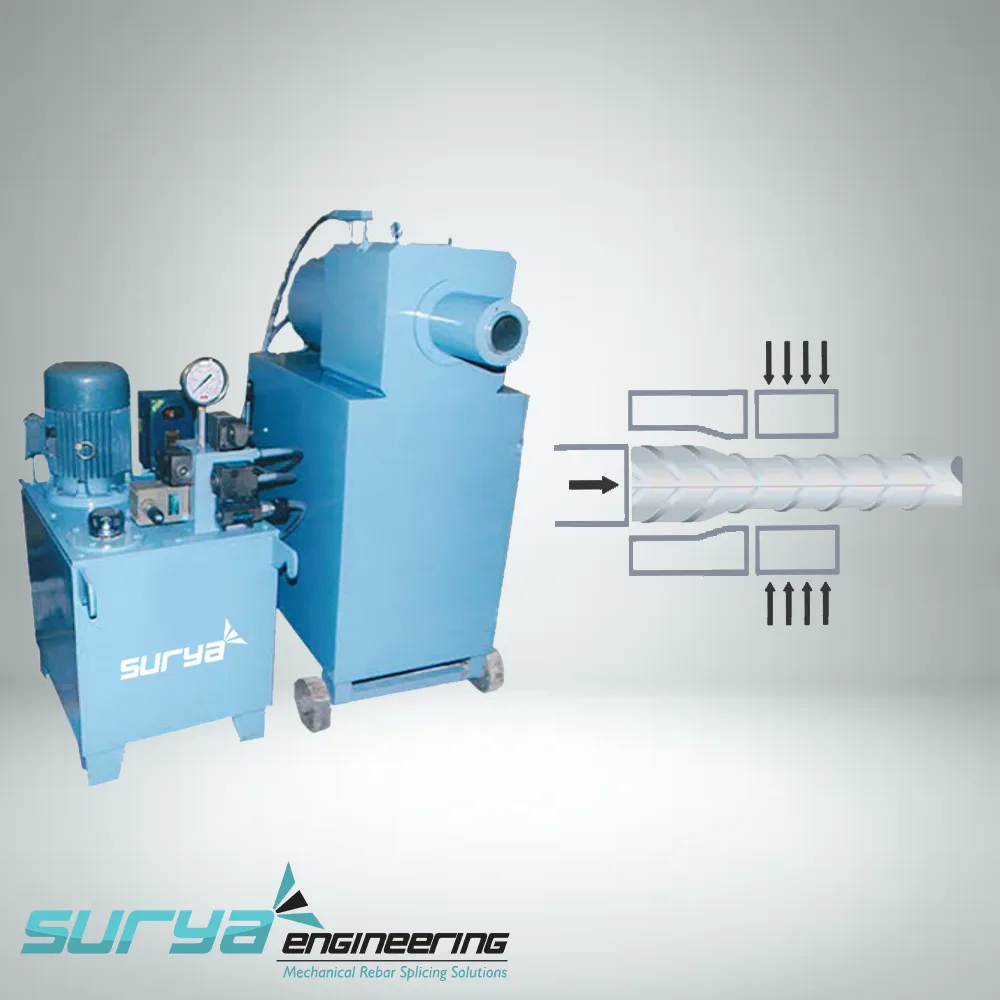
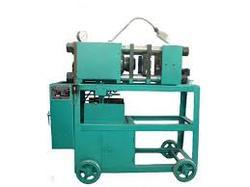
Hydraulic bar end forging for full strength coupler joints.
Cold Forging Machine for Rebar
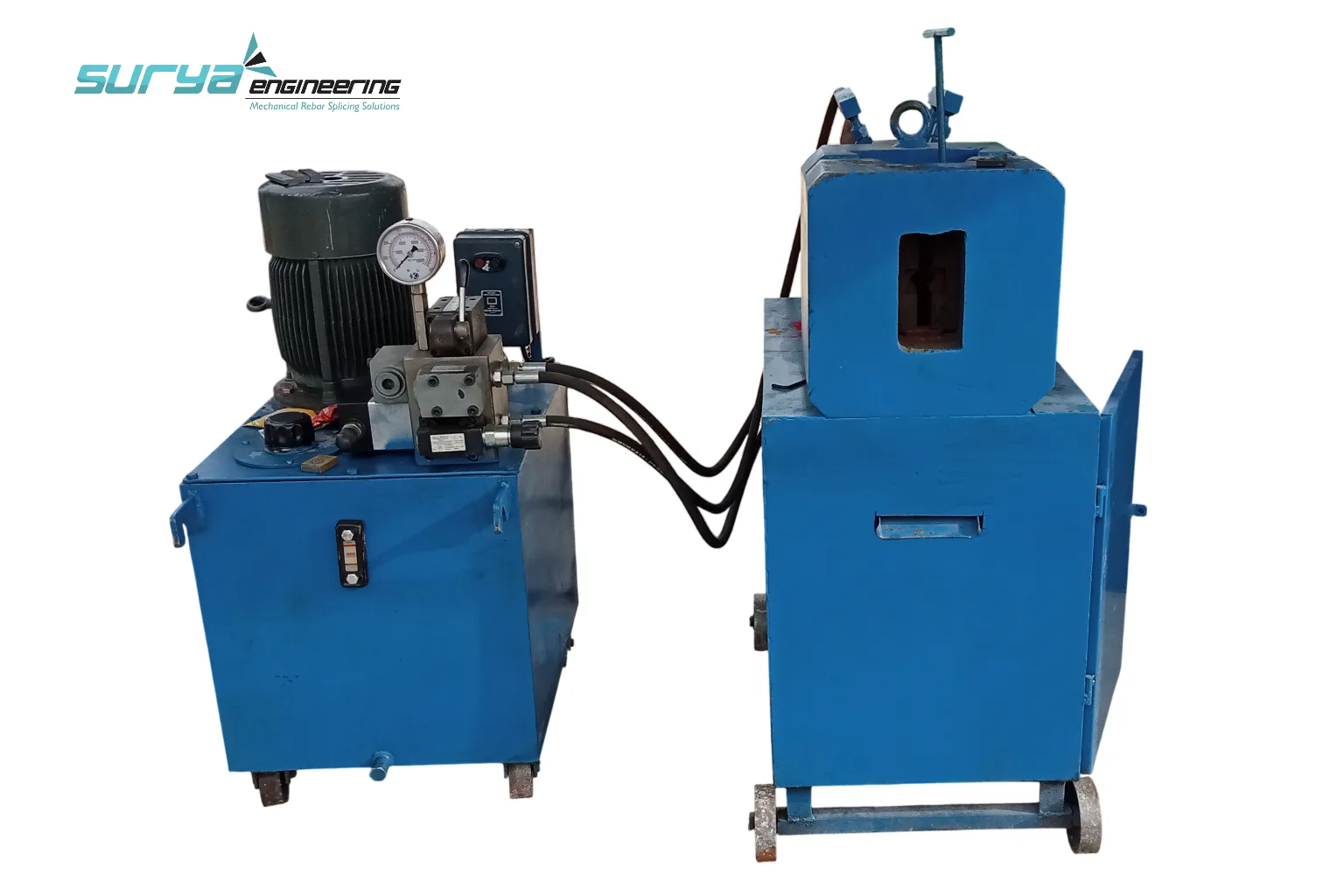
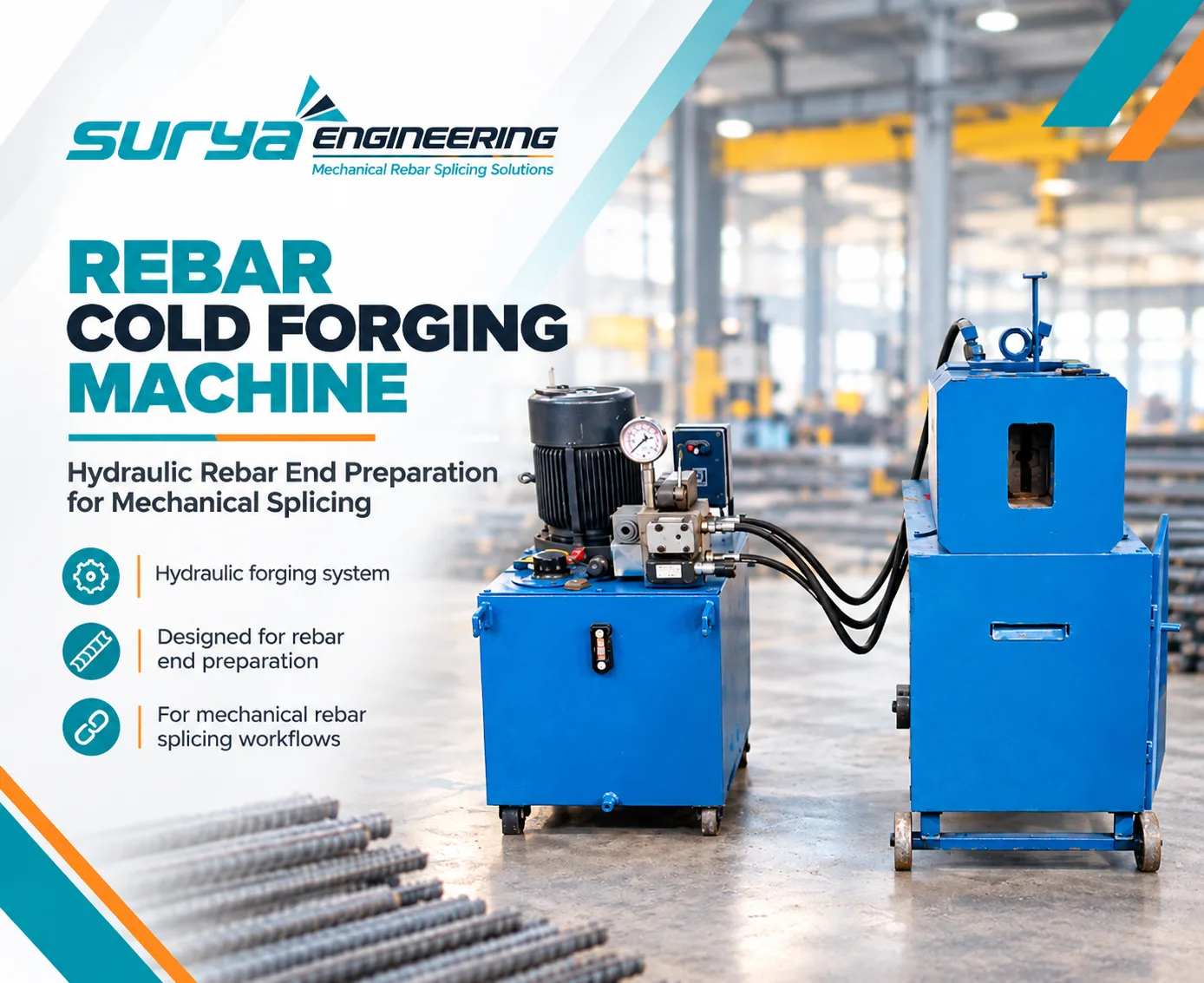
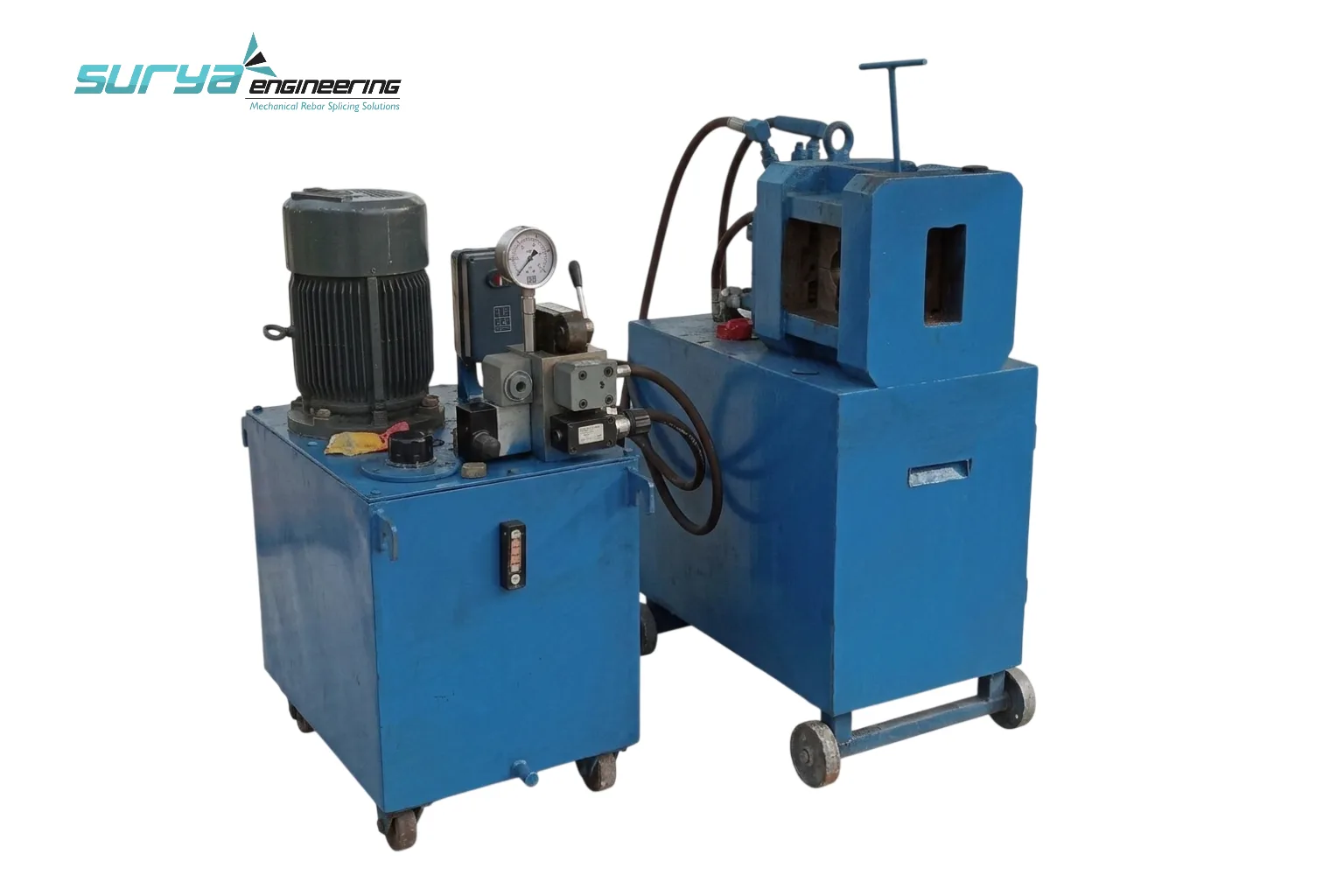
Cold forging machine for rebar from Surya Engineering, Mumbai. It hydraulically enlarges the sawn end of a TMT bar before threading, so the thread keeps the bar’s full cross-section. SE-32 for 16 to 32 mm bars, SE-40 for 16 to 40 mm bars.
The Surya Engineering cold forging machine for rebar is a hydraulic press that prepares the ends of TMT bars for threaded couplers. IS 16172:2023 asks for one result from this step: after threading, the bar end must have at least the cross-section area of the parent bar.
A rebar cold forging machine is how a coupler maker gets there. Some sellers list it as a TMT bar cold forging machine, and the job is the same. It grips a sawn bar end, presses it into a closed die, and leaves it larger, round and uniform. A thread then goes onto that enlarged end, so the rebar coupler joint can carry the full load of the bar.
Hydraulic rebar cold forging machine technology
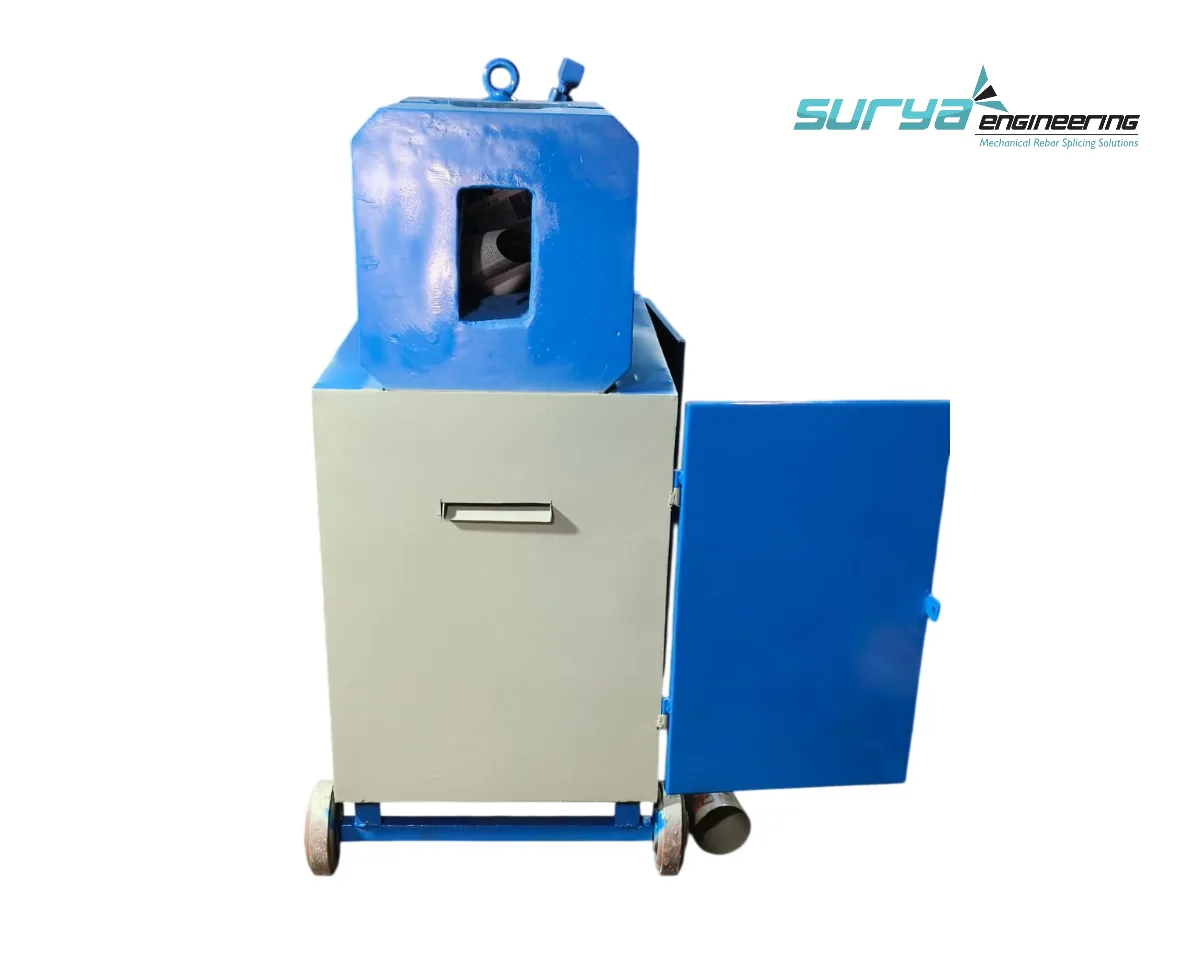
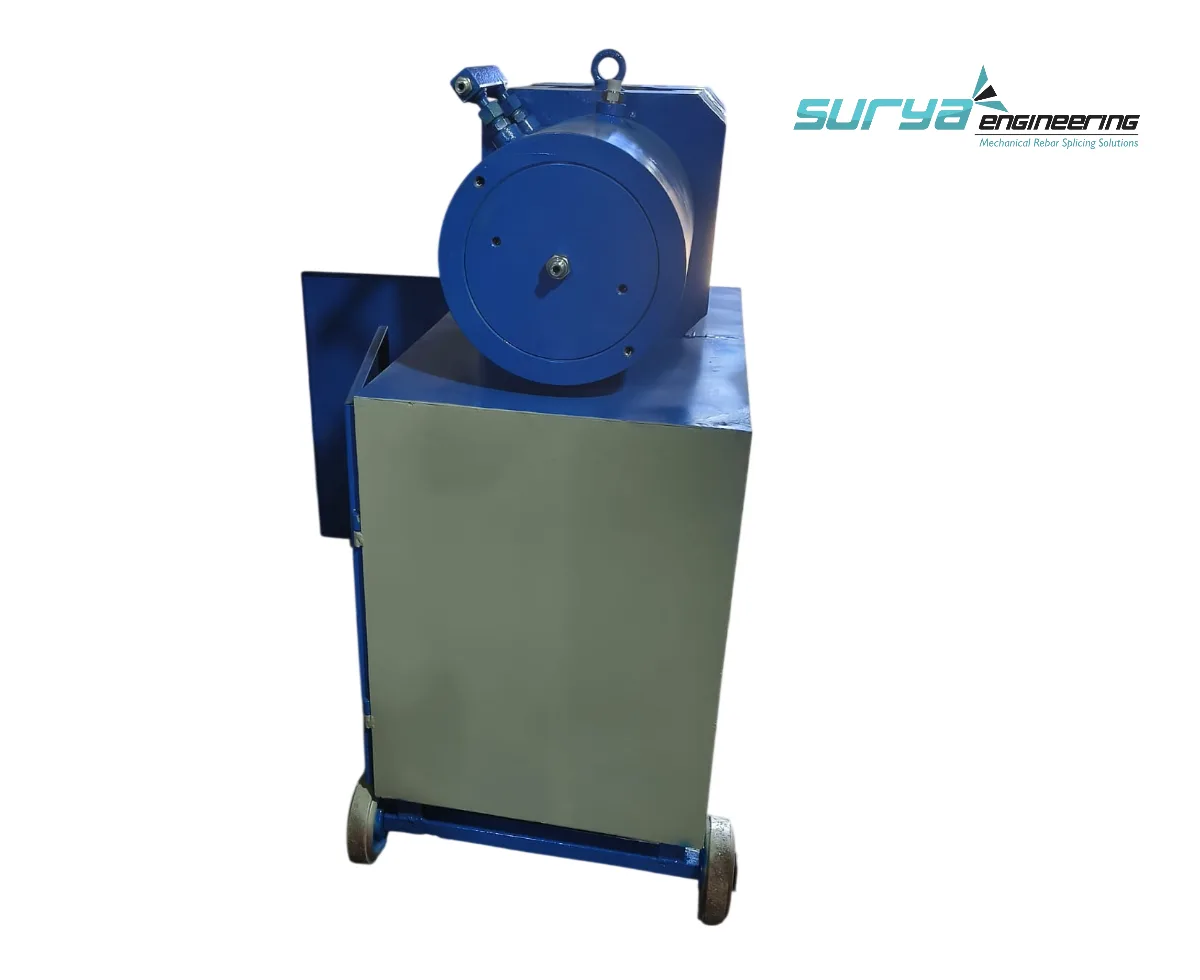
The standard has hydraulic drive in mind. Its description of the upset system says the bar ends are hydraulically enlarged by cold forging. Inside a hydraulic rebar cold forging machine, two cylinders do the work. A clamping cylinder holds the bar, and a forging cylinder pushes the end into a die cavity sized for the enlargement the thread needs.
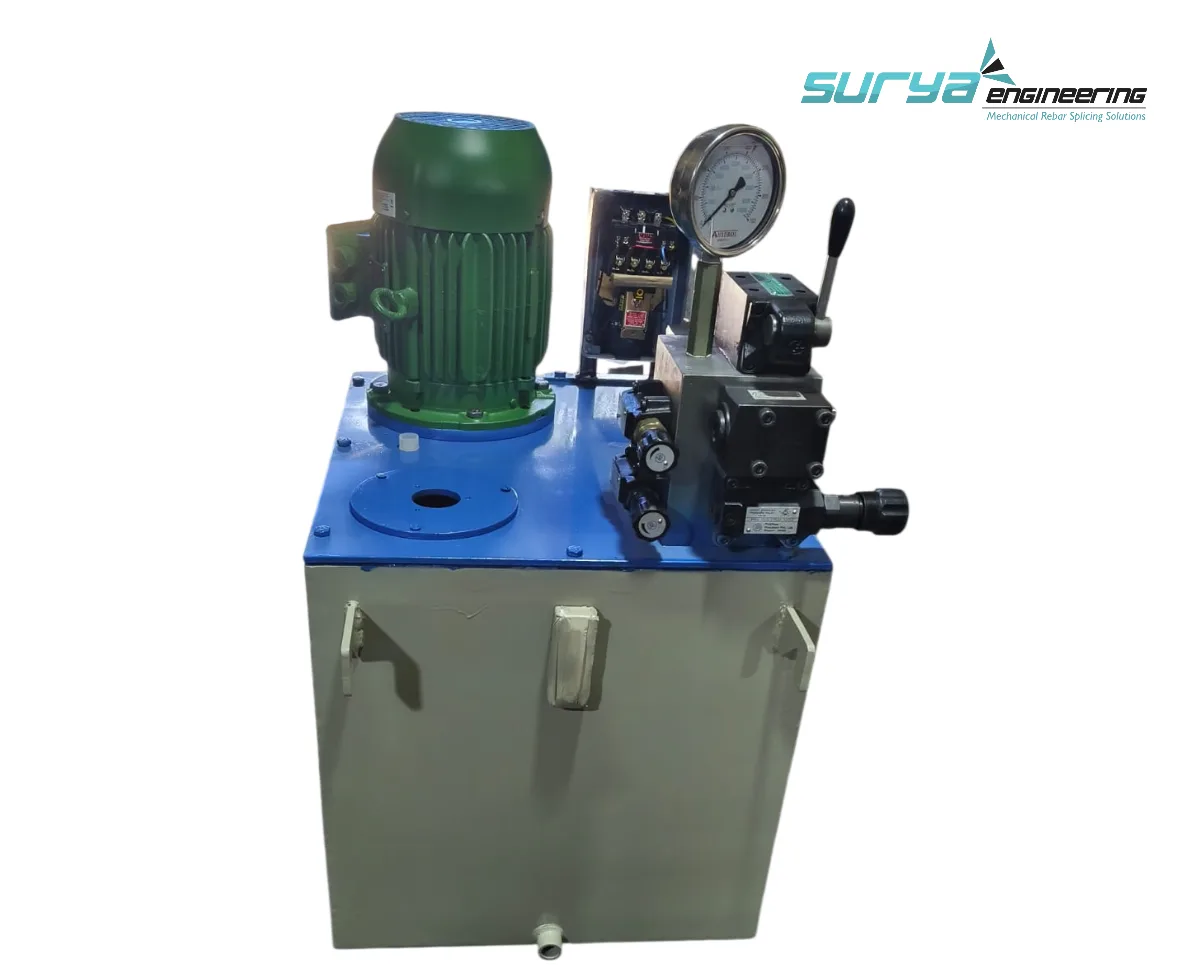
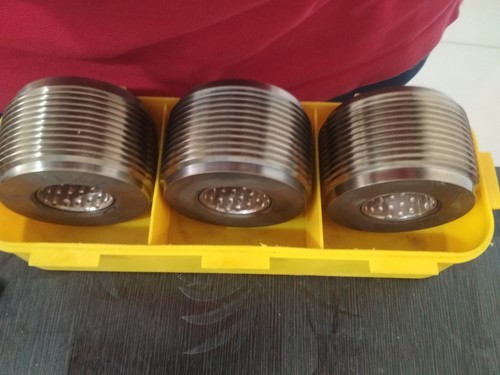
A US patent on a closed-die design describes the logic well: one force secures the bar against the axial push, and the other keeps the dies shut against the sideways swelling of the steel. A complete machine pairs the forging block with die sets, punches and a power pack with separate high and low pressure circuits.
Working principle of a rebar upsetting machine
The work starts before the machine. A saw cuts the bar end square. IS 16172 does not allow disc cutting or gas cutting for this, because both risk overheating the bar and leaving an end out of square. It gives about 3 degrees either way as the usual perpendicularity tolerance.
Upsetting is cold forging under another name. In a rebar upsetting machine the clamped end is pushed into the die until it grows by a few millimetres. One manufacturer puts the increase at roughly 3 to 5 mm in diameter. The same patent notes that upsetting also evens out the ribs and small deviations along the end, so the thread starts from one standard diameter and a round section.
The reason for enlarging is simple. Every thread removes metal. Cut or rolled, the patent explains, a thread leaves the threaded section with less effective area than the bar, and the joint ends up weaker than the bar itself. Enlarging first gives the thread extra steel to work with.
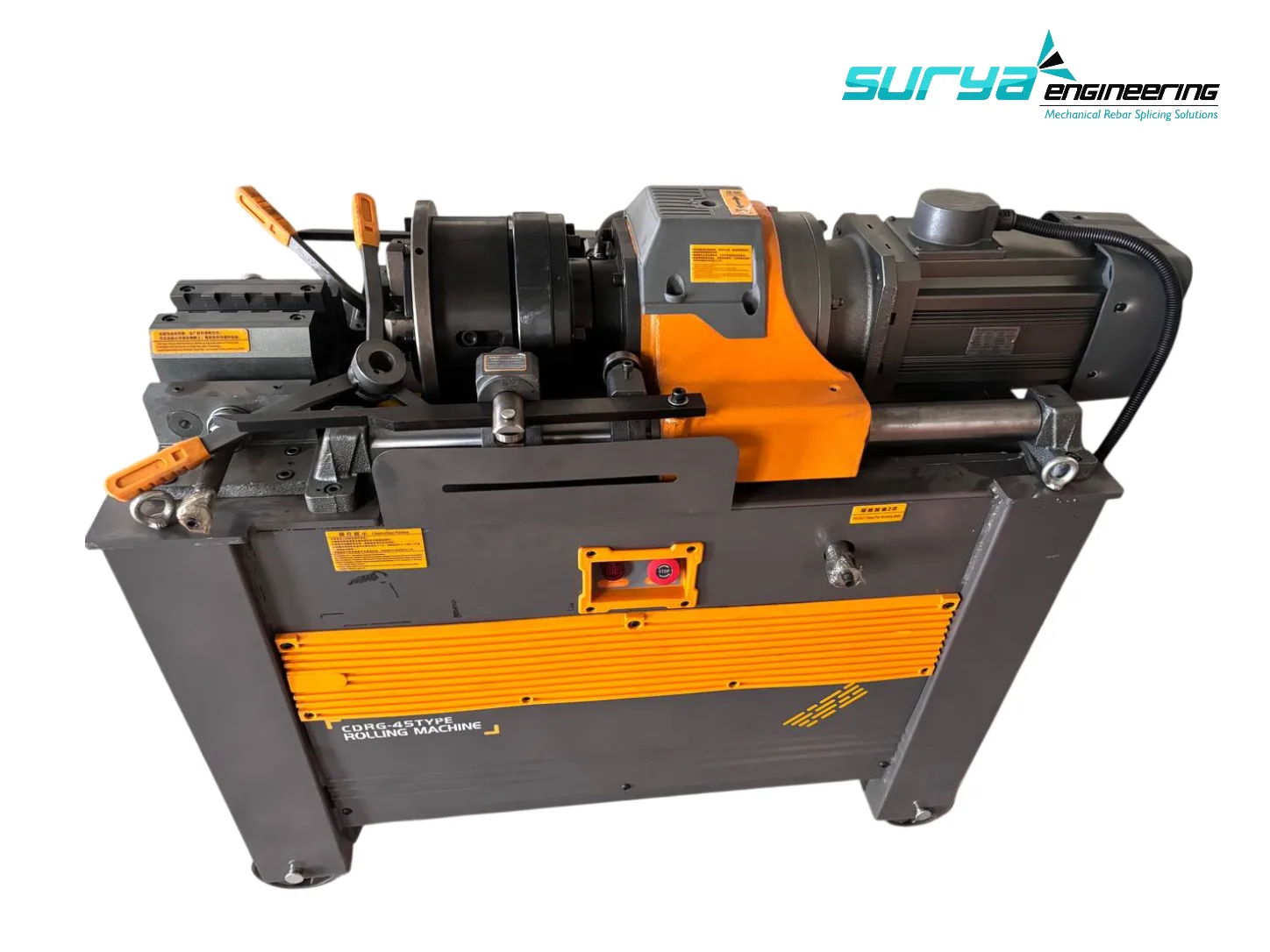
Forging is the second step of four: saw, forge, thread, then check. After that the threaded length gets a plastic cap, which comes off only when the next bar goes in. Cutting and forging eat length, so plan extra length on each bar to cover it.
What IS 16172 expects around the forging step
IS 16172:2023 is the first revision of the Indian standard for reinforcement couplers. Annex A describes the upset parallel threaded system: bar ends sawn square, hydraulically enlarged by cold forging to a set core diameter, then threaded. Annex G, which the standard offers as guidance for site quality checks, is where the rules for whoever runs the machine sit.
The forged length has to suit the thread length in the coupler maker's design. Oversized ribs can be smoothed before forging. Double cold forging is not permitted, and a bad forging means cutting the end off square and starting again on fresh bar.
After forging, someone looks over the end for cracks, and GO and NO GO gauges check the thread major diameter. Every threaded end then takes a proof load of 80 percent of the bar's minimum yield strength on a machine that shows the load on a digital display and punches the bar itself, with no manual marking.
That ban on double forging puts weight on the die and the stroke. The machine has to finish a 32 mm end in one go, and the cavity has to match the bar. A machine that regularly needs a second hit costs you a saw cut and a length of bar each time.
The standard also ties approvals to machines. Type tests have to be repeated when the forging or threading machine changes. The slip test approval normally lasts one year, and the cyclic and fatigue approvals five. For a coupler manufacturer, swapping machines is a retesting event.
Hydraulic TMT bar upsetting machine specifications
Surya Engineering builds this hydraulic TMT bar upsetting machine in Mumbai in two sizes.
Specification
SE-32
SE-40
Bar diameter range
16 to 32 mm
16 to 40 mm
Motor power
5 HP
7.5 HP
Forging force
2036 kN
3000 kN
Maximum working pressure
80 MPa
31.5 MPa
Dimensions (L x W x H)
1030 x 500 x 956 mm
1300 x 830 x 1350 mm
Weight
900 kg
1250 kg
Force is pressure times piston area, so force and pressure only mean something as a pair. A listing that quotes tonnage alone says little about what the cylinder is doing.
Pick the size from your largest bar. A machine bought for 32 mm becomes a problem the week a job specification arrives with 36 mm bars. Ask how many die sets come with the machine and how long a changeover takes.
Rebar end forging machine applications
A rebar end forging machine earns its keep where bars are spliced in volume. The foreword of IS 16172 gives the reason people go to this trouble: splicing large bars mechanically means less congestion when the concrete goes in, and faster construction. Typical uses include metro rail, tunnel, flyover, dam, industrial and precast work.
Rebar coupler applications also decide how demanding the coupler has to be. Couplers pass as Class L with the low cycle fatigue test and as Class H with the high cycle test as well. The standard recommends Class H for road and rail bridges, machine foundations and tall slender structures such as stacks, so a yard that supplies bridge work should ask about the class early.
Whatever the class, the finished splice must reach 130 percent of the bar's specified yield strength, or the bar must fail outside the splice.
Rebar cold forging machine price and enquiry
The rebar cold forging machine price depends on the bar range, the forging force and pressure rating, the number of die sets and the motor. Compare machines on those figures, because the name on a listing tells you little.
Owning a machine does not always pay. A site with a small number of splices may spend less buying bars prepared elsewhere, or choosing a splice type that skips the forging step. Past a certain volume the sums flip, so work out your own number from what you pay per prepared bar end today.
When you send an enquiry, give the largest bar diameter, the bar grade and the thread length your coupler design needs. Ask for forged samples of your own bar. Check them against the standard's own list: a square sawn end, no visible cracking, and a thread that passes GO and NO GO gauges after rolling. Get the working pressure and forging force in writing before you pay an advance.
Frequently asked questions
What does a cold forging machine for rebar do?
It enlarges the end of a sawn TMT bar under hydraulic force. The enlarged end is then threaded for a rebar coupler.
Why enlarge the bar end before threading?
Threading removes metal. Forging first means the threaded section keeps at least the cross-section of the parent bar, so the joint is not weaker than the bar.
Which model should I buy?
Choose by your largest bar, not your usual one. If you may ever process bars above 32 mm, take the SE-40.
What is rebar end upsetting?
It is the same operation as cold forging. Force squeezes the bar end shorter and fatter, so the diameter grows.
Is a TMT bar forging machine different?
Usually not. A TMT bar forging machine is the same equipment under another name. Compare bar range and forging force instead of the name.
Can I forge a bar a second time if the first attempt fails?
IS 16172 does not permit double cold forging. Cut the end off square and forge again from fresh bar.
Technical Details
Specifications
Product Specifications
Machine TypeHydraulic Rebar Cold Forging Machine
Available ModelsSE-32 and SE-40
Bar Diameter Range16mm to 40mm (Model Dependent)
Operation TypeSemi-Automatic
Forging ProcessHydraulic Cold Forging
ApplicationTMT Bar End Upsetting
Forging Force2036 kN (SE-32) / 3000 kN (SE-40)
Motor Power5 HP (SE-32) / 7.5 HP (SE-40)
Machine Weight900 kg (SE-32) / 1250 kg (SE-40)
Machine Dimensions1030 × 500 × 956 mm (SE-32) / 1300 × 830 × 1350 mm (SE-40)